
 Nana
Nana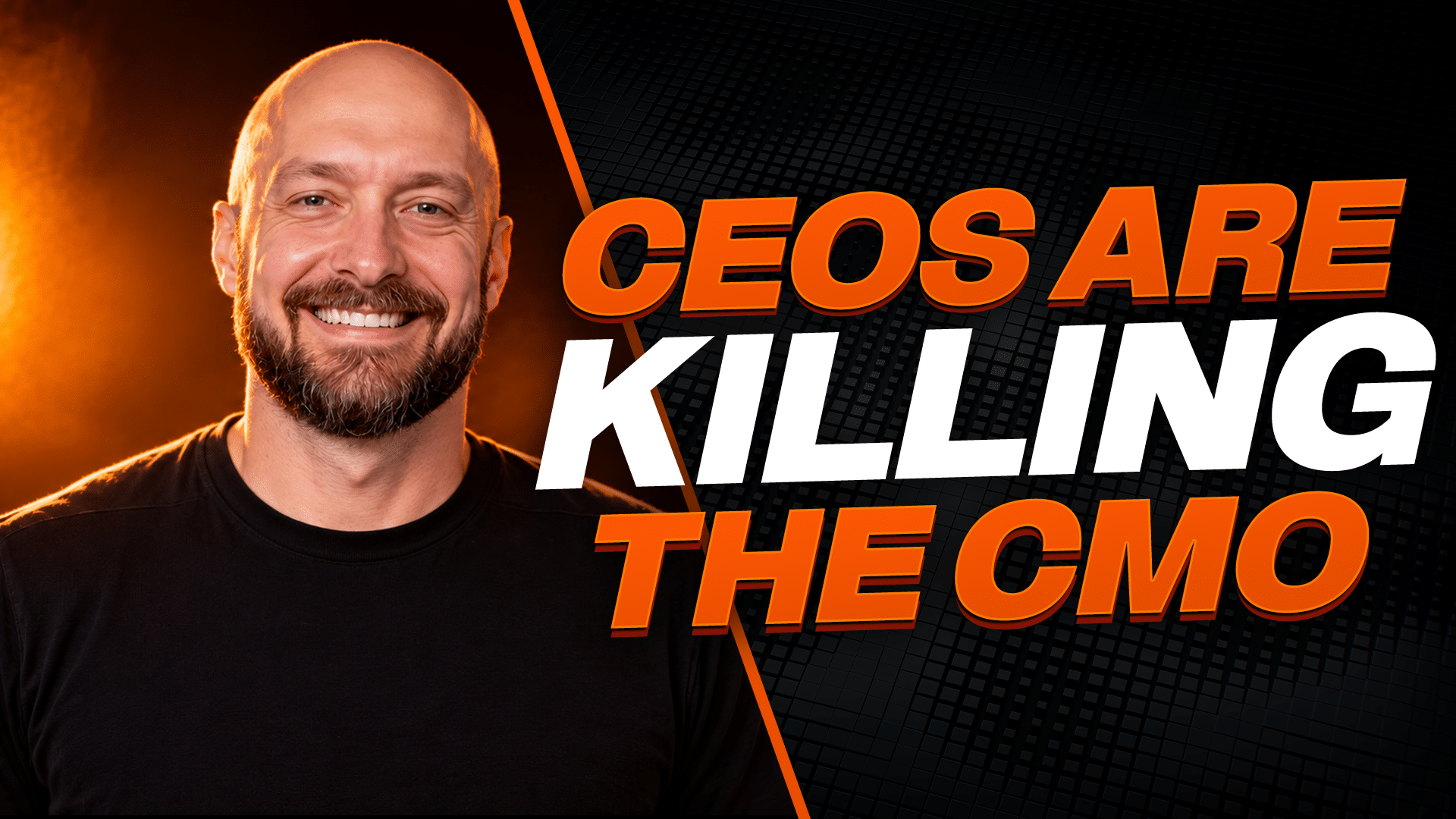
In the fast-paced corridors of modern enterprise, a quiet but seismic shift is underway. Across the B2B and technology sectors, the title of Chief Marketing Officer (CMO) is increasingly being scrubbed from organizational charts. For some, this represents a brutal pruning of overhead; for others, it is a strategic repositioning toward revenue-focused leadership.
As the industry grapples with this trend, the question remains: is the CMO role facing an evolutionary dead-end, or are marketers simply suffering the consequences of a decade spent prioritizing short-term metrics over long-term brand equity?
To unpack this, we look to insights from industry veteran Kyle Lacy, CMO at Docebo, who argues that the current crisis is largely self-inflicted.
The Main Facts: Why the C-Suite is Cold on Marketing
The disappearance of the CMO is rarely a sudden event. It is typically the culmination of a widening disconnect between marketing departments and the bottom line. Historically, the CMO was the champion of the "brand"—a role that, while essential, was often viewed by finance-heavy boards as opaque and difficult to measure.
As companies shifted toward data-driven, performance-based marketing, the mandate for the CMO transformed. Marketing leaders were forced to become "pipeline machines," hyper-focused on lead generation, MQLs (Marketing Qualified Leads), and conversion rates. In doing so, many CMOs traded their creative influence for a seat at the table that was tethered to short-term, spreadsheet-driven performance. When those numbers waver, the individual responsible—the CMO—becomes the primary target for restructuring.
A Chronology of the Decline
The erosion of the CMO role did not happen overnight. We can trace its trajectory through three distinct phases:
- The Golden Age of Brand (Pre-2010s): The CMO was a visionary, responsible for storytelling, market positioning, and the long-term emotional connection between the consumer and the product.
- The Era of Measurement (2010–2020): With the explosion of MarTech, the focus shifted to attribution. CMOs became obsessed with tracking every dollar. The role began to lean heavily into technical operations, data analytics, and performance marketing, often at the expense of creative brand building.
- The Efficiency Reckoning (2021–Present): Facing economic headwinds, boards began questioning the necessity of a dedicated C-suite marketing executive when growth could be automated or outsourced. The rise of AI and the "growth-at-all-costs" mentality led to the consolidation of marketing under CROs (Chief Revenue Officers) or the complete elimination of the role in favor of smaller, more agile teams.
Supporting Data: The Pipeline Trap
Kyle Lacy notes that the biggest trap modern marketers fall into is the "pipeline obsession." By treating marketing as a pure sales-support function, organizations have effectively commoditized their own departments.
"If you want to kill your creative team, tell them they have a specific, rigid pipeline goal to hit," Lacy warns.

When marketing is reduced to a lead-gen factory, it loses the ability to innovate. Data suggests that companies that prioritize brand-building alongside performance marketing outperform their peers in long-term valuation by nearly 2x. Yet, the pressure to report on daily pipeline movement forces CMOs to ignore the "impossible to ignore" brand strategy in favor of safer, low-impact lead campaigns. This short-termism creates a cycle of mediocrity that inevitably leads to leadership turnover.
Official Perspectives: Self-Inflicted Wounds
Is it the market’s fault, or is it our own? In his discussion, Lacy is blunt: "We did this to ourselves."
Marketing leaders have spent years attempting to prove their worth by speaking the language of finance and sales, rather than the language of customer experience. By framing their success entirely around incremental pipeline growth, marketers invited the C-suite to treat them as an expense item rather than a growth engine.
Furthermore, the unchecked reliance on AI and automation has created a dangerous void. As human connection is stripped away in favor of algorithmic efficiency, brands are becoming increasingly homogenous. Consumers can tell the difference between a brand with a soul and one generated by a prompt. When the CMO is no longer there to protect the brand’s unique identity, the product becomes just another commodity in a crowded marketplace.

Implications for the Future of Marketing Leadership
What does this mean for the next generation of marketing leaders? The future of the role isn’t necessarily extinction, but it requires a fundamental change in scope.
The Rise of the "Technical CMO"
There is a school of thought suggesting that the future belongs to the "technical CMO"—the leader who understands data architecture as well as they understand consumer psychology. However, technical prowess alone is insufficient. The most effective leaders of the future will be those who can bridge the gap between AI-driven efficiency and human-centric creativity.
Reclaiming the Brand vs. Product Distinction
One of the most critical challenges for modern B2B organizations is distinguishing between the product and the brand. A product is what you sell; the brand is why someone chooses you over a competitor. Organizations that eliminate the CMO often conflate the two, believing that a superior product will sell itself. This is a fallacy. Without a dedicated leader to curate the brand experience, companies suffer from "marketing drift," where their messaging becomes fragmented and loses its competitive edge.
The Shift Toward "Autonomous Marketing"
We are entering an era of autonomous marketing, where AI agents handle the repetitive, rule-based tasks that have consumed the last decade of a CMO’s time. This should, in theory, free up the executive to focus on high-level strategy, narrative, and market differentiation. If companies use this technology to simply cut headcount, they will lose the war for attention. If they use it to amplify their human creative talent, the CMO role—or whatever it evolves into—will become more valuable than ever.
Conclusion: The Path Forward
The "death" of the CMO is a signal, not a final verdict. It is a warning to those in the industry that the current model of marketing leadership—one defined by narrow metrics and automated output—has reached its natural limit.
To survive and thrive, marketing leaders must stop trying to be "junior sales executives" and return to the roots of their discipline: understanding the customer, crafting a narrative that resonates, and building an organization that creates lasting value.
Whether the title remains CMO, or shifts to Chief Growth Officer, Chief Customer Officer, or something entirely new, the function of the role is indispensable. A company without a leader focused on the "why" and the "who" of the business will eventually find itself irrelevant.
The revolution isn’t in the removal of the role; it is in the evolution of the person filling it. It is time for marketers to stop chasing the pipeline and start building brands that are, quite simply, impossible to ignore.


 Siti Muinah
 Jia Lissa
 Layla Zulfa

 Pevita Pearce
 Rifan Muazin

 Iffa Jayyana