
 Dwi Wanna
In a sprawling, open-air warehouse in the humid heat of Darwin, Australia, thousands of cylindrical rock cores sit in neatly arranged trays. These unassuming stone tubes, pulled from the earth decades ago by mineral exploration companies, were never intended to house the secrets of biological history. They were meant for mining surveys, to reveal the promise of gold or copper. Yet, tucked away within this geological archive—specifically within mudstones formed from ancient, compacted seafloor sludge—lies a treasure trove that has fundamentally altered our understanding of the origins of complex life.
A new study published in Nature has utilized these forgotten geological specimens to solve a billion-year-old mystery. By analyzing these rocks, researchers have uncovered evidence that clarifies the environmental "bottleneck" that allowed the first eukaryotes—the ancestors of all plants, animals, fungi, and ourselves—to emerge and thrive.
The Great Divide: Prokaryotes vs. Eukaryotes
To understand the magnitude of this discovery, one must first appreciate the profound biological divide that exists on Earth. Every living organism falls into one of two fundamental categories: the simple and the complex.
Prokaryotes—comprising bacteria and archaea—are the masters of efficiency. They are mostly single-celled organisms with a straightforward cellular organization, lacking a nucleus or internal "machinery." They are the ancient bedrock of life. Eukaryotes, by contrast, are the masters of sophistication. They possess complex cells featuring a nucleus that houses DNA and specialized organelles—tiny, dedicated structures that function like the rooms of a factory to perform specific chemical jobs.
The "eukaryotic revolution" was the singular event that allowed life to break free from the constraints of simplicity. It paved the way for multicellularity, the development of tissues, the evolution of organs, and eventually, the rise of conscious, sentient beings. Modern genomic research suggests that this transition occurred when two distinct prokaryotes—an archaeon and a bacterium—entered into a symbiotic union. This "first contact" provided the internal energy-producing infrastructure necessary for cellular complexity to flourish.
A Chronology of the Ancient Sea
The history of these organisms is written in the Earth’s crust. For years, scientists have scoured the globe for the oldest traces of these complex cells. While the fossil record is notoriously sparse, the Northern Territory of Australia has provided the most compelling evidence to date.
- 1.75 Billion Years Ago: The oldest known eukaryote fossils were deposited in what is now northern Australia. These single-celled organisms represent the earliest departure from the prokaryotic norm.
- 1.7 to 1.4 Billion Years Ago: The period of primary focus for the new study. During this time, a massive inland sea covered large swaths of the Australian continent. The fossils trapped in these mudstones document a critical transition phase in Earth’s evolution.
- The Modern Era: Researchers at the Northern Territory Geological Survey (NTGS) rediscovered these samples, realizing that the drill cores held a biological map of the Proterozoic Eon. By chemically dissolving the rock and isolating the organic matter, scientists were able to extract and study over 12,000 distinct fossils.
Supporting Data: The Oxygen Constraint
For decades, a debate has raged within the scientific community: Was oxygen a catalyst for the evolution of eukaryotes, or an obstacle to be overcome?
Most modern eukaryotes rely heavily on aerobic respiration—the process of using oxygen to break down food for energy. This is a highly efficient metabolic pathway that provides the massive energy reserves required for complex life. However, recent discoveries of "enigmatic" eukaryotes that thrive in oxygen-free environments sparked a counter-narrative, suggesting that maybe oxygen wasn’t the essential driver we once thought.
The study from the Darwin-based team sought to settle this debate by combining paleontological fossil analysis with geochemical data. By analyzing the chemistry of the mudstones, the researchers were able to reconstruct the oxygen levels of the water in which the sediments were deposited.
The Findings:
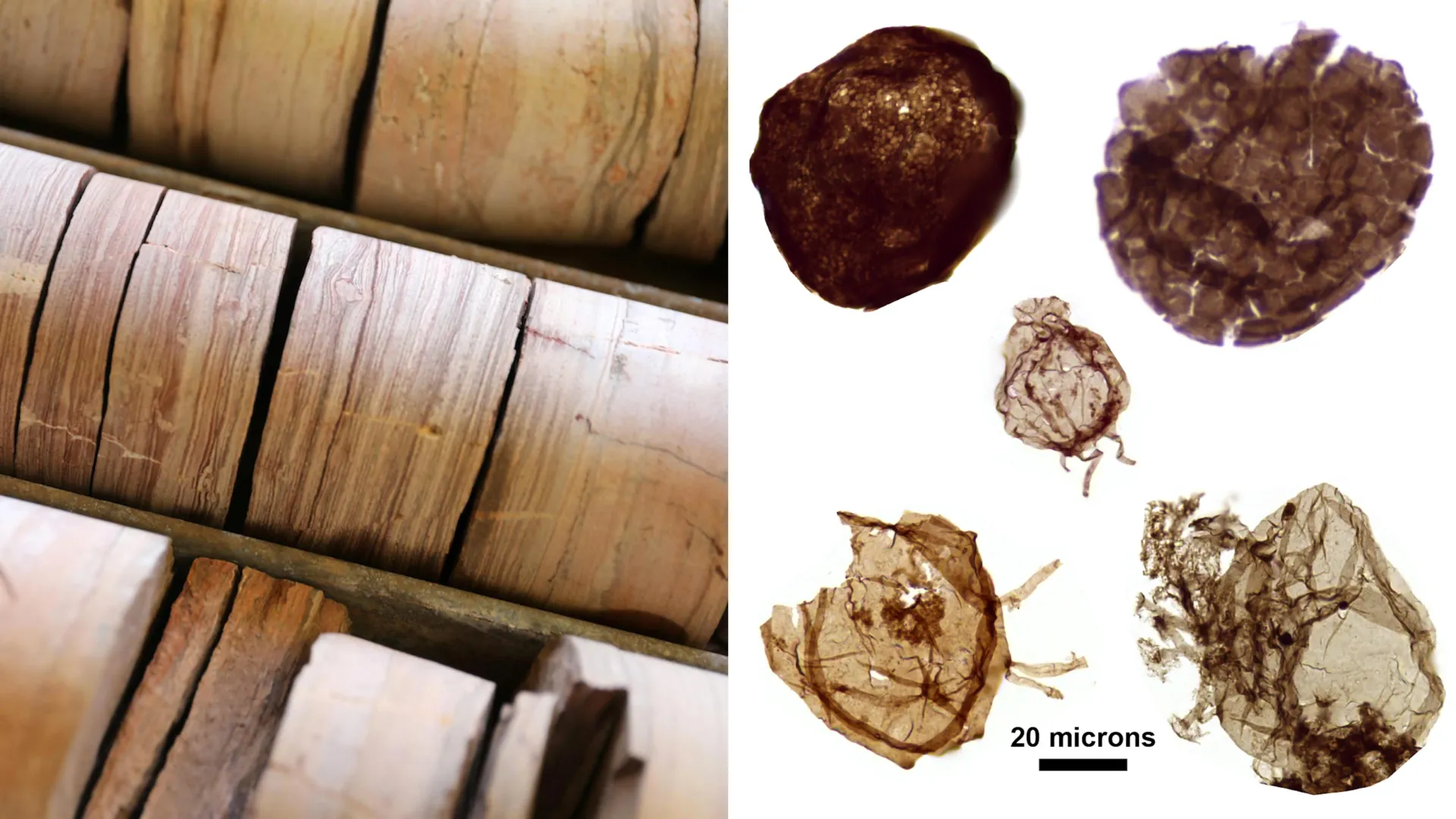
- Strict Correlation: The researchers identified a clear, binary trend. Eukaryote fossils were present only in samples deposited in oxygenated environments.
- Environmental Diversity: These organisms were found in a variety of settings, from coastal mudflats to open-sea environments, provided that oxygen was present.
- Prokaryotic Resilience: In contrast, samples taken from oxygen-free, or "anoxic," environments contained only simple prokaryotic forms.
This provides overwhelming evidence that while some modern eukaryotes have evolved specialized survival mechanisms to live without oxygen, the ancestral lineages were strictly oxygen-dependent. Oxygen was not merely a secondary byproduct of their environment; it was the metabolic fuel that allowed them to expand their cellular complexity.
Official Perspectives and Scientific Context
The implications of this study extend far beyond the borders of Australia. Dr. [Name/Lead Researcher, if applicable], the study’s lead author, notes that "resolving the drivers and context of the major evolutionary leap represented by early eukaryotes is one of the major outstanding questions in the life sciences."
The Northern Territory Geological Survey (NTGS) has been instrumental in providing access to these cores, emphasizing the value of preserving geological samples. "These drill cores represent a permanent record of Earth’s history," says a spokesperson from the survey. "We are only just beginning to realize that these rocks contain more than just mineral resources—they contain the biological history of the planet."
Furthermore, the study aligns with broader genomic insights. Geneticists mapping the ancestors of eukaryotes have long hypothesized that the symbiosis between the archaeon and the bacterium required an oxygen-rich context to flourish. This study provides the empirical "ground truth" that was previously missing from the genomic models.
Implications: Our Place in the Cosmos
Why does the oxygen preference of a 1.5-billion-year-old microbe matter to us today?
First, it reframes our understanding of Earth’s history. It suggests that the rise of complex life was not just a genetic "accident," but an environmental inevitability tied to the oxygenation of the oceans. This "Great Oxygenation Event" acted as a gatekeeper, and only those organisms capable of harnessing that oxygen could pass through to become the ancestors of all plants and animals.
Second, it informs our search for extraterrestrial life. If complex, eukaryotic-style life requires specific environmental conditions—such as the availability of oxygen—then our search for life on exoplanets must prioritize those worlds that show similar atmospheric and oceanic chemistry. If the origin of complex life is tied to the transition from an anoxic to an oxygenated world, then the "biosignatures" we look for in the telescopes of the future must include high levels of atmospheric oxygen.
Finally, the study serves as a humbling reminder of the hidden nature of discovery. The fossils that allowed us to better understand our own origins were sitting in an open-air warehouse, misidentified as mere industrial waste. It suggests that the next great breakthrough in our understanding of the universe might not require a multi-billion-dollar mission to Mars, but rather a closer look at the "boring" rocks we have already collected.
As the team continues to analyze these 12,000 fossils, the story of our biological lineage becomes clearer. We are the descendants of those early oxygen-breathers that colonized the ancient seas of Australia, and in the patterns of their fossilized remains, we find the echo of our own existence. The "eukaryotic revolution" was not just a change in cell shape; it was the dawn of a new kind of life, one that has spent the last 1.5 billion years refining itself to survive, adapt, and eventually, to ask the question: Where did we come from?


 Suro Senen
 Layla Zulfa
 Nana Wu
 Asro
Asro
 Jia Lissa
 Neng Nana
 Siti Muinah