
 Pevita Pearce
In the modern digital landscape, the line between influencer marketing and traditional direct-response advertising is blurring to the point of invisibility. As brands pivot toward performance-driven metrics, the "creator economy" has evolved from a realm of brand awareness and high-production sponsorships into a systematic, data-heavy engine for commerce. Nowhere is this more apparent than in the rise of TikTok Shop, where the recipe for success is no longer about securing a singular, high-cost celebrity endorsement, but rather orchestrating a massive, automated symphony of smaller, niche creators.
The Evolution of Influence: From Super Bowls to Shop Feeds
For years, influencer marketing was viewed through the lens of traditional advertising. When a mega-creator like MrBeast commands a fee approaching the cost of a Super Bowl spot, the objective is typically broad-reach brand awareness. However, the current iteration of the creator economy, specifically within the TikTok Shop ecosystem, mimics the "programmatic-ification" of digital display ads.
Brands are increasingly abandoning the "one-big-hit" mentality in favor of the "long-tail" approach. This involves casting a wide net, distributing thousands of product samples to micro-influencers, and relying on data-backed performance incentives to drive sales. This shift represents a fundamental change in how marketing dollars are allocated: it is the influencer equivalent of the early days of affiliate marketing, where success is measured not by impressions, but by conversions.
Chronology of the Shift: The Data-Driven Pivot
The transition to this model did not happen overnight. It is the result of years of refinement in how brands interact with platforms and creators:
- The Early Phase (The "Wild West"): Initially, brands treated TikTok creators similarly to Instagram influencers, focusing on one-off, flat-fee sponsorships. Results were inconsistent, and the ROI was difficult to attribute directly to specific pieces of content.
- The Rise of the Affiliate Model: As TikTok Shop introduced more robust affiliate tools, the platform began to resemble a retail marketplace. Brands started testing the viability of commission-based payments.
- The Automation Era: Firms like Flywheel and Reacher emerged to bridge the gap between brands and the massive, decentralized pool of creators. This enabled the "automated outreach" model, where thousands of creators are contacted simultaneously to solicit user-generated content.
- The Current Maturity: Today, the industry is moving toward a hybrid model. Brands are using high-volume sampling to identify top-performing creators, then locking those creators into recurring, performance-incentivized partnerships.
Supporting Data: Why "More" Means "Better"
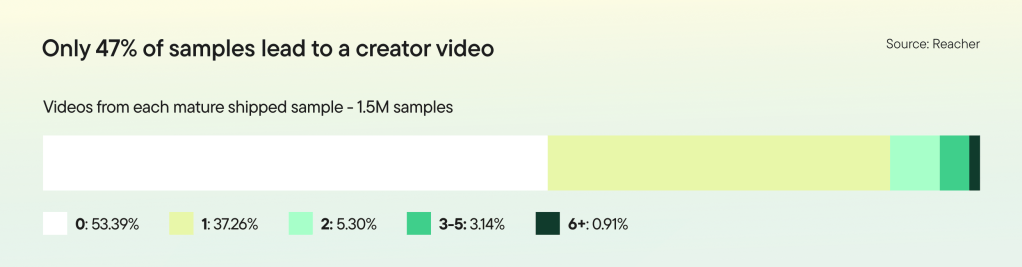
A new report from Omnicom-owned Flywheel, utilizing data from the affiliate software provider Reacher, underscores the necessity of scale. Analyzing a dataset of 1.5 million samples sent by brands, the numbers tell a clear story: only 47% of creators who receive a sample actually produce a video, and only 14% manage to generate a sale.
This low hit rate might discourage a traditional marketer, but for those operating in the TikTok Shop ecosystem, it is simply a cost of doing business. The strategy is built on the reality that "shots on goal" are the primary driver of Gross Merchandise Value (GMV).
The Compounding Effect of Video Volume
The data reveals a stark contrast between sporadic content and consistent output:
- Single-Video Creators: On average, a creator posting a single video about a product generates roughly $7.19 in sales.
- High-Frequency Creators: When a creator posts 20 or more videos, the average revenue per video jumps to $74.07.
This exponential increase suggests that the algorithm—and the audience—responds to consistency. For brands, the goal is to incentivize creators to move from one-off posters to repeat collaborators. As Deren Baker, CEO of Flywheel Ventures, notes, "A lot of brands get really freaked out when you tell them to be successful you’re going to need 5,000 videos live a month." Yet, those who embrace this volume-heavy strategy are the ones seeing the highest returns.
Official Perspectives: The "Recipe" for Success
Deren Baker emphasizes that while the volume is essential, the strategy requires nuance. "You’ve got to send out thousands of samples to affiliates at the very beginning, at least, to get a broad enough pool of affiliates to work with," Baker explains. "And then you narrow that down over time into that concept of long-term, repeatable creator relationships."
Baker draws a direct parallel to the classic affiliate models that dominated the early web. "It’s literally the same affiliate thing that you and I who have been doing this for too long would think of in the past," he says. The difference is that the "recipe sites" and "mom-blogs" of the early 2000s have been replaced by niche TikTok creators who possess a high degree of trust with their hyper-specific audiences.
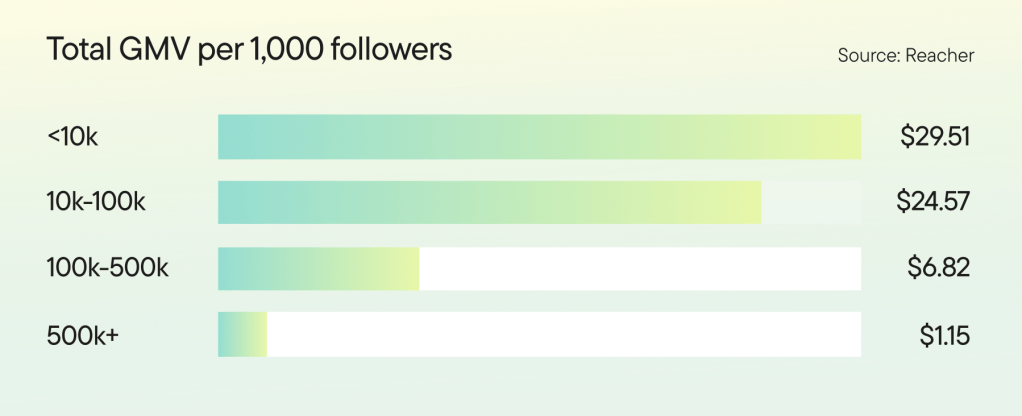
When asked if this represents the direct-response side of the creator economy, Baker confirms: "Absolutely. I think you nailed it. We’re not saying if you pay a creator with 500,000 followers to create a Shop video for you, you’re not going to generate any money. It’s just the efficiency side of it is a lot lower because their audience is used to brand things. Direct response is a much more efficient way to generate sales if that’s your goal."
Implications: The Blurring of Two Worlds
The professionalization of TikTok Shop is leading to a fascinating convergence of two distinct influencer marketing worlds: the "mega-creator" brand-awareness model and the "micro-creator" performance-marketing model.
The Rise of Hybrid Compensation
While TikTok Shop was built on a commission-only foundation, the market is maturing. The current recommendation for brands is to offer a tiered compensation structure:
- Commission-Only: The entry point for mass-scale sampling.
- Flat Fees: Reserved for creators who have proven their ability to drive consistent sales.
- Performance Bonuses: Incentivizing top-tier affiliate creators to prioritize the brand over the long term.
This hybrid approach allows small, niche creators to achieve the level of financial stability previously reserved for celebrities. Conversely, larger creators are increasingly looking to tap into the affiliate market, realizing that a steady stream of commission income is often more sustainable than the volatility of sporadic, high-dollar brand sponsorships. As Baker aptly summarizes, "That world is blurring in a really interesting way that wouldn’t have been true a year and a half ago."
Industry Context: Broader Market Trends
The professionalization of creator marketing is occurring against a backdrop of broader shifts in the media and technology sectors:
- Corporate Layoffs and Efficiency: Companies like Netflix are navigating workforce reductions (reportedly 5% of staff), signaling a broader corporate push toward operational efficiency.
- The Reshoring of Production: Data from 2024 shows that the share of studio TV spending in the U.S. has dropped from 94% in 1999 to 64%, indicating a shift in global production strategies.
- The Trust Deficit: Reports of scams on platforms like TikTok have highlighted the dangers of "loose" advertising rules, forcing platforms to reckon with the trade-offs between open marketplaces and consumer safety.
- The Data War: Retailers like Walmart are aggressively integrating their shopper data with linear TV and CTV platforms, further tightening the loop between ad exposure and purchase.
Conclusion: The Path Forward
The "Future of TV" is increasingly a story about commerce. As the barriers between content creation and retail continue to dissolve, the brands that win will be those that master the logistics of scale. By combining automated outreach, high-volume sampling, and sophisticated, performance-based compensation models, marketers are turning the chaotic, unpredictable world of social media into a reliable, scalable sales channel.
For the modern creator, the message is clear: the ability to generate consistent, data-backed sales is the new currency. For the brand, the message is equally direct: success is no longer about the perfect ad—it is about the perfect system of thousands of smaller, targeted shots on goal. As we look toward the future, the integration of these affiliate-style strategies will likely define the next generation of digital retail, permanently changing how we value influence in the digital age.

 Lina Irawan
 Lina Hope
 Nana Wu
 Asro
Asro
 Jia Lissa
 Neng Nana
 Dwi Wanna
 Siti Muinah