
 Neng Nana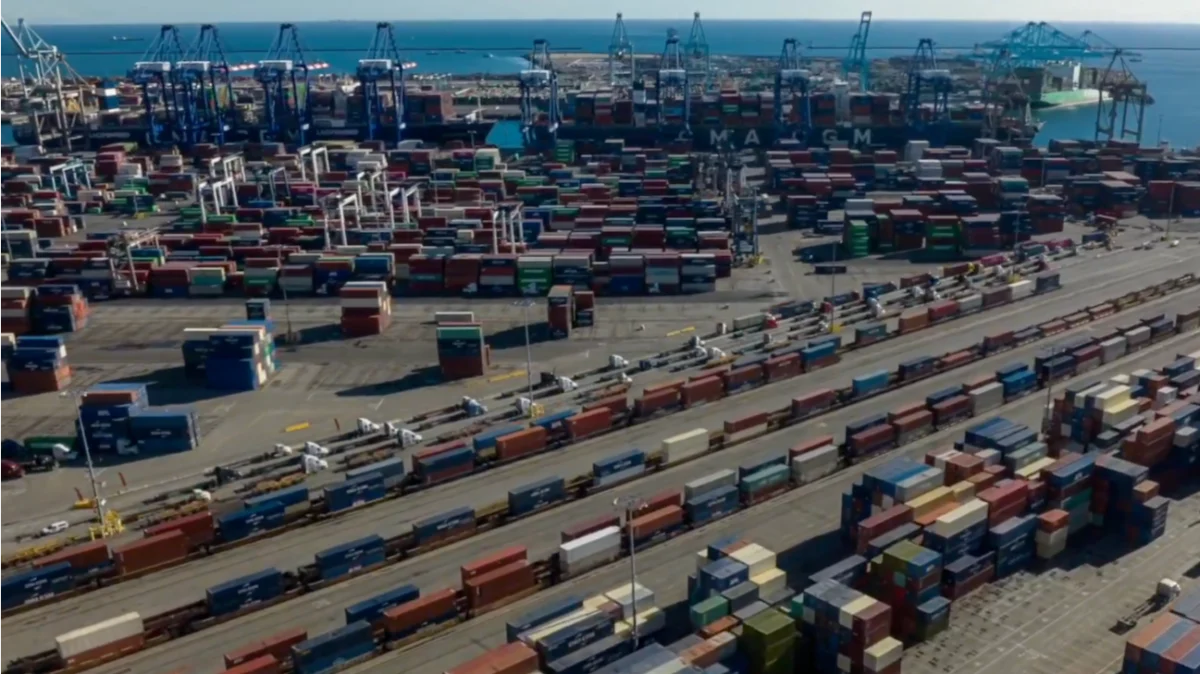
The Port of Los Angeles has officially rewritten the record books. In a stunning display of operational capacity and economic resilience, the harbor handled 1.42 million twenty-foot equivalent units (TEUs) in September, marking the busiest single month in its history. This milestone does more than just highlight the port’s throughput; it stands as the highest monthly volume ever recorded by any port in the Western Hemisphere, signaling a dramatic shift in global supply chain dynamics.
Executive Director Gene Seroka announced the figures earlier this week, attributing the surge to a confluence of factors: shifting global trade routes, persistent consumer demand, and tactical adjustments by cargo owners navigating a volatile geopolitical landscape. As the industry looks toward the final quarter of 2026, the Port of Los Angeles has cemented its position as the primary gateway for U.S.-bound goods.
The Anatomy of a Record-Breaking Quarter
The September performance was not an isolated spike but the culmination of an aggressive upward trend that began mid-year. The third quarter (July through September) saw nearly 3 million TEUs pass through the port’s terminals—the strongest quarter in the facility’s history. When combined with June’s figures, the port moved nearly 4 million containers in a four-month span.
Breakdown of September Volumes
- Loaded Imports: The port processed 546,000 loaded TEUs, a 19% increase year-over-year and a staggering 26% above the five-year average for the month.
- Exports: Loaded exports saw a healthy 10% uptick, reaching 126,000 TEUs.
- Equipment Repositioning: A record 371,000 empty containers were handled as ocean carriers scrambled to reposition equipment back to Asian manufacturing hubs to sustain the cycle of trade.
Through the first nine months of 2026, the port has processed approximately 8.1 million TEUs, representing a 3% growth compared to the same period in 2025. This steady climb suggests that despite widespread economic uncertainty, the American consumer’s appetite for imported goods remains largely unabated.
Geopolitical Shifts and the "China Plus" Strategy
One of the most profound revelations from Seroka’s briefing was the changing map of global sourcing. For decades, the Port of Los Angeles was effectively a pipeline for Chinese manufacturing. Today, that narrative is diversifying. China’s share of the port’s total business has retreated from 60% to 40%.
Vietnam has emerged as the port’s second-largest trading partner, with volume originating from the Southeast Asian nation quadrupling over the last ten years. Meanwhile, Thailand has solidified its place in the port’s top five trading partners for the first time.
The Complexity of Diversification
During the briefing, guest expert Professor Willy Shih of Harvard Business School provided critical context for these shifts. He noted that while companies are moving away from an exclusive reliance on China, the shift is often more cosmetic than structural. "Companies are optimizing for options rather than lowest cost," Shih explained, noting that the frequent policy changes and tariff threats make long-term planning difficult.
Shih pointed out that much of the trade now attributed to Vietnam or Mexico still relies heavily on Chinese-made components. Building fully independent, comparable supplier networks in regions like Mexico is a monumental task that could take upwards of a decade to fully realize. Consequently, while the source of the finished goods is moving, the upstream dependence on China remains a significant, albeit evolving, factor in global logistics.
Strategic Divergence: Why Los Angeles is Winning
The surge in volume at Los Angeles is not merely a reflection of increased demand; it is a testament to tactical cargo routing. Shippers are increasingly pivoting away from traditional routes through the Panama Canal. Persistent drought-related constraints in the canal, combined with the rising costs of fuel and insurance associated with navigating the Middle East, have rendered the traditional "all-water" route to the U.S. East Coast less attractive.
As Seroka noted, the value proposition of the West Coast has returned to the forefront. "Shorter, faster transits have become more valuable," he said. By choosing Los Angeles, shippers can bypass the delays and uncertainties plaguing global maritime chokepoints, ensuring that holiday inventories reach retail shelves on time.
Operational Realities: The View from the Docks
With record-breaking volumes come operational challenges. Currently, the port is managing the influx with notable efficiency, with large vessels being turned around in roughly four days. Truck turn times—a traditional bottleneck for the Southern California supply chain—remain healthy.
However, the port is not without its concerns. Seroka specifically highlighted rail dwell times as a critical metric that requires constant monitoring. As the port transitions from moving late-summer goods to the high-volume holiday replenishment phase, the inland movement of cargo via rail will be the ultimate test of the system’s endurance.
Looking ahead, the port expects October volume to hit approximately 900,000 TEUs. This projection is underpinned by several factors:
- Schedule Disruptions: Typhoon activity in Asia has caused temporary bottlenecks, leading to "roll pools" where cargo is held over for subsequent sailings.
- Holiday Front-Loading: Importers are rushing to secure inventory ahead of the peak holiday shopping season.
- National Holidays: The lead-up to China’s national holidays has traditionally created a sprint to get goods out of factories, which keeps terminal throughput elevated.
Tariffs and the Uncertainty Principle
Despite the current success, the elephant in the room remains the unpredictable nature of trade policy. Tariffs, according to Seroka, are the single greatest source of uncertainty for importers. Logistics managers are currently forced to make rapid-fire decisions based on shifting cost structures, consumer demand forecasts, and the looming threat of new policy deadlines.
While purchase orders out of Asia remain "solid" for the immediate future, Seroka admitted that the visibility into November and December remains murky. The industry is operating in an environment where historical data is less predictive than it once was, and agility has become the most valuable currency in the shipping sector.
Looking Forward: A Resilient Future
The record-breaking performance of the Port of Los Angeles serves as a microcosm for the broader global supply chain. It illustrates a transition from the hyper-efficient, "just-in-time" model of the pre-pandemic era toward a more resilient, "just-in-case" strategy.
For the Port of Los Angeles, the goal for the remainder of 2026 is clear: maintain the momentum while preventing the kind of congestion that crippled the supply chain in 2021 and 2022. By leveraging its scale, investing in technology, and remaining the primary alternative to the constrained transit routes of the world, the port has proven that it is not only capable of handling the current surge but is prepared to serve as the backbone of U.S. trade for the foreseeable future.
As industry leaders gather later this month at events like the Future of Freight Festival (F3) in Chattanooga, the discussions will undoubtedly center on how to sustain this momentum. The challenges of compliance, cargo theft, and infrastructure investment remain, but for now, the docks in Southern California are humming with the sound of a record-setting year. The Port of Los Angeles has set the bar, and the global logistics community is watching to see if it can be sustained through the end of the year.

 Pevita Pearce
 Ammar Sabilarrohman
 Nana Wu
 Asro
Asro
 Jia Lissa

 Dwi Wanna
 Siti Muinah