
 Asro
Asro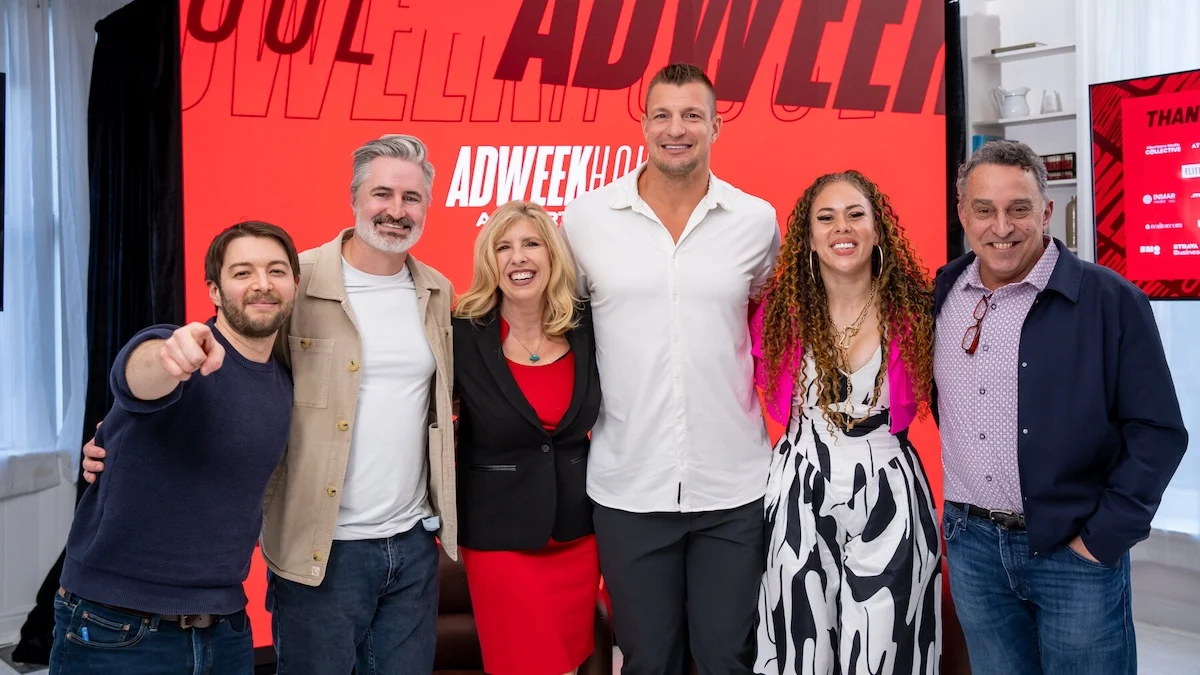
This feature was created in partnership with Fluent.
In an era where consumers possess an almost supernatural ability to sniff out inauthenticity, the traditional transactional model of marketing is undergoing a seismic shift. Today, shoppers are no longer just buying products; they are investing in ideologies. For modern enterprises, the bridge between "brand awareness" and "loyal advocacy" is built on the foundation of authentic purpose.
During a recent ADWEEK House Advertising HQ panel, hosted in collaboration with the data-driven marketing platform Fluent, industry leaders gathered to dissect the nuances of this evolution. The central thesis was clear: Purpose is not a corporate social responsibility (CSR) checkbox—it is a performance multiplier. When a brand’s mission resonates with the core values of its audience, the resulting emotional connection creates a competitive moat that price-cutting and flashy advertising simply cannot replicate.
The Architecture of Purpose: Moving from Transaction to Transformation
For many CMOs, the challenge lies in the "how." How does a company move beyond vague mission statements toward tangible, performance-driving action?
David Young, VP of retail media at DICK’S Sporting Goods, argues that the transformation begins with self-recognition. "People need to recognize themselves in your message and what you stand for," Young noted during the panel. At DICK’S, this manifests as a deep-seated belief that sports are not merely recreational activities but catalysts for life-changing personal growth for athletes of every background. By framing the brand’s identity around this universal human potential, DICK’S transcends the "retailer" label, positioning itself as a partner in the consumer’s personal journey.
Jeanniey Walden, CMO of Fluent, expanded on this by emphasizing the "after-care" of the customer experience. Too often, brands view the point of sale as the finish line. Walden advocates for a total paradigm shift: the transaction is merely the kickoff of a long-term relationship. "The transaction is just the beginning of an entire journey that gives you purpose for what we’re all doing every day," she explained. By maintaining engagement and demonstrating appreciation long after the purchase, brands provide the consistent value that turns a one-time buyer into a lifelong brand evangelist.
Chronology of a Shift: Why Authenticity Matters Now
The move toward purpose-driven commerce did not happen overnight. It is the result of a decade-long evolution in consumer behavior, accelerated by the digital age’s radical transparency.
- 2010–2015: The Rise of the Conscious Consumer: Early digital advocacy groups began using social media to highlight corporate malfeasance, forcing brands to be more transparent about their supply chains and internal policies.
- 2016–2020: The Expectation of Stance: Consumers began demanding that brands take positions on social and political issues. "Silence" became a statement in itself, often leading to public backlash.
- 2021–Present: The Integration Phase: We have entered the era of the "Integrated Brand." Purpose is now being baked into the product design, supply chain, and customer service models rather than being siloed into a marketing department.
This timeline reflects a maturing market where the "performative" branding of the late 2010s is being replaced by the "action-based" branding of the 2020s.
Real-World Application: Moving Beyond Performative Marketing
One of the most persistent criticisms of purpose-driven marketing is that it is often performative—a "marketing stunt" meant to garner positive press without changing the fundamental behavior of the corporation. To avoid this trap, leadership must prioritize actions that reflect values, even when those actions are difficult or costly.
Perry Kamel, founder and CEO of DNA Vibe, provided a powerful example of this during the panel. When faced with the opportunity to support recovery efforts in Ukraine, Kamel didn’t look at the ROI spreadsheet; he looked at the moral imperative. DNA Vibe partnered with MoveUkraine to establish a production facility directly within an active conflict zone. The goal was twofold: to provide employment to local residents and to distribute specialized recovery devices to wounded veterans and civilians who lacked access to adequate care.
"How could we not do this?" Kamel asked, underscoring that for true leaders, the "why" is self-evident. "Purpose is extremely powerful. It’s the first thing, but it’s got to be the real thing." By putting his company’s infrastructure on the ground, Kamel proved that purpose is a commitment of resources, not just a line of ad copy.
Supporting Data: The Trust-to-Revenue Pipeline
The correlation between purpose, trust, and revenue is increasingly supported by market analytics. According to recent industry benchmarks, brands that are perceived as having a strong, authentic purpose see higher customer retention rates and a greater lifetime value (LTV) per customer.
Lois Cook, CEO of FootballHer and a professional player with the WFA, brings an athlete’s perspective to this data. For her, partnerships are not just business contracts; they are reflections of her own brand identity. "I have to be credible; there has to be integrity in what I do," Cook stated. "I can’t just join a company that doesn’t stand for anything, because who am I at that point?"
Cook’s philosophy highlights the "Integrity Tax"—the idea that aligning with low-integrity partners ultimately erodes the personal brand of the influencer or athlete. Conversely, when brands align with high-integrity partners, they borrow that credibility, creating a cycle of mutual trust.
Fluent’s CMO Jeanniey Walden summarized this cycle succinctly: "When you create trust, you create belief in a brand. When you create belief in a brand, that’s where the business grows." This "Belief Loop" is the primary engine of modern enterprise growth.
The Playbook: Lessons from the Field
As the panel concluded, the focus shifted to the practical application of these lessons. Even with the best intentions, a brand can fail if it lacks execution and a clear strategy.
Robert "Gronk" Gronkowski, 4X Super Bowl champion and entrepreneur, drew a direct parallel between athletic discipline and marketing strategy. "It doesn’t matter how talented you are in the NFL," Gronk noted. "If you don’t know the playbook, you’re not going to play."
In the context of marketing, the "playbook" is the strategy that turns broad, abstract ideas about purpose into concrete business results. It involves data-driven insights, consistent communication across channels, and the discipline to stick to the mission even when quarterly pressures suggest taking a shortcut.
The Cost of Commitment: A Case Study in Character
Walden shared a poignant, personal story from the early days of her career that illustrated the ultimate test of brand purpose: what happens when the money runs out?
While working at a startup, she faced a crisis when the company’s CFO mismanaged the media budget for a client who had joined the startup specifically because they trusted her. Rather than abandoning the client or shifting the blame, Walden took out a second mortgage on her home to fund the media spend herself. The next day, she launched her own agency with that same client as her first account.
"It’s really important that you show up," she said. "When people put their trust in you, you have to be there for them." This level of personal accountability is the pinnacle of purpose-driven leadership. It demonstrates that the brand is not a faceless entity, but a collection of people willing to sacrifice for the promises they make to their customers.
Implications for the Future of Marketing
The implications of this panel are clear for CMOs and marketing directors:
- Stop Selling, Start Solving: Products are commodities; solutions are services. If your brand isn’t solving a problem that aligns with your stated purpose, you are likely to be commoditized by a cheaper competitor.
- Audit Your Actions: Conduct a "Purpose Audit." Does your internal policy, supply chain, and hiring practice match the narrative in your Super Bowl commercial? If not, you are vulnerable to accusations of performative marketing.
- Invest in Long-Term Relationships: Shift budget allocation from high-frequency, low-touch acquisition campaigns to lower-frequency, high-touch loyalty and retention programs.
- Prioritize Integrity over Expediency: As demonstrated by the leaders on the panel, the long-term gains of maintaining a reputation for integrity far outweigh the short-term spikes in performance metrics achieved through deceptive or hollow marketing.
In conclusion, the conversation at the ADWEEK House made it clear that we are moving toward a future where "business as usual" is no longer acceptable. The brands that win will be those that view their customers as human beings on a journey, and themselves as the reliable, purposeful partners in that journey. Whether it is through building production facilities in conflict zones or taking a personal risk to protect a client’s trust, the message is the same: Purpose is the ultimate performance engine. If you want to play the game, you need to know the playbook—and the playbook now requires you to mean what you say.

 Layla Zulfa
 Iffa Jayyana
 Nana Wu

 Jia Lissa
 Neng Nana
 Dwi Wanna
 Siti Muinah