
 Suro Senen
This reporting is the result of a collaborative investigation between Grist and Interlochen Public Radio in northern Michigan.
The promise of federal assistance for private landowners struggling to recover from catastrophic weather events has effectively evaporated. As climate-driven disasters increase in frequency and severity, the Emergency Forest Restoration Program (EFRP)—a lifeline designed to help nonindustrial forest owners clear debris, manage invasive species, and replant damaged acreage—has run dry.
The U.S. Department of Agriculture (USDA) confirmed this week that the program has reached its fiscal ceiling. "Currently, requests for financial assistance through the Emergency Forest Restoration Program exceed the funding currently available," a USDA spokesperson stated. For thousands of landowners across the United States, this announcement transforms a long-anticipated recovery effort into a state of indefinite, expensive uncertainty.
The Anatomy of a Funding Crisis
Created by Congress in 2008 as part of the Farm Bill, the EFRP was designed to provide critical disaster relief to private forest owners who are often overlooked in the wake of large-scale environmental trauma. The program reimburses landowners for up to 75 percent of the costs associated with rehabilitating woodlands damaged by natural disasters.
Nearly two years ago, Congress appropriated $357 million for the program, declaring the funds would "remain available until expended." However, the sheer volume of climate-linked disasters—ranging from the devastating 2024 Atlantic hurricane season to massive ice storms in the Midwest and pest infestations in the South—has exhausted that capital far faster than lawmakers anticipated.
The collapse of the funding pipeline is not merely a bureaucratic hurdle; it is a profound failure of disaster preparedness. With the federal coffers empty, the Farm Service Agency (FSA), which oversees the program, has effectively halted the distribution of aid, leaving hundreds of forest restoration plans gathering dust.
A Chronology of Delays and Confusion in Michigan
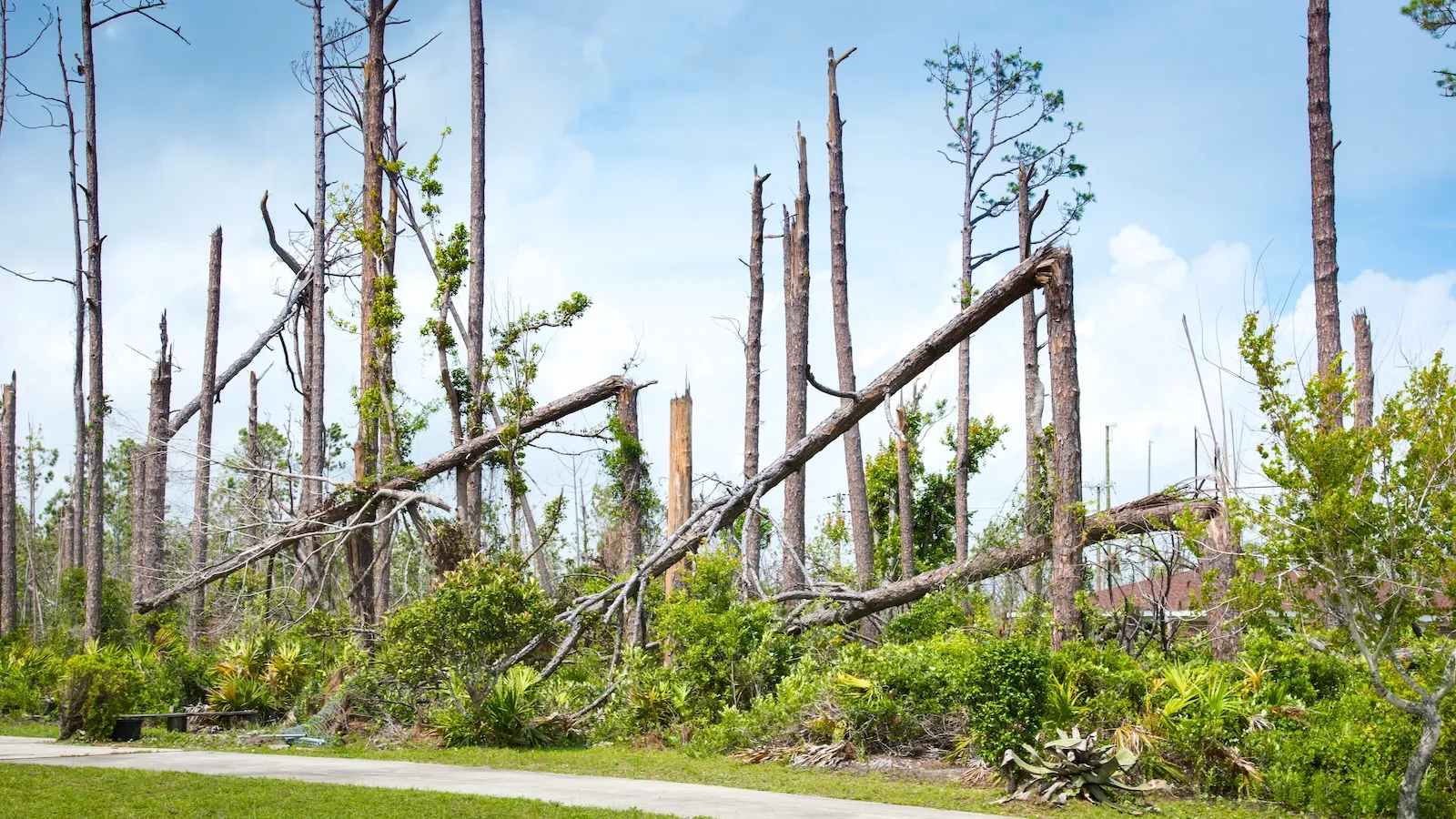
For landowners in northern Michigan, the struggle for assistance began in the wake of a severe ice storm in March 2025. The storm was a transformative event for the region, leaving approximately 3 million acres of forest compromised. In just 48 hours, the accumulation of ice snapped branches and toppled timber across 12 counties, creating a landscape of jagged stumps and dangerous debris.
The timeline of the federal response has been characterized by hesitation and procedural friction:
- March 2025: A catastrophic ice storm strikes northern Michigan, causing widespread destruction to private and public forests.
- May 2025: After months of lobbying and assessment, the USDA finally invites Michigan landowners to apply for EFRP assistance.
- Late 2025 – Early 2026: Landowners and local foresters report significant delays, confusion regarding eligibility requirements, and a near-total lack of communication from federal officials.
- Spring 2026: Parts of the region are hit by a secondary ice storm, compounding the damage from the previous year and highlighting the urgency of the initial restoration efforts.
- October 2026: The USDA confirms that EFRP funding is exhausted nationwide, effectively freezing pending applications.
For many Michigan applicants, the process has been defined by what local foresters describe as a "square peg in a round hole" scenario. Because the local FSA offices primarily deal with agricultural crops—soybeans, corn, and dairy—they were ill-equipped to evaluate the complex, long-term needs of hardwood forests. "You had a lot of folks who had no clue about the forest trying to wedge an agricultural program into the woods," said Tony Fox, a forester based in Lake City, Michigan, who assisted with more than a dozen restoration plans. "There was a steep learning curve."
The Economic and Environmental Stakes
The forest industry is the backbone of northern Michigan’s economy, contributing billions of dollars annually through wood products, tourism, and recreation. When forests are left to rot, the economic ripple effects are significant.
According to Mike Smalligan, forest stewardship coordinator with the Michigan Department of Natural Resources (DNR), approximately 600 landowners in the state are currently caught in the application process. The DNR does not administer the program, but it stepped in to contract 25 professional foresters to conduct site visits and draw up restoration plans for the FSA. These plans included critical recommendations for fire risk mitigation—such as clearing "ladder fuels" from fallen timber—and strategies for preventing the spread of invasive species that thrive in the light gaps created by storm damage.
The Cost of Inaction
The financial burden of waiting is immense. Planting new trees can cost hundreds of thousands of dollars, a figure that is prohibitive for most small-scale landowners. While the FSA has stated that landowners "may begin restoration work at their discretion," they have warned that any work initiated prior to federal approval is done entirely at the owner’s expense.
"We’ve spent so much time filling out the paperwork, going and doing in-person meetings, having them on site doing visits, for what feels like nothing," says Neil Haney, executive director of the Lake Louise Christian Community in Boyne Falls. The camp suffered damage to roughly 1,700 acres of woodland. For Haney and others, the choice is between paying for restoration out-of-pocket—without any guarantee of reimbursement—or waiting and risking the permanent loss of their timber’s value to rot, pests, and fire.
A National Pattern of Resource Exhaustion
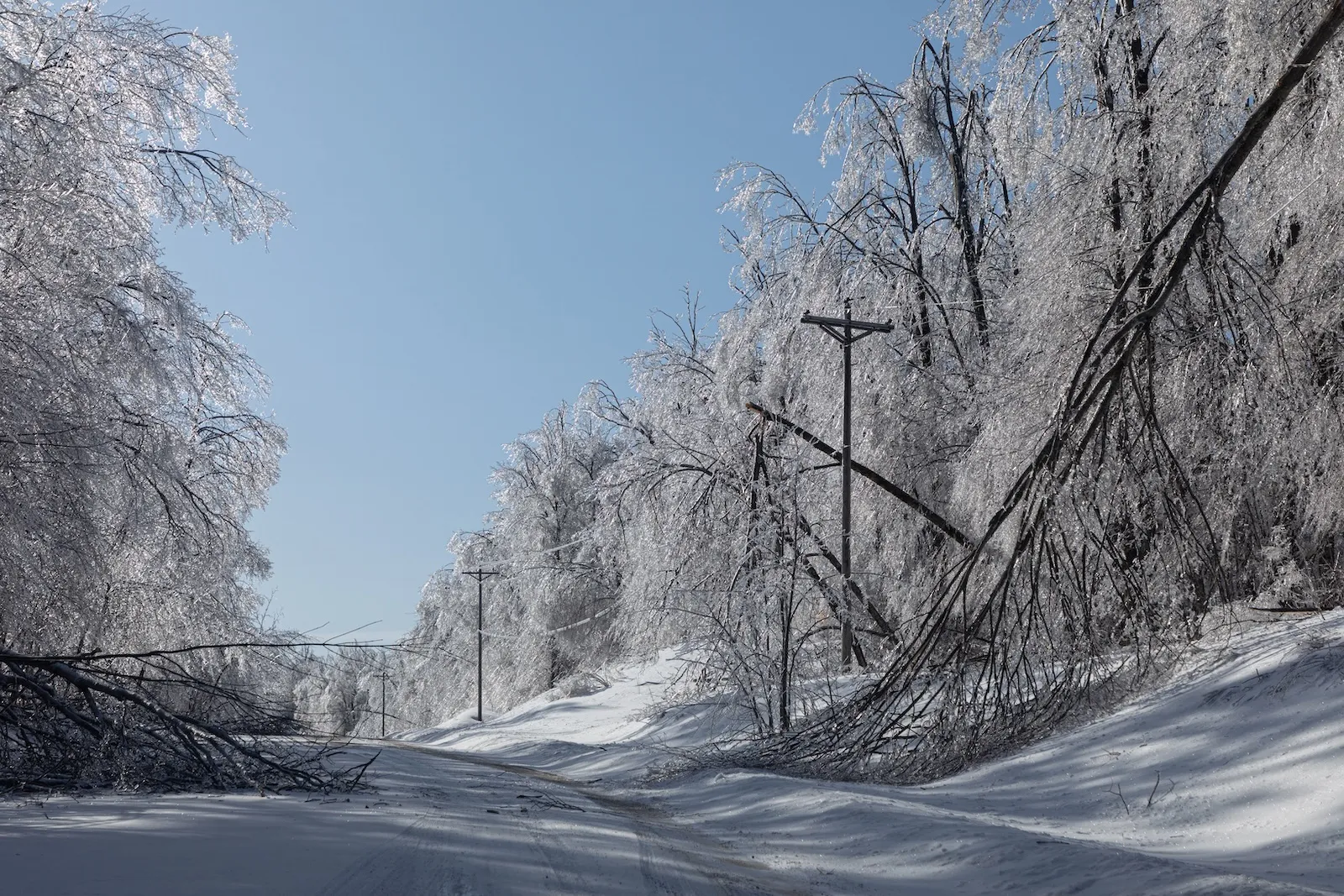
The situation in Michigan is not an isolated incident. The exhaustion of EFRP funds is a national crisis that has stalled recovery efforts in multiple states. Since the last major appropriation in 2024, the USDA has accepted applications for an array of disparate disasters:
- Georgia: A severe southern pine beetle infestation, exacerbated by stressed trees.
- Hawaii: Massive flooding events.
- Minnesota: A major windstorm ("blowdown") requiring extensive clearing.
Gary Michael, a supervisor with the Minnesota Department of Natural Resources, confirmed that like their counterparts in Michigan, Minnesota applicants are currently seeing zero movement on their requests.
The disconnect between disaster timing and legislative funding cycles is a known flaw in the system. Congress has acknowledged that the current model is broken, as it relies on retroactive appropriations that fail to account for the increasing frequency of climate-driven catastrophes. A bill passed this summer attempted to introduce "advance payments" to landowners, but as the funding pool has hit zero, even this legislative fix appears to be a solution for a problem that no longer has the resources to be solved.
Implications for Future Resilience
As the climate continues to shift, experts warn that the lack of consistent funding for forest restoration is a short-sighted approach that will lead to greater costs down the road.
"Our weather conditions are becoming more harsh in many circumstances, so we need to be able to have these pots of funding available," says Logan Hawley, a landowner and forester in Hubbard Lake, Michigan, who has helped dozens of others with their applications. Hawley notes that when restoration is delayed, forests become more vulnerable to disease and fire. Furthermore, damaged forests are less capable of serving their vital role as carbon sinks. America’s forests store nearly 60 billion metric tons of carbon, offsetting roughly 13 percent of the nation’s total emissions. When those forests are left in a state of decay, their capacity to sequester carbon is significantly diminished.
Political Pressure and the Path Forward
Representative Jack Bergman, a Republican representing northern Michigan, has expressed frustration with the federal stagnation. "Landowners shouldn’t have to fight Washington just to get help recovering," Bergman said in a statement. He has called on his colleagues in the House Appropriations Committee to replenish the EFRP, noting that if the government labels a situation an "emergency," the financial response must reflect that urgency.
For now, the landowners of northern Michigan are left to navigate the wreckage on their own. Some, like Neil Haney, have adopted a philosophical approach, acknowledging that nature will eventually heal itself, albeit over a much longer timeline. "Nature will be nature, and it’ll come back," Haney said. "It’ll just take longer."
However, for those whose livelihoods depend on the health of their timber, the wait is far more precarious. As the federal government continues to struggle with the logistics of managing "emergency" funds in an era of constant crisis, the forests of the American heartland serve as a silent, decaying witness to a system failing to keep pace with a changing world.


 Ali Ikhwan
 Nana
Nana
 Raul Delapena Setiawan

 Muslim
 Asep Darmawan
 Neng Nana