
 Lina Hope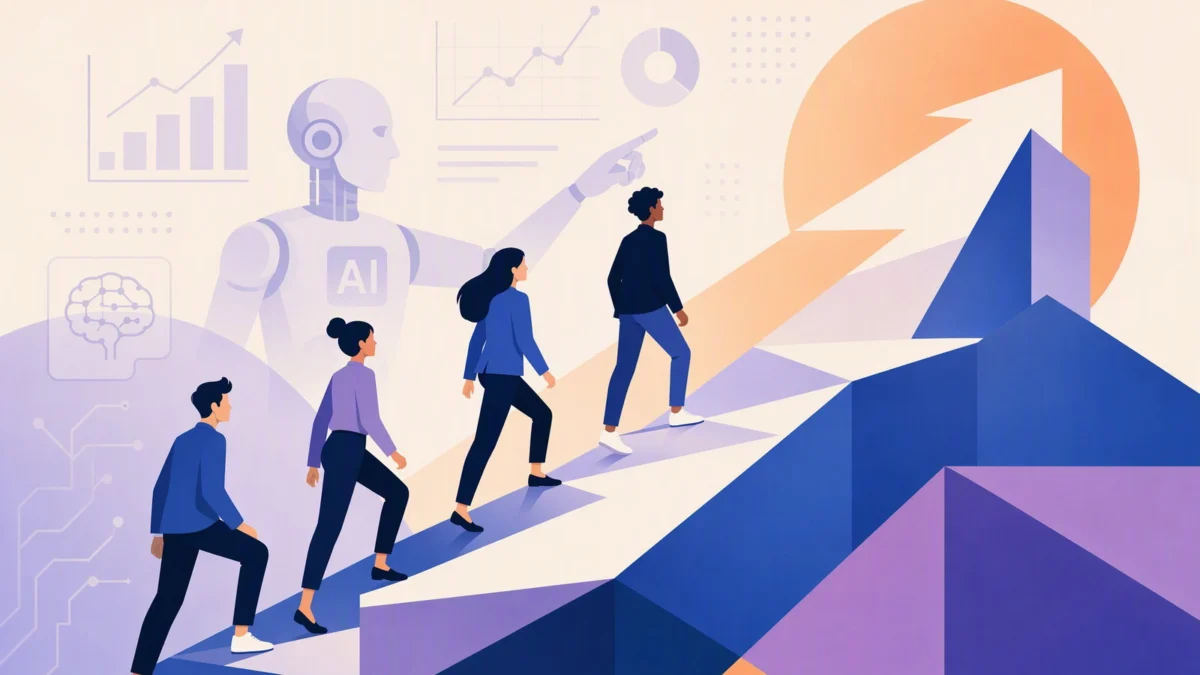
In the traditional corporate hierarchy, the path to the boardroom was often viewed as a marathon—a decades-long journey defined by the slow accumulation of institutional knowledge, the "paying of dues," and the gradual climb through middle management. However, a seismic shift is underway. A new report suggests that the "time-served" model of leadership is being replaced by a "tech-enabled" meritocracy. At the heart of this transformation is generative artificial intelligence (AI), a tool that is not only augmenting productivity but is actively accelerating the ascension of Generation Z into senior leadership roles.
According to the Z-Suite Report: How a New Generation is Evolving the Boardroom, published by the International Workplace Group (IWG), the era of the "Z-Suite" has arrived. The research reveals that a staggering 82% of senior leaders believe AI is fast-tracking the rise of younger talent, while 92% of established executives express a willingness to appoint Gen Z candidates to senior roles—a level of confidence that would have been unthinkable for previous generations at the same stage of their careers.
Main Facts: The AI-Powered Fast Track
The IWG research, conducted among 1,000 company leaders across the United Kingdom and the United States, paints a picture of a corporate landscape in the midst of a fundamental transition. The findings suggest that AI acts as a "knowledge equalizer," allowing younger employees to bypass the traditional years of "learning by osmosis" that once defined the early career experience.
Key highlights from the report include:
- Leadership Acceleration: 80% of senior leaders acknowledge that younger employees are reaching leadership positions significantly earlier than their predecessors.
- The Confidence Catalyst: 78% of Gen Z professionals (aged 21-29) report that AI has increased their confidence in taking on leadership responsibilities, while 79% believe the technology allows them to perform tasks well beyond their current level of seniority.
- Strategic Contribution: Nearly four in five (79%) younger leaders state that AI enables them to contribute more strategically to their organizations, moving them away from administrative "grunt work" and into high-level decision-making.
- Unprecedented Ambition: Reflecting this technological empowerment, 95% of respondents aged 21 to 29 expect to hold a senior leadership role by the age of 30.
Chronology: From Digital Natives to AI Pioneers
To understand the rise of the Z-Suite, one must look at the evolution of the workplace over the last two decades. The "chronology of acceleration" can be divided into three distinct phases:
1. The Era of Tenure (Pre-2010):
Before the digital revolution fully took hold of the workplace, leadership was almost exclusively tied to tenure. Information was siloed, and "experience" was synonymous with having seen specific market cycles or internal processes over many years. The barrier to entry for the C-suite was time.
2. The Digital Transformation Era (2010–2022):
The arrival of Millennials into management coincided with the rise of SaaS, social media, and mobile-first business models. While this era began to prize "digital fluency," the hierarchy remained largely intact. Younger employees were valued for their technical skills, but still required a decade or more to acquire the "soft skills" and strategic oversight necessary for senior roles.
3. The AI Inflection Point (2023–Present):
The democratization of Large Language Models (LLMs) and generative AI marks a turning point. Unlike previous software revolutions, AI mimics cognitive functions. It can synthesize vast amounts of data, draft strategic plans, and provide "instant experience" by analyzing historical precedents. For Gen Z, who entered the workforce during or shortly after the pandemic, AI is not a tool they have had to "adopt"—it is a foundational element of their professional identity.
Supporting Data: Bridging the Experience Gap
The IWG report provides a granular look at how AI serves as a bridge over the "experience gap." One of the most significant barriers to early-career promotion has historically been a lack of broad business context. However, 80% of leaders aged 21 to 29 now state that AI provides them with knowledge that would previously have taken years of experience to acquire.
This "instant expertise" is reflected in how these young leaders spend their time. By automating routine analytical tasks, Gen Z leaders are able to focus on high-level strategy—a domain previously reserved for those with 15+ years of experience. The data shows that 86% of this cohort believe they are progressing faster than any generation before them.
Furthermore, the research highlights a shift in perception among older leaders (those aged 35 and above). Far from being skeptical of their younger counterparts, 92% of these established leaders are ready to embrace Gen Z in the boardroom. This suggests that the value of "AI fluency" is currently outweighing the value of traditional "years on the job" in the eyes of current CEOs and Boards of Directors.
Official Responses and Expert Analysis
Industry experts suggest that the "Z-Suite" phenomenon is a logical progression of the modern hybrid work model. Mark Dixon, Founder and CEO of International Workplace Group, has frequently noted that the flexibility of hybrid work, combined with the power of AI, creates an environment where output and impact are prioritized over physical presence and tenure.
"The research shows that the traditional path to leadership is being rewritten," an IWG spokesperson commented regarding the report. "AI is effectively acting as a mentor in the pocket of every young professional. It provides the data, the structure, and the analytical depth that used to require a team of researchers and years of trial and error. This allows young talent to focus on the ‘human’ side of leadership—vision, empathy, and culture—much earlier."
HR analysts also point out that the willingness of 92% of senior leaders to appoint Gen Z talent reflects a broader corporate anxiety about falling behind in the AI race. Companies are increasingly viewing younger, AI-native employees as "reverse mentors" who can steer the organization through technological disruption.
While the survey focused on the UK and US markets, Human Resources Online (HRO) notes that these trends are highly relevant to the Asian market. In regions like Singapore, Hong Kong, and India, where digital adoption is high and the workforce is increasingly tech-centric, the "AI accelerator" effect is expected to be even more pronounced.
Implications for the Future of Work
The rise of the Z-Suite carries profound implications for organizational structure, talent management, and the very definition of leadership.
1. The Death of the "Entry-Level" Role:
As AI takes over the basic data entry, scheduling, and preliminary research tasks typically assigned to junior staff, the "entry-level" role is evolving. Organizations must now hire for leadership potential from day one, as the transition from "doer" to "manager" is happening faster than ever.
2. The Soft Skills Premium:
If AI can handle the "hard" analytical tasks, the value of human-centric skills will skyrocket. The Z-Suite will need to excel in emotional intelligence (EQ), conflict resolution, and ethical decision-making—areas where AI still lags. The challenge for organizations will be providing "soft skill" training at a pace that matches the "hard skill" acceleration provided by AI.
3. Intergenerational Dynamics:
While the report shows high levels of support for Gen Z leaders, the rapid promotion of younger employees could create friction with "Squeezed Millennials" or Gen X managers who followed the traditional path. Organizations will need to manage these dynamics carefully to prevent resentment and ensure that the wisdom of older generations is still integrated into the Z-led boardroom.
4. Mental Health and Burnout:
The fact that 95% of Gen Z leaders expect to reach the top by age 30 suggests a high-pressure environment. The "acceleration" of a career also means an acceleration of responsibility and stress. Companies must implement robust support systems to ensure that these young leaders have the resilience to match their technological prowess.
Conclusion
The IWG Z-Suite Report serves as a clarion call for businesses to rethink their succession planning. The integration of AI into the workplace is not merely a matter of efficiency; it is a fundamental shift in how human potential is realized. As Gen Z continues to leverage AI to close the experience gap, the boardroom of the near future will be younger, more tech-integrated, and more ambitious than ever before. For the 92% of leaders ready to appoint them, the message is clear: the future of leadership isn’t just coming—it’s already here, and it’s powered by AI.


 Pevita Pearce
 Rifan Muazin
 Basiran
 Neng Nana
 Nana Muazin
 Jia Lissa
 Laily UPN
 Asep Darmawan