
 Pevita Pearce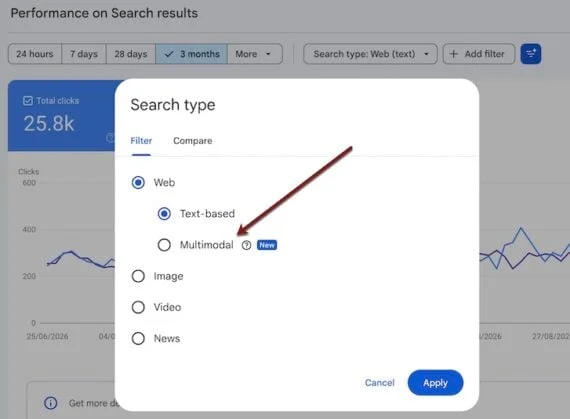
The landscape of search engine optimization (SEO) is undergoing a quiet but seismic shift. For years, the industry has been obsessed with keywords, backlinks, and textual intent. However, as mobile technology advances and user behavior shifts toward visual-first discovery, Google has responded by integrating more robust tracking tools for non-textual search.
Google Search Console (GSC) has recently introduced a powerful new filter designed to capture the performance of URLs viewed or clicked during “multimodal” searches—a term describing the convergence of image-based inputs and search results. This update marks a significant milestone for e-commerce merchants, providing a window into a previously opaque "discovery channel" that shoppers are increasingly using to locate products.
Main Facts: The Emergence of Multimodal Analytics
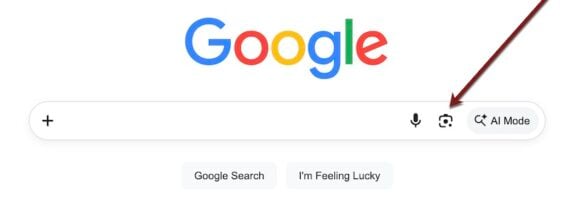
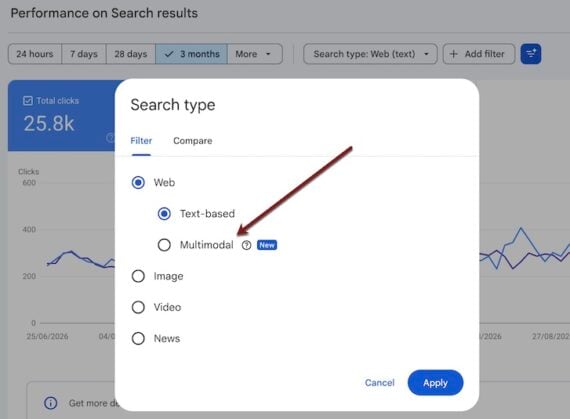
The new filter within Google Search Console represents a departure from traditional performance reporting. Previously, GSC categorized traffic primarily into "Web," "Image," "Video," and "News." The addition of the "Multimodal" filter under the "Web" search type allows merchants to isolate performance data specifically for sessions where a user initiated a search via an image upload or a visual query (often facilitated by tools like Google Lens).
How to Access the Data
To access this new reporting layer, users must navigate to:
Search Console > Performance > Search results > Search type: Web > Multimodal.

It is crucial to understand what this filter provides. Because these are image-based queries, the report does not function like a standard text-query list—there are no traditional search terms to analyze. Furthermore, the report does not display the exact source image the user uploaded. Instead, it provides:
- Impression data: How often your site appeared in response to a visual query.
- Click-through rates (CTR): How effectively your visual assets encourage users to visit your site.
- Average position: Your ranking in the visual search results.
- URL performance: Which specific pages are driving traffic from visual inputs.
A Chronology of Visual Search Evolution
The journey to this moment began long before the "Multimodal" filter was released. Understanding the timeline of this development helps contextualize why this update is a turning point for digital commerce.
- 2017: The Birth of Lens. Google introduced Google Lens, a technology capable of identifying objects, landmarks, and text within images. Initially a niche feature, it slowly became integrated into the core Android experience and the Google mobile app.
- 2020–2022: The Shift to Shopping. Recognizing that users were uploading photos of furniture, apparel, and electronics to find where to buy them, Google began prioritizing "Shop the Look" features and visual match results in their primary SERPs.
- 2023: The Rise of Generative AI. As multimodal AI models (like Gemini) became more capable, the barrier between a "search query" and a "visual input" blurred. Google began experimenting with hybrid queries, where a user could upload a photo and add a text prompt (e.g., "Where can I buy this in blue?").
- 2026 (Present Day): The Transparency Update. Google finally granted webmasters the ability to track this traffic, acknowledging that visual search is no longer a peripheral activity but a core component of the e-commerce funnel.
Supporting Data: Why Visual Search Matters for E-commerce
The importance of this filter cannot be overstated for retailers. Modern consumer behavior data suggests that "visual discovery" is the preferred method for Gen Z and Millennial shoppers, particularly in categories like home decor, fashion, and hobbyist gear.
The Conversion Gap
While traditional SEO focuses on intent-based text searches (e.g., "buy leather boots"), visual search captures "discovery-based" traffic. A shopper might see a pair of boots on a stranger in a coffee shop, take a photo, and immediately search for them. This bypassed the "keyword" stage of the funnel entirely. Without the Multimodal filter, merchants were flying blind, unable to see which product pages were winning these "visual" battles.
The Role of High-Resolution Imagery
Internal performance metrics from retailers who have begun tracking this data show a strong correlation between high-resolution imagery and visual search ranking. When an image is blurry or poorly lit, the "match" confidence score from Google’s algorithm drops, leading to lower impressions in the multimodal results. This provides a clear business case for investing in professional-grade product photography rather than relying on manufacturer-supplied thumbnails.
Official Perspectives and Expert Interpretation
While Google’s documentation on the technical aspects of the filter is precise, industry experts are filling in the gaps regarding strategy.
Marie Haynes, a renowned search analyst, has been vocal about the integration of Generative AI (GenAI) to improve visual search performance. Her recommendation is to leverage AI to identify the "attributes" that a search engine might prioritize when matching an image. By using AI to analyze product photos, merchants can determine if their images are optimized for the specific visual cues—such as texture, color, and angle—that the search algorithm is looking for.
Technical Optimization
Google has emphasized that the "Multimodal" filter is a reporting tool, not a ranking algorithm in itself. However, by observing which pages perform well in the report, merchants can reverse-engineer their visual SEO strategy. If a page performs well in visual search, it is likely due to the following:
- Image Sitemap Submission: Ensuring that high-quality, descriptive images are indexed via an image-specific XML sitemap.
- Structural Integrity: Using descriptive filenames and comprehensive alt-text, which still act as a "textual anchor" for the visual data.
- Contextual Metadata: Ensuring the image is surrounded by relevant, keyword-rich content on the product page.
Implications: The New Frontier of SEO
The introduction of the Multimodal filter has profound implications for how businesses should approach digital marketing.
1. The Death of the "Single Angle" Product Page
E-commerce sites that only feature a front-facing, white-background product image are at a distinct disadvantage. Visual search algorithms rely on identifying objects from various angles. To maximize visibility in the new filter, retailers must diversify their assets to include:
- Close-up macro shots of textures.
- Lifestyle shots showing the product in use.
- Multiple angles (side, back, top-down).
- Color variants to capture users searching for specific aesthetic matches.
2. A Shift in Keyword Strategy
While keywords remain vital, they now serve as the metadata for visual assets. The goal is no longer just to rank for "leather sofa" but to ensure that the image of that sofa matches the latent visual features (color saturation, mid-century design, velvet texture) that a user is looking for when they upload a reference photo.
3. The Need for "Visual SEO" Audits
Merchants must now treat their image libraries with the same rigor as their landing page copy. An audit should include:

- Compression without quality loss: Ensuring images are fast to load but high enough in resolution for the algorithm to "see" the details.
- Structured Data: Implementing
Productschema markup to provide Google with explicit information about price, availability, and brand, which often accompanies the image in the search results.
4. Leveraging AI for Competitive Advantage
As suggested by the latest testing tools, merchants should use GenAI to generate "visual audits." By asking an AI model to describe a product image as if it were a search engine, retailers can identify gaps in their content. If the AI describes the image as "a generic brown chair," but you are selling a "mid-century modern teak lounge chair," your visual metadata and imagery may need a significant overhaul to align with the desired search intent.
Conclusion: Adapting to the Visual Future
The rollout of the Multimodal filter in Google Search Console is a clear signal that the search giant is moving away from a purely text-centric model. For e-commerce merchants, this is an opportunity to reclaim control over how their products are discovered in an increasingly visual digital marketplace.
To stay competitive, retailers must pivot their SEO strategy to include:
- Rigorous Image Optimization: Adopting best practices for image sitemaps and technical metadata.
- Asset Diversification: Providing a wider range of visual inputs for the algorithm to ingest.
- Strategic Monitoring: Using the new GSC filter to track which products are resonating in visual search, and using that data to refine product photography and page content.
The future of search is not just about what we say—it is about what we show. By embracing this shift and utilizing the new tools provided by Google, savvy merchants can turn their product catalogs into highly discoverable visual assets, effectively capturing the attention of shoppers exactly when they are looking to buy.


 Jia Lissa
 Asep Darmawan
 Basiran
 Neng Nana
 Nana Muazin
 Laily UPN