
 Basiran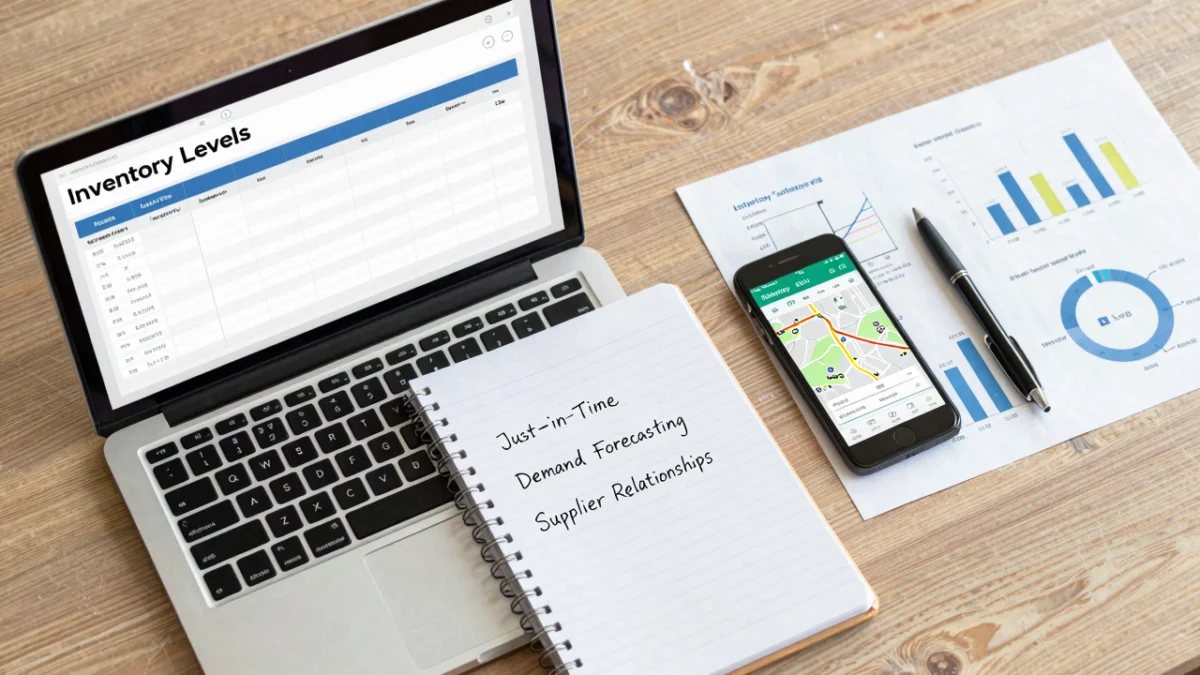
In an era defined by rapid technological shifts and unpredictable consumer behavior, the supply chain has transitioned from a back-office logistical necessity to the primary engine of competitive advantage. For businesses aiming to scale, the ability to harmonize inventory levels with real-time market demand is no longer just an operational goal—it is a survival mandate.
Recent industry analysis indicates that businesses that fail to refine their inventory control mechanisms risk significant capital erosion. Conversely, those that embrace digital transformation and agile methodologies are seeing reductions in holding costs by up to 30% and lead-time improvements ranging between 20% and 50%. This article explores the comprehensive strategies required to build a resilient, efficient, and responsive supply chain.

The Core Fundamentals: Why Optimization Matters
At its heart, supply chain optimization is about the elimination of friction. When inventory management is disconnected from actual sales data, businesses suffer from the "bullwhip effect"—where small fluctuations in demand cause massive, inefficient oscillations in upstream supply orders.
The Financial Impact of Precision
Effective inventory control directly impacts the balance sheet. Excess inventory is "trapped cash." By utilizing advanced methodologies like ABC analysis—which categorizes inventory based on its importance and value—companies can prioritize their resources on high-impact items. This prevents the common pitfall of tying up working capital in low-turnover, obsolete stock.

Reducing Operational Friction
Modern supply chains are measured by their velocity. When a company reduces its lead times by 20-50%, it gains the agility to respond to market trends before competitors. This responsiveness is the bedrock of customer satisfaction. In the modern retail and B2B landscape, the "on-time, in-full" (OTIF) delivery metric has become the gold standard by which business relationships are judged.
Chronology of Modern Supply Chain Evolution
To understand the current state of supply chain management, one must view it through the lens of its technological progression:

- The Manual Era (Pre-2000s): Relying on spreadsheet-based tracking and periodic physical audits. This era was characterized by high levels of "safety stock" to account for human error and lack of visibility.
- The ERP Integration (2000s–2010s): The advent of Enterprise Resource Planning (ERP) systems allowed for centralized data, though it remained largely reactive.
- The Real-Time Visibility Era (2015–Present): The integration of RFID, IoT sensors, and cloud-based Warehouse Management Systems (WMS). Data is no longer "batch-processed"; it is streamed, allowing for instantaneous decision-making.
- The AI and Predictive Future (2025 and beyond): Current trends point toward AI-driven demand forecasting, where machine learning algorithms predict supply chain disruptions before they occur, allowing for proactive, rather than reactive, adjustments.
Supporting Data: The Metrics That Define Success
"You cannot manage what you do not measure." This adage is the cornerstone of supply chain excellence. For business leaders, focusing on the right Key Performance Indicators (KPIs) is essential.
1. Inventory Turnover Ratio
This metric measures how many times a company’s inventory is sold and replaced over a period. A low ratio indicates weak sales or overstocking, while an excessively high ratio might suggest inadequate stock levels, leading to potential lost sales.

2. Customer Availability Rate
This is the percentage of customer orders that are filled from current stock. A high rate is a strong indicator of a healthy supply chain, while a dip in this metric is often the first signal of a breakdown in replenishment logistics.
3. Carrying Cost of Inventory
This encompasses the total cost of holding unsold stock, including warehousing, insurance, labor, and the opportunity cost of the capital tied up. Reducing this by even a small percentage can lead to a massive boost in annual net profit.

Technical Strategies for Streamlining Operations
The transition from legacy systems to a high-velocity supply chain requires the implementation of several key technical strategies.
The Power of Real-Time Tracking (RFID and IoT)
Real-time tracking provides a "digital twin" of your inventory. By utilizing RFID tags, businesses can track goods in transit and within the warehouse with 99% accuracy. IoT sensors add a layer of environmental context, tracking temperature, humidity, and location, which is critical for perishable or sensitive goods.

Just-In-Time (JIT) Management
JIT is the philosophy of ordering materials only as they are needed for production or sale. While this reduces holding costs significantly, it requires a "near-perfect" supply chain.
- Requirement: It demands high-accuracy demand forecasting.
- Risk: It is susceptible to external disruptions, which is why it must be paired with robust supplier communication.
Automation and WMS
Warehouse Management Systems (WMS) remove human error from the equation. From automated picking to AI-assisted routing, automation allows for 24/7 warehouse operations. This speed is critical for e-commerce, where consumers expect next-day or even same-day delivery.

Official Perspectives: The 5 C’s of Supply Chain Management
Industry experts often cite the "5 C’s" as the foundational framework for a successful supply chain strategy:
- Customer: Every action must begin with the end-customer’s needs. If the customer wants speed, the supply chain must prioritize logistics.
- Cost: Continual optimization to remove waste.
- Communication: Transparency between departments (sales, procurement, and warehouse).
- Coordination: Aligning internal goals with external supplier capabilities.
- Collaboration: Moving beyond transactional relationships with suppliers to become strategic partners.
Implications for Small and Medium Enterprises (SMEs)
For SMEs, the challenge of supply chain optimization is often perceived as a "big enterprise" problem. However, the barrier to entry has never been lower.

The Shift Toward Collaboration
Smaller businesses can now leverage cloud-based platforms to share data with their suppliers. By engaging in Collaborative Planning, Forecasting, and Replenishment (CPFR), a small business can gain the same level of predictability as a global corporation.
Building Resilience
The primary implication for modern businesses is that resilience must be prioritized over absolute cost-cutting. The global disruptions of recent years taught us that the cheapest supply chain is often the most fragile. A balanced approach—incorporating "Safety Stock" for essential items while maintaining a "Just-in-Time" approach for non-essentials—is the current gold standard.

Conclusion: The Path Forward
Optimizing the supply chain is not a project with a fixed end date; it is a continuous cycle of measurement, adjustment, and improvement. By integrating real-time tracking, embracing automation, and fostering deep, collaborative relationships with suppliers, businesses can transform their inventory from a financial burden into a competitive weapon.
As we look toward the future, the integration of AI will further refine these processes, allowing for predictive modeling that can account for market volatility before it hits the warehouse floor. For the business leader, the mandate is clear: invest in visibility, prioritize data-driven decision-making, and remain agile in the face of an ever-changing global market. The organizations that master these elements will not only survive the next decade of disruption—they will lead it.


 Laily UPN
 Nana Muazin

 Neng Nana

 Jia Lissa
 Asep Darmawan