
 Lina Irawan
After more than two decades at the helm of Ceres, the influential sustainability nonprofit, President and CEO Mindy Lubber has announced that she will step down at the end of 2027. Her departure marks the end of a transformative chapter for the organization, during which Ceres evolved from a niche environmental advocate into a powerhouse of global capital market influence.
Lubber’s tenure has been synonymous with the mainstreaming of climate risk as a core financial concern. As she prepares for her transition, she leaves behind an institutional legacy that has fundamentally altered how investors, policymakers, and multinational corporations interact with the climate crisis.
The Succession and the Legacy of Leadership
Lubber’s decision to step down, while unexpected, follows a deliberate philosophy of organizational evolution. She noted that her departure is not triggered by a specific event or crisis, but rather a belief in the necessity of periodic renewal. “Institutions do well with change,” Lubber stated, reflecting on her 23-year tenure. By providing a multi-year notice period, she has ensured that the Ceres board has ample time to conduct a robust search for a successor who can navigate the increasingly polarized and complex landscape of global sustainability.
During her time at the top, Lubber transformed Ceres from a group focused on basic environmental accountability into a key player in the development of the Paris Agreement, the Inflation Reduction Act (IRA), and the SEC’s climate disclosure rules. Her leadership style—often described as a mix of pragmatic diplomacy and fierce advocacy—has made Ceres a unique bridge between the boardrooms of Wall Street and the halls of Washington, D.C.
Chronology: A Career Built on Climate Integration
To understand the weight of Lubber’s departure, one must look at the trajectory of her career, which has consistently pushed the boundaries of environmental stewardship.
- 1995: Before her time at Ceres, Lubber demonstrated an early commitment to sustainable finance by founding Green Century Capital Management, where she served as president and CEO for five years, pioneering the concept of environmentally conscious investment products.
- Early 2000s: Lubber took the helm of Ceres. At the time, the idea that climate change posed a material risk to investment portfolios was considered fringe. Under her guidance, Ceres began the arduous process of convincing institutional investors that fiduciary duty necessitated the consideration of environmental externalities.
- 2009–2010: Lubber served as a regional administrator for the U.S. Environmental Protection Agency (EPA) under the Obama administration, a role that allowed her to integrate her private-sector experience with federal policy execution.
- 2015: As the world converged on Paris for the COP21 climate talks, Ceres played an instrumental role in rallying corporate support for the Paris Agreement. That same year, she was dubbed a "Climate Warrior" in a Vogue feature highlighting the female leaders who were architecting the global climate response.
- 2022–Present: Following the passage of the Inflation Reduction Act, Lubber has spent recent years navigating the “anti-ESG” backlash, defending the role of responsible investing against politically motivated attacks while simultaneously working to bring more diverse, conservative voices into the climate conversation.
Supporting Data: From Niche to Necessity
When Lubber began her journey two decades ago, “climate risk” was rarely mentioned in quarterly earnings reports. Today, it is a pillar of corporate governance. Ceres’ influence is evidenced by the seismic shift in the financial sector’s approach to environmental data.
The organization’s advocacy was pivotal in shaping the SEC’s climate disclosure rule, which mandates that publicly traded companies disclose climate-related risks that could impact their financial performance. This policy win represents the culmination of 20 years of pressure from Ceres, which argued that without transparent, standardized data, investors were flying blind in a changing world.
Beyond policy, Ceres has scaled its influence by organizing investor coalitions—most notably the Climate Action 100+—which brings together hundreds of institutional investors managing tens of trillions of dollars in assets to engage the world’s largest corporate greenhouse gas emitters. This data-driven approach has forced companies in high-carbon sectors, such as steel, cement, and energy, to adopt net-zero transition plans that were largely absent at the start of the millennium.
Official Responses and Strategic Focus
Lubber is not retreating into idle retirement. Instead, she is pivoting her focus to the next frontier of the energy transition: the massive infrastructure demands of the digital age.
“I’m allergic to the word retire,” Lubber said, noting that she plans to continue working, albeit with a different, more flexible schedule. In her final years at Ceres, her agenda is laser-focused on the U.S. data center buildout. As artificial intelligence and cloud computing demand unprecedented amounts of electricity, the infrastructure required to power these facilities—steel, cement, and massive energy loads—threatens to exacerbate climate damage if not managed correctly.
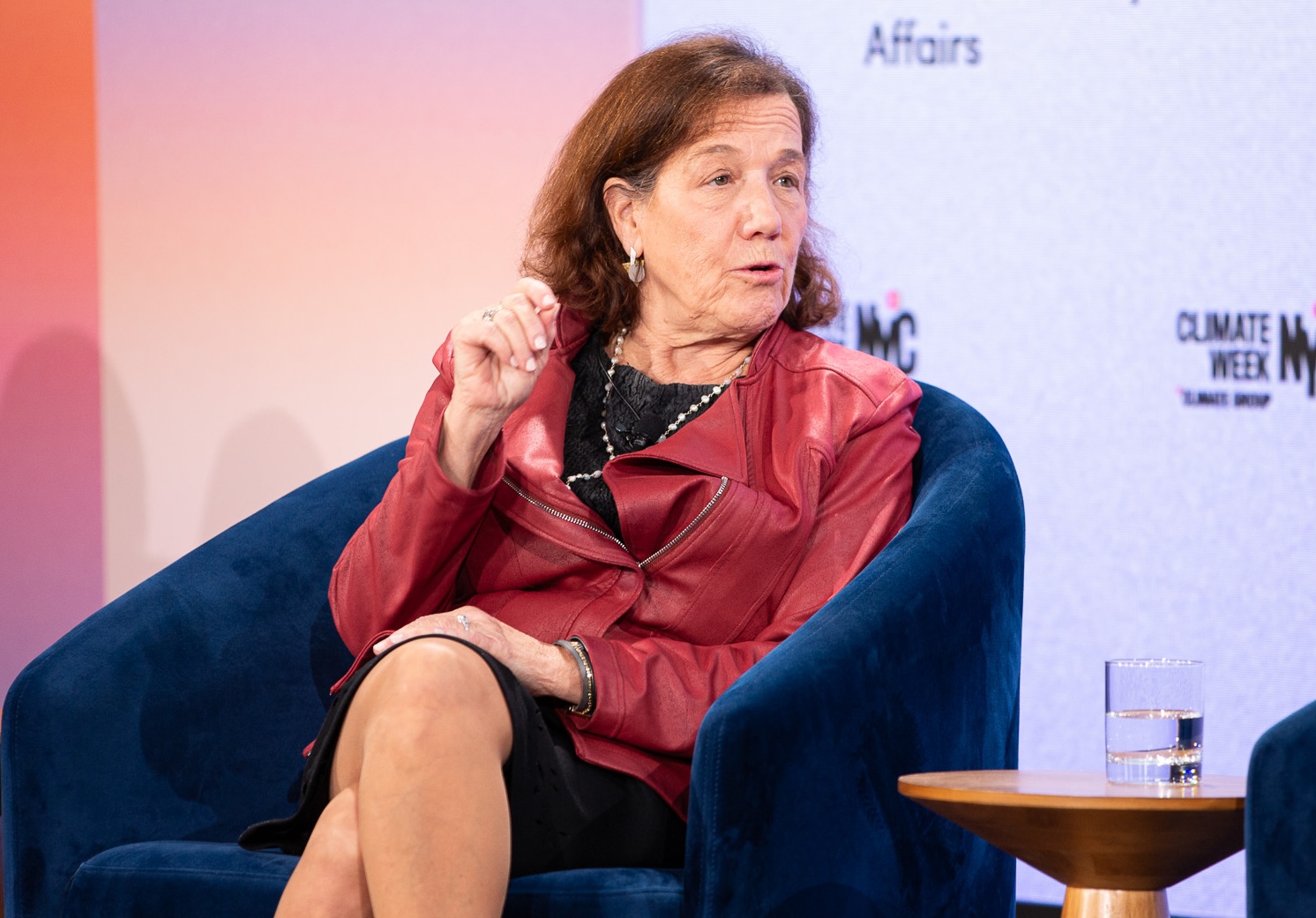
"I think there’s an appetite on the part of the hyperscalers to listen," Lubber said regarding the massive tech firms leading the AI charge. "They want to figure out how to do what they want to do, and move forward if they’re going to move forward, but do it in a way that’s not environmentally damaging, that helps build the new economy of energy systems and truly addresses communities."
Lubber’s goal is to ensure that the infrastructure boom of the next decade does not result in a carbon-intensive lock-in. By engaging directly with hyperscalers, she hopes to steer the tech industry toward clean energy procurement and low-carbon materials before the infrastructure is set in stone.
Implications: The Road Ahead for Climate Advocacy
As Lubber prepares to step down, the landscape for sustainability advocacy is more precarious than at any point in her tenure. The political climate in the U.S. has become increasingly fractured, and the movement faces a concerted effort to delegitimize the integration of environmental, social, and governance (ESG) factors in business.
Lubber’s recent emphasis on "depoliticizing" these issues is a strategic response to this climate. She believes that the path forward requires moving away from partisan rhetoric and back toward the economic fundamentals of climate change.
"The fact that water shortages or nature or climate change and the implications that it creates have become so partisan, we’ve got to change that," she emphasized. Her belief is that if climate action is framed as a matter of economic stability, supply chain security, and risk management rather than ideological preference, it will survive the volatile political cycles of the coming decades.
The challenge for her successor will be to maintain Ceres’ seat at the table in both corporate boardrooms and legislative chambers. The nonprofit must balance its role as an aggressive advocate for radical change with its ability to act as a pragmatic partner to those seeking to navigate a net-zero transition.
Conclusion
Mindy Lubber’s legacy is defined by the transition of climate from a "special interest" topic to a fundamental pillar of the global economy. By spending the next three years focusing on the critical intersection of AI, data centers, and industrial decarbonization, she is signaling that her work remains unfinished.
She leaves behind an organization that is no longer just a voice in the wilderness, but a central architect of modern finance. As the world faces the next, more complex phase of the climate crisis—one involving the physical realities of infrastructure and energy grids—Lubber’s shift in focus serves as a final lesson: the work of sustainability is not a static goal, but a process of constant, iterative adjustment to the evolving demands of the planet and the economy.
The search for the next leader of Ceres will undoubtedly be watched closely by the global financial community. Whoever steps into the role will be inheriting an organization that has become a vital piece of the global economic infrastructure—an accomplishment that owes a great debt to the two decades of "Climate Warrior" leadership provided by Mindy Lubber.



 Rifan Muazin
 Nana
Nana
 Ali Ikhwan
 Evan Lee Salim
