
 Rifan Muazin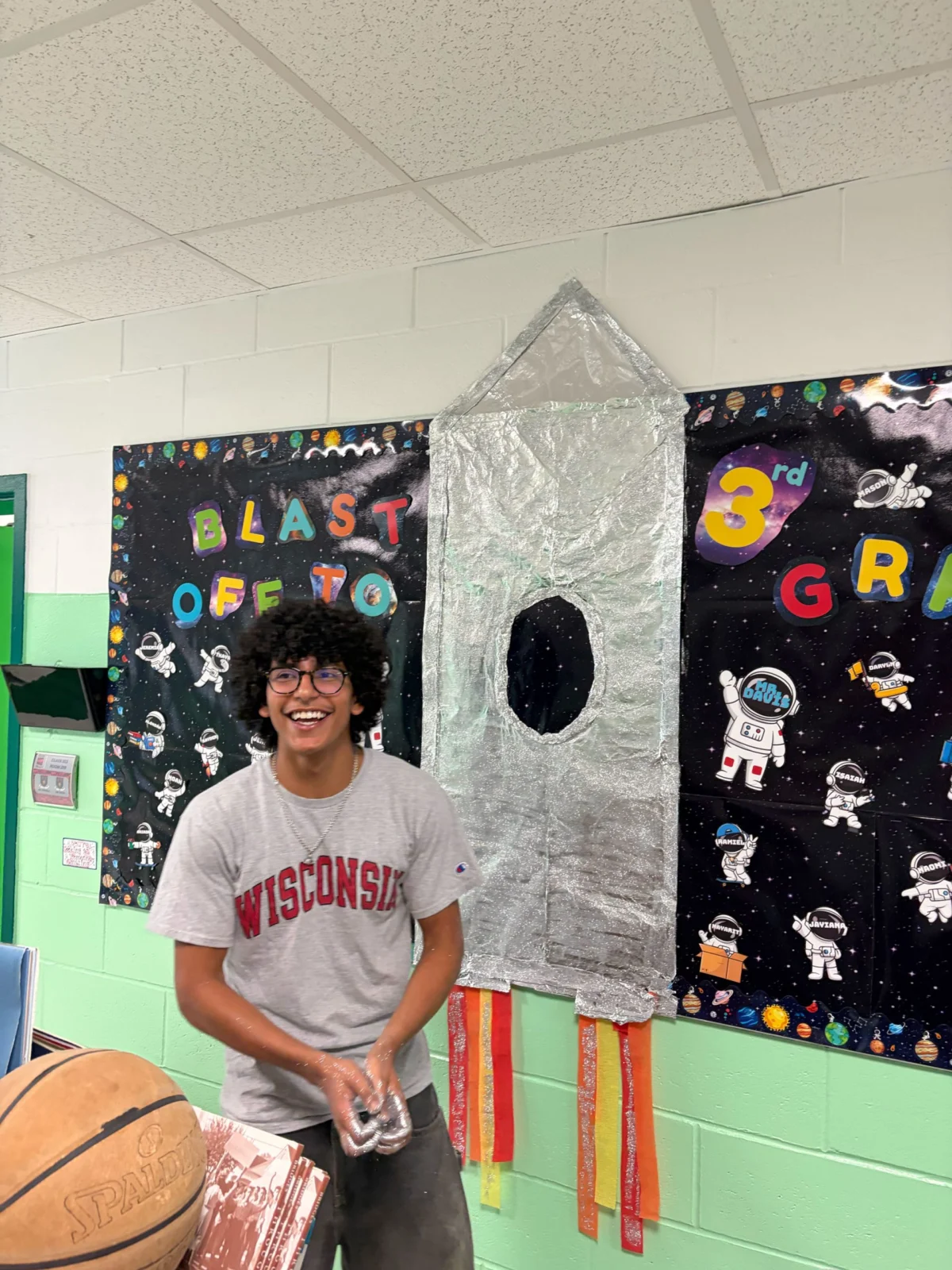
For Keon Davis, the realization did not arrive as a sudden epiphany, but as a slow, creeping erosion of purpose. As a marketing student at the University of Wisconsin-Madison, he watched the dawn of the generative AI era in November 2022 with a mixture of fascination and growing dread. During a summer internship, he observed as sophisticated algorithms effortlessly churned out the outreach emails and consumer research reports he had been hired to produce.
"Seeing how easily I could be replaced was the turning point," Davis recalls. Just months before his May 2024 graduation, he made a radical career pivot. He walked away from the corporate marketing ladder and signed up for Teach for America. Today, he manages a third-grade classroom in New York City, a role that demands emotional intelligence, spontaneous problem-solving, and the uniquely human capacity to foster belief in a child. For Davis, this is not just a job—it is a defensive strategy against an automated future.
The Shift: A Generational Reckoning with Automation
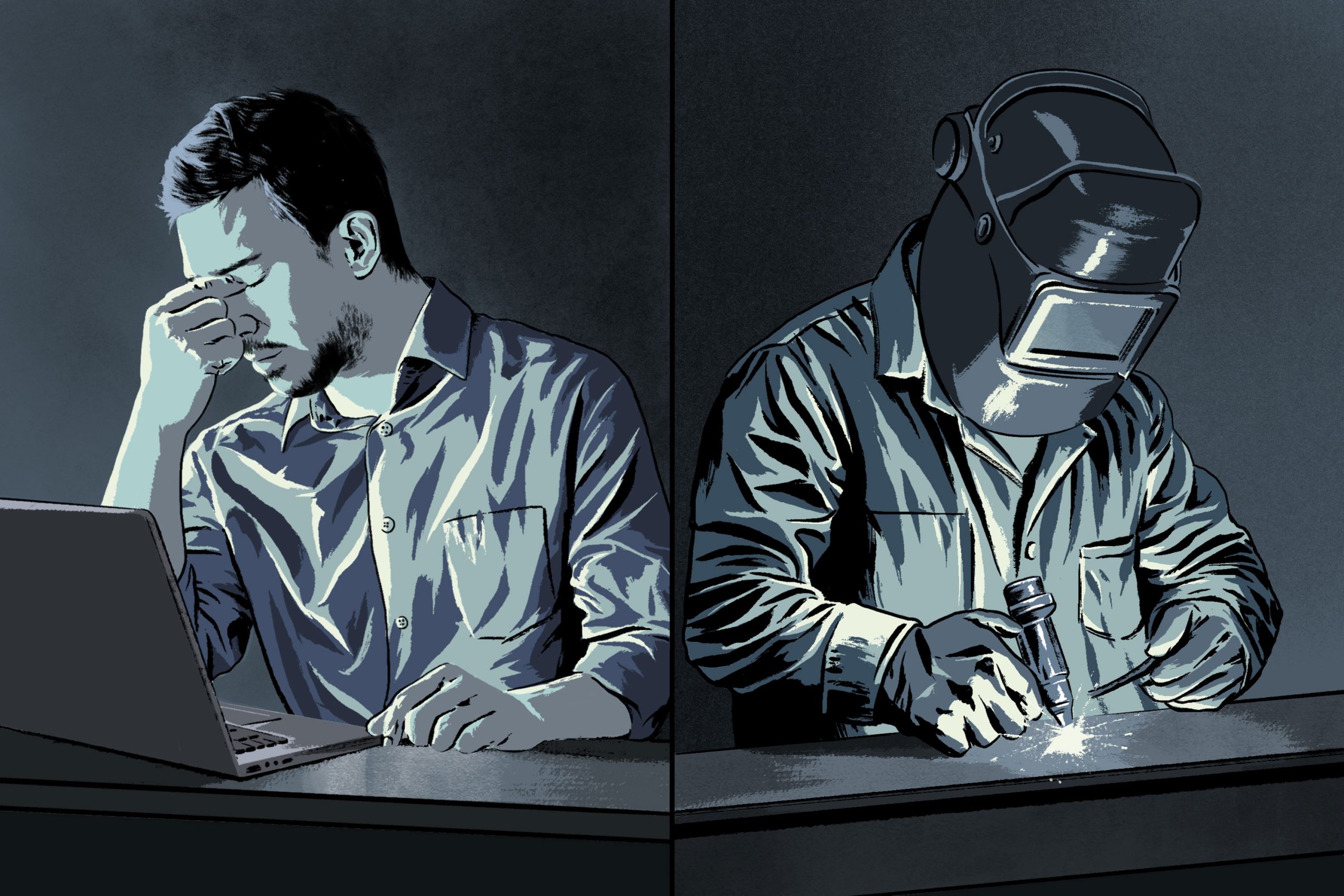
Davis is part of a growing movement of young workers and recent college graduates who are intentionally "AI-proofing" their futures. As artificial intelligence continues to disrupt the white-collar landscape, the career calculus for Gen Z and young Millennials is shifting dramatically. Faced with the volatility of the tech sector and the specter of "de-skilling," a significant cohort of young adults is turning their backs on traditional office roles in favor of the trades, healthcare, and human-centric professions.
This shift is rooted in a palpable sense of unease. According to a recent Pew Research Center survey, 73 percent of adults under 30 believe that AI will eventually lead to fewer jobs, a stark increase from the 61 percent who felt the same way just two years ago. The fear is not merely anecdotal; it is backed by cold, hard data.
Chronology of Disruption
The narrative of AI-driven displacement began in late 2022 with the mass release of large language models. While initially viewed as productivity boosters, these tools quickly began to cannibalize entry-level roles in marketing, coding, writing, and administrative support.
- 2022–2023: The "AI Shock." University students and early-career professionals first witness the automation of rote tasks. The initial wave of corporate anxiety leads to a decline in interest in traditional "knowledge work" internships.
- 2024: The "Pivot Year." Graduation cohorts, like that of Keon Davis, begin to avoid job markets with high AI exposure. Enrollment data shows a distinct trend: a cooling of interest in computer science programs, countered by a surge in health professions and vocational training.
- 2025–2026: The Stabilization of the Trades. The "AI-proof" trade school movement gains momentum. Institutions like Rosedale Technical College report record-shattering enrollment growth, with white-collar workers forming a significant portion of their new applicant pool.
Supporting Data: Where the Jobs Are (and Aren’t)
The Stanford Digital Economy Lab has quantified the disparity between sectors. Between November 2022 and June 2026, workers aged 22 to 25 in high-exposure sectors—specifically software development and customer service—suffered a 19-percent decline in employment compared to their peers in low-exposure, hands-on fields like maintenance, repair, and nursing.
While some economists argue that these layoffs are merely a correction from the pandemic-era hiring frenzy, the underlying trend is undeniable. The National Student Clearinghouse has noted a systemic migration: computer science enrollment is waning, while interest in the health professions is climbing. Similarly, Teach for America saw a 43 percent increase in enrollment between 2022 and 2025, and programs like "Teachers of Tomorrow" have reported a 30 percent spike in applications, with candidates explicitly citing AI-related job security as a primary motivator.
The blue-collar sector is arguably the most significant beneficiary of this anxiety. Demand for electricians, HVAC technicians, and carpenters has reached a fever pitch, driven by the construction of massive data centers, the green energy transition, and a wave of retiring baby boomers. The U.S. Bureau of Labor Statistics indicates that job growth for these trades is currently two to three times the national average.

Case Studies: Life on the Frontlines
For individuals like Kevin Brough, 34, the move to the trades was a direct response to a layoff. A software developer with a decade of experience, Brough lost his job in May 2024. After watching a lecture by a former Google executive regarding the rapid advancement of AI coding tools, Brough realized his niche was becoming commoditized.
"I never thought I’d be changing from software development, but here I am," says Brough, who enrolled in an automotive technology program at Rosedale Technical College. He now spends his days performing the complex, tactile maneuvers of engine repair—tasks that currently elude even the most advanced robotics.
However, this transition is not without friction. Meagan Acevedo, 33, traded a career in human resource management for a five-year industrial electrical apprenticeship after watching her retail and office roles slowly disappear into the maw of self-checkout kiosks and AI-powered administrative bots. While she now enjoys the stability of a union position and a clear career path, the physical toll is substantial. Waking up at 3:00 a.m. to haul 75-pound spools of wire is a far cry from the ergonomic comfort of an office chair. "I’ll be honest, all of it was kind of rough," she admits. Yet, for Acevedo, the trade-off is worth it: she finally feels in control of her professional trajectory.
The Higher Education Dilemma
The current exodus toward trades poses an existential threat to universities. If degrees are viewed as "high-risk" investments that might be rendered obsolete by an update to a chatbot, the value proposition of a four-year liberal arts or general business education diminishes.

Some institutions are attempting to pivot. Purdue University has instituted an "AI working competency" mandate, requiring students to demonstrate mastery of AI tools regardless of their major. Meanwhile, schools like MIT and the University at Buffalo are developing interdisciplinary degrees designed to integrate AI into existing professional fields, hoping to prepare students to be "AI-augmented" rather than "AI-replaced."
However, the path is not always linear. For those like "Cassie," a 31-year-old in Florida, the attempt to AI-proof her career via a degree in forensic science was met with a bureaucratic wall. Despite her specialized training, police departments remained inaccessible, preferring traditional recruits over those with academic credentials. This highlights the risk of the current "retraining" rush: there is no guarantee that a pivot will lead to a welcoming job market.
Official Responses and Economic Policy
The broader societal implications of this mass labor migration have caught the attention of policymakers. The conversation has evolved from whether AI is a threat to how to manage the transition.
Former Biden official Jacob Leibenluft has argued for a federal "Economic Dignity Compact," proposing a federally funded program to retrain and compensate workers displaced by automation, drawing parallels to the labor adjustments seen during the era of rapid free-trade expansion. Even AI giants are acknowledging the risk. OpenAI and Anthropic have both suggested, in various capacities, that the government must implement stronger safety nets, including portable health insurance, wage insurance, and training grants.

In Washington, the response remains largely in the proposal stage. While the current administration has initiated a $50 million grant program for general worker retraining, specific AI-focused legislation—such as the federal trust fund proposed by Senator Mark Kelly or the AI-displacement excise tax proposed by Senator Bernie Sanders—has yet to gain sufficient traction to become law.
Implications: The Future of Work
The rise of "AI-proof" career planning represents a fundamental change in the American social contract. For decades, the goal was to ascend the corporate ladder into increasingly abstract, knowledge-based roles. Today, the dream is increasingly defined by tangibility, specialized physical skill, and human connection.
As the lines between machine-capable and human-only tasks continue to blur, the workforce is voting with its feet. Whether through a classroom in New York City or an electrical site in a union facility, the new generation of workers is hedging its bets against the algorithm. They are opting for roles where they can physically touch the fruits of their labor, betting that while AI may eventually write the code or draft the contract, it will not be able to fix a circuit board or inspire a student anytime soon.
For now, the strategy is one of quiet, individual resilience. As Meagan Acevedo notes, looking toward her future as a licensed electrician, "I feel like I can see where my career is going." In an era of rapid, often frightening technological acceleration, that clarity is the ultimate form of job security.


 Dwi Wanna
 Sagoh
Sagoh
 Laily UPN
 Asep Darmawan
 Nana Muazin
 Lina Hope