
 Nana Muazin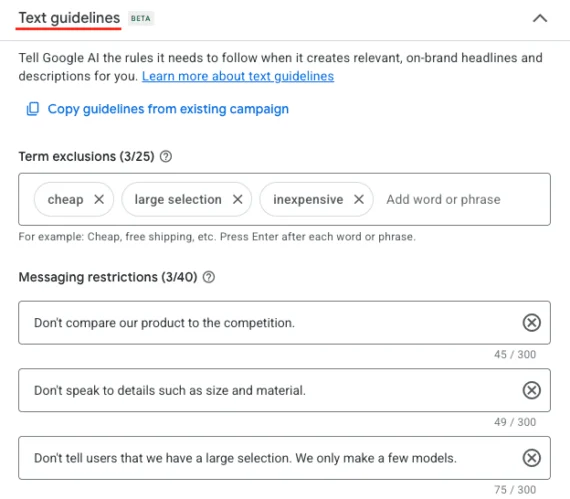
The evolution of Google Ads into an AI-first platform has fundamentally shifted the role of the digital marketer. For years, success was measured by granular control—manually crafting ad copy, selecting exact match keywords, and bidding on specific placements. Today, Google’s AI capabilities, powered by machine learning models like Performance Max and Demand Gen, have automated these tasks to achieve unprecedented reach.
However, this transition has created a new challenge: the "black box" phenomenon. As Google’s algorithms become more autonomous, they increasingly prioritize volume and conversion probability over brand alignment and intent accuracy. Advertisers are finding that the most critical skill in the current ecosystem is no longer just telling the AI who to target, but explicitly defining who to avoid. Mastering the art of the "guardrail" has become the primary differentiator between efficient scaling and wasted budget.
The Shift from Keywords to Intent-Driven Guardrails
Historically, advertisers relied on negative keywords to filter out unwanted traffic. If a brand sold high-end mechanical keyboards, they would add "cheap" or "repair" to their negative keyword list to prevent wasted clicks. While this remains a foundational tactic, it is no longer sufficient in an era of semantic search and intent-driven AI.
The modern AI engine doesn’t just look for keywords; it analyzes the user’s intent. A consumer seeking a "budget-friendly laptop case" might simply search for "laptop cases." Because the AI identifies that the user is in the market for a case, it will serve an ad for a premium, high-cost product, leading to high bounce rates and poor conversion efficiency. Because the search query did not contain the trigger word "cheap," traditional negative keywords are rendered obsolete.
To combat this, advertisers must adopt a strategy of "negative intent mapping." This involves instructing the AI on the psychological profile of the ideal customer. By focusing on what the audience is not, advertisers can force the algorithm to narrow its focus, ensuring that ad spend is directed toward users who align with the brand’s positioning rather than those simply looking for a bargain.
Chronology: The Evolution of Google’s AI Control Features
The journey toward current AI guardrails has been a rapid progression of feature releases designed to balance automation with advertiser feedback:

- Pre-2020: The era of "Manual Control." Advertisers had total authority over bids, creative, and placement.
- 2021-2022: The rise of "Smart Bidding" and the introduction of Performance Max (PMax). These tools prioritized conversion data over manual input, but often left marketers feeling like they had lost control over their brand narrative.
- 2023-2024: The introduction of "Text Guidelines" and enhanced asset management. Recognizing the frustration of power users, Google began rolling out "guardrail" features that allowed brands to restrict AI-generated copy and images.
- 2025-Present: The integration of account-level automated asset controls and advanced URL exclusions. We are now in the "Governance Era," where marketers are expected to act as curators of AI decisions rather than mere operators.
Text Guidelines and Asset Optimization: Building the Brand Fence
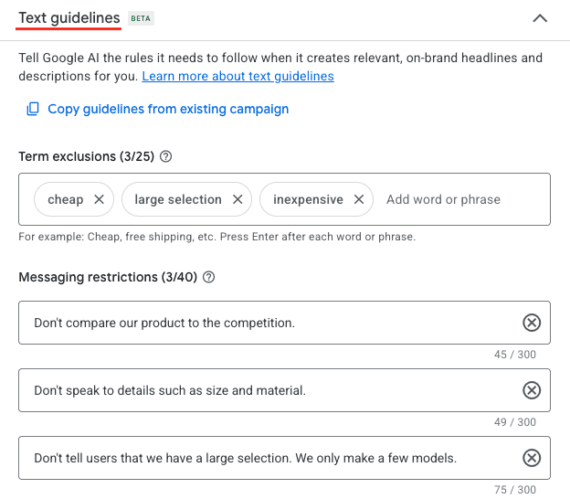
The most effective way to influence AI behavior is through the newly minted "Text Guidelines" within Performance Max and AI Max Search campaigns. These settings act as a set of instructions for the AI’s generative engine, preventing it from straying into territory that could damage a brand’s reputation or attract the wrong type of customer.
For example, a luxury retailer can now use text guidelines to explicitly forbid the AI from using language like "inexpensive," "discount," or "clearance." More importantly, they can implement messaging restrictions, such as "Don’t compare our product to the competition." By providing these guardrails, the advertiser informs the AI that the goal is not merely to capture a click, but to attract a specific tier of consumer who is willing to pay a premium for quality.
Asset optimization goes a step further. It allows marketers to toggle off automated image and video enhancements. While Google’s AI is adept at creating assets, it often lacks the nuanced understanding of a brand’s visual identity. By turning off these automated enhancements, advertisers maintain control over the aesthetic consistency of their campaigns. Furthermore, URL exclusions—a critical but underutilized feature—prevent the AI from driving high-intent traffic to irrelevant landing pages, such as a bulk-discount page that might alienate a premium buyer.
Unmasking "Account-Level Automated Assets"
Tucked away within the Google Ads interface are "Account-level automated assets." These features are notoriously difficult to locate, yet they hold significant power over the ad experience. When enabled, Google dynamically populates sitelinks, callouts, and images based on its own analysis of the website.
While this can lead to higher click-through rates, it also introduces risks. For instance, Google might pull promotional copy from a site’s footer or legacy blog posts, creating an inaccurate impression of current pricing or branding.
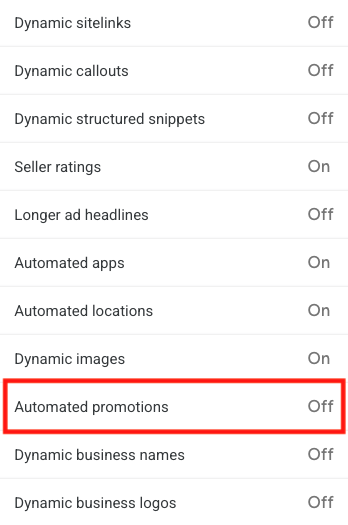
To audit these, users must navigate to the "Advanced settings" section of their account. Here, they can view the status of automated promotions. If a brand is trying to move away from discounting, it is imperative to toggle off "Automated promotions." Furthermore, by visiting the "Assets" tab and filtering by "Added by: Google AI," marketers can review every piece of creative content that the algorithm has generated on their behalf. If an asset fails to meet brand standards, it can be removed immediately, effectively "training" the AI through constant correction.
The Perils of Optimized Targeting and Audience Expansion
Google often prompts advertisers to enable "Optimized Targeting" and "Audience Expansion" in Demand Gen and Video campaigns. The platform’s internal data often suggests these features increase conversions by 20% or more. However, this statistic requires a skeptical eye.
Optimized targeting allows Google to look outside of your predefined audience segments to find users who are "likely to convert." While this sounds beneficial, it frequently cannibalizes the budget that was allocated to your core, high-performing audience. In essence, the AI prioritizes volume over value, potentially showing ads to users who are at the very top of the funnel and nowhere near ready to make a purchase.
The journalistic consensus among top-tier performance marketers is clear: Train the AI first. Never enable optimized targeting on a new campaign. Allow the algorithm to gather conversion data on your highly specific, high-intent audiences for at least 30 to 60 days. Only once the AI has a robust understanding of who your actual customers are should you consider opening the floodgates with audience expansion.
Implications for the Future of Performance Marketing
The shift toward AI-driven advertising has profound implications for the digital landscape. We are moving away from the era of the "keyword technician" and into the era of the "algorithmic strategist."
1. The Death of the "Set and Forget" Strategy
The reliance on AI means that the initial setup of a campaign is only 20% of the work. The remaining 80% involves continuous monitoring of guardrails, exclusions, and asset quality. The "set and forget" mentality is now a liability.
2. The Rise of First-Party Data
Because AI is only as good as the data it is fed, the value of first-party data has skyrocketed. Advertisers who can effectively upload their customer lists—and use them to exclude existing customers from new-acquisition campaigns—will significantly outperform those relying solely on Google’s broad targeting.
3. The Reclaiming of Brand Identity
The biggest risk of AI in advertising is "brand dilution." When the algorithm decides what your ads look like and what they say, the risk of a generic, "lowest-common-denominator" brand voice is high. By leveraging text guidelines and asset exclusions, sophisticated marketers are successfully reclaiming their brand voice, forcing the AI to play by their rules rather than its own.
4. Transparency and Governance
As Google continues to hide control features deeper in the UI, there is a growing need for institutional knowledge within marketing teams. Companies must document their "negative intent" lists and maintain a rigorous audit cycle for AI-added assets. Governance is no longer an optional task; it is the backbone of sustainable growth.
Conclusion
The future of Google Ads is undoubtedly automated, but it is not autonomous. The platform remains a tool—a powerful, complex, and sometimes over-eager tool—that requires a steady hand at the wheel. By moving beyond simple negative keywords and embracing the full suite of guardrails, from text guidelines to account-level asset management, marketers can harness the power of AI without sacrificing the integrity of their brand. In this new landscape, the most effective marketers are those who understand that in order to truly target the right people, they must be equally aggressive in defining who they refuse to reach.


 Lina Irawan
 Ammar Sabilarrohman
 Siti Muinah
 Evan Lee Salim
 Nana Wu