
 Basiran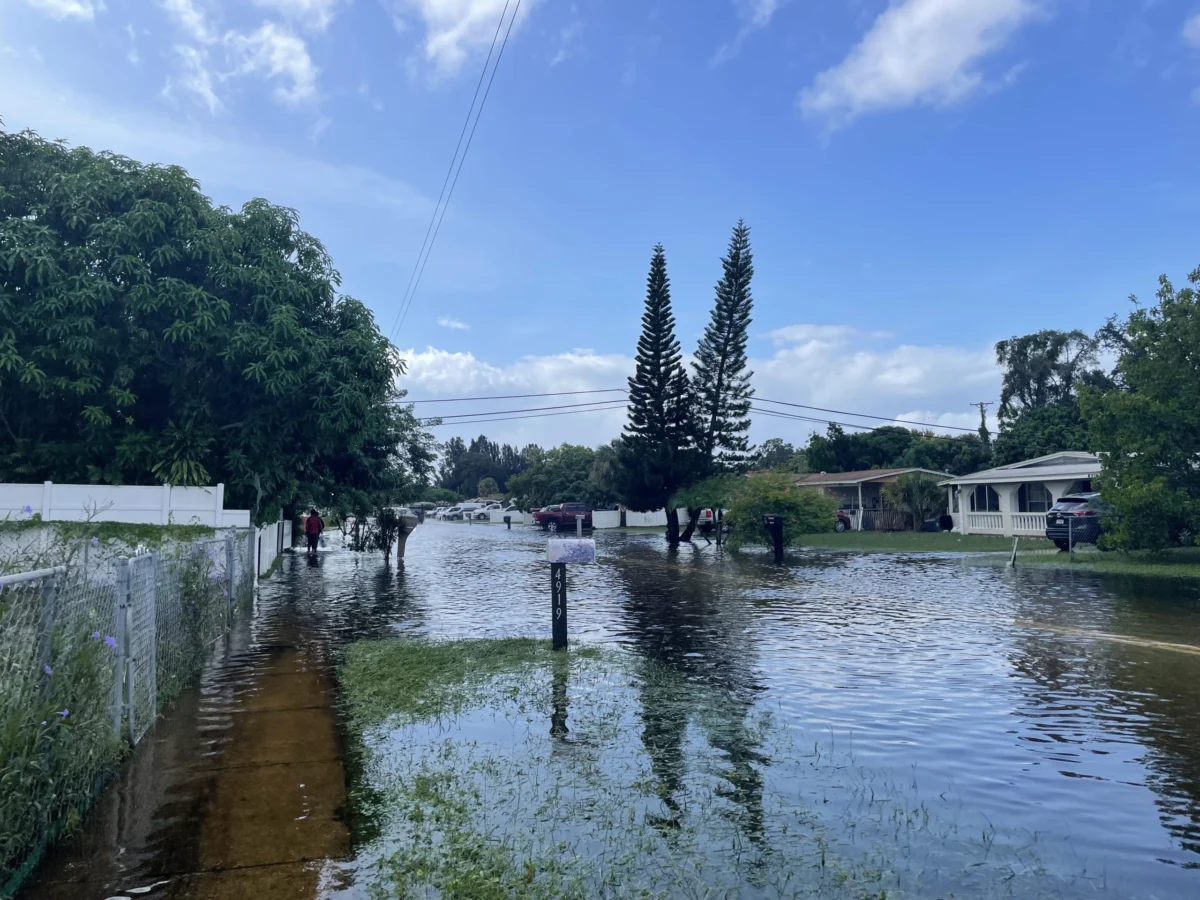
In the classrooms of Florida, the language of environmental science is undergoing a profound and systematic transformation. A joint investigation by WUSF and The Hechinger Report has uncovered a calculated effort by state education officials to sanitize high school science textbooks, removing or diluting references to climate change, human-driven environmental impact, and the systemic consequences of burning fossil fuels.
This trend, which intensified during the summer of 2024, has left educators, scientists, and students navigating an increasingly restrictive academic environment. As the state faces the visceral, real-time realities of rising sea levels, more intense hurricane seasons, and record-breaking heat, the curriculum intended to explain these phenomena to the next generation is being quietly stripped of its most critical context.

The Mechanics of Erasure: A Pattern of Edits
The changes made to textbooks—often under the guise of meeting state standards—reveal a pattern of semantic softening that critics argue serves a political rather than a pedagogical purpose. In one instance, a McGraw Hill marine science textbook, which originally cited research finding that climate change claims at least 150,000 lives annually, saw that section significantly altered. Instead of the clear, research-backed assertion of climate-related mortality, students were left with a vague observation: “human health will also be affected by the increase in CO2.”
In other cases, the very terminology of the crisis was scrubbed. References to "climate change" were swapped for the more benign and imprecise "changes in the environment." Cengage, another major publisher, was prompted to remove the descriptor "polluting" from in front of "coal-burning power plants." Furthermore, a section detailing how students at the University of Washington organized to pay higher fees to transition their campus to renewable energy was cut entirely—a move that removes a tangible example of youth civic engagement in the face of environmental challenge.

Chronology of the Shift
The pressure on textbook publishers reached a fever pitch in the summer of 2024, coinciding with a broader political movement within the state. In May 2024, Governor Ron DeSantis signed legislation that officially removed references to "climate change" from state statutes, signaling a top-down shift in state policy.
This legislative pivot set the stage for the Florida Department of Education (FDOE) to exert influence during the textbook adoption cycle. Because Florida is a massive market for educational materials, publishers are often incentivized to comply with the state’s specific editorial demands to ensure their books are on the approved list for school districts.

The timeline of these edits reveals that publishers were frequently in communication with state officials to "align" their content. Internal correspondence obtained through public records requests shows that when publishers resisted, they were often pushed to provide citations for well-established scientific facts—a burden of proof rarely applied to other chapters, such as those on DNA or human anatomy. By late 2024, the state initiated a broader review of its science standards, a process that has historically been the primary vehicle for curriculum reform.
Supporting Data and Scientific Consensus
The scientific consensus on the climate crisis remains absolute: the combustion of fossil fuels has increased the concentration of heat-trapping gases in the atmosphere, leading to accelerated global warming and the destabilization of planetary systems. For Florida, a peninsula uniquely vulnerable to storm surges and sea-level rise, these are not abstract concepts but immediate threats.

A data analysis by WUSF and The Hechinger Report indicates that textbooks featuring environmental, earth, or marine science content were adopted at a significantly lower rate than those in other fields, suggesting a structural bias against climate-focused curriculum. Furthermore, a 2020 study by the National Center for Science Education (NCSE) had already graded Florida’s 2008 science standards with a "D," noting a failure to adequately address climate science. With the current review process, educators fear the grade could slide into "F" territory.
Official Responses and Publisher Justifications
The Florida Department of Education has maintained a guarded stance regarding these changes. Press secretary Olivia Wester stated in an email that the department’s review of materials is strictly guided by state law and academic benchmarks.

Publishers, caught between the demands of the state and the scientific integrity of their products, have offered varying explanations. Tyler Reed, a spokesperson for McGraw Hill, described the edits as "routine" efforts to ensure "accuracy and efficacy." He insisted that the changes were specific to Florida editions and did not reflect the content of national versions.
However, many authors disagree. Michael Huber, an author of the McGraw Hill marine science text, was not informed of the edits to his work until contacted by journalists. Upon reviewing them, he called the changes "unsettling," noting that the dilution of the text regarding human health effects essentially rendered the scientific data incoherent. "There’s no scientific or pedagogic or aesthetic improvement," Huber noted. "Why make something worse with no benefit?"

A Culture of Caution in the Classroom
Beyond the pages of textbooks, the most insidious impact of this policy shift is the "culture of caution" it has cultivated among teachers. Educators in the Tampa Bay region and across Central Florida report a climate of fear. While they are not always explicitly banned from saying the words "climate change," they are frequently warned by administrators to avoid "controversial" topics.
This self-censorship is often a survival mechanism. With new laws making it easier for parents to sue teachers and challenge classroom materials, many educators are choosing to avoid the topic entirely to protect their jobs. One middle school teacher noted, "I still teach that with fidelity, and I make sure that my kids know that human beings are screwing up this planet," but acknowledged the constant fear of retaliation.

Implications for Future Generations
The long-term implications of this curriculum shift are profound. Students like Alisha Imam, who participated in high school environmental clubs and later pursued higher education in civil engineering, represent the demographic most affected by these changes. Imam, who did not receive a formal education on the mechanics of the climate crisis until she took an Advanced Placement (AP) course, noted the disparity between the reality she sees—flooding and hurricane destruction—and the silence of her earlier classroom education.
"If we don’t know the problem, we won’t be able to fix it," Imam said.

This sentiment is echoed by experts like Glenn Branch of the NCSE, who points out that students are being prepared to be the workers, consumers, and voters of tomorrow. By withholding the fundamental science of climate change, the state is arguably handicapping its students’ ability to compete in a global economy that is increasingly centered on green energy, sustainability, and climate adaptation.
Conclusion: The Two-Tiered System
The situation in Florida has created a two-tiered system of education in the United States. While states like California, New Jersey, and Hawaii are moving to integrate climate literacy across all subjects—including physical education—Florida is moving in the opposite direction.

Historically, this pattern of censorship has been seen in the debate over evolution, where political groups sought to weaken science curriculum to align with ideological preferences. Today, climate change has joined evolution as the primary target of this localized, political pressure. As the state continues its review of science standards, the fate of climate education remains uncertain. What is certain, however, is that the silent erasure of these concepts from textbooks has already fundamentally changed the way Florida’s 3 million students engage with the most pressing challenge of their lifetime.


 Nana Muazin
 Layla Zulfa
 Raul Delapena Setiawan
 Reynand Wu
 Sagoh
Sagoh

 Azzam Bilal Chamdy
 Ali Ikhwan