
 Pevita Pearce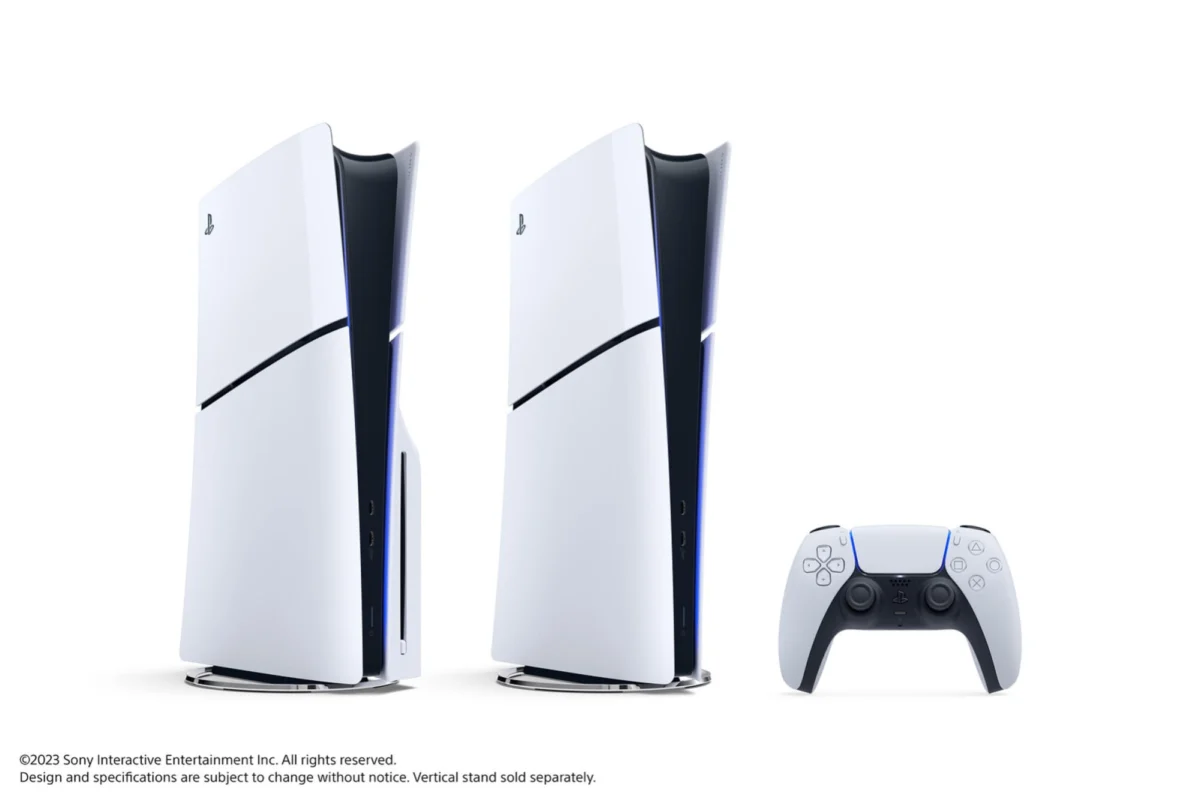
For nearly three decades, the PlayStation brand has served as a cornerstone of the home gaming experience. As a long-term enthusiast who has witnessed the evolution from the original gray box to the powerhouse machines of the modern era, I understand that selecting the right console is more than just a purchase—it is an investment in your entertainment ecosystem. With the recent, high-profile launch of the PS5 Pro, many prospective buyers are re-evaluating their options. Should you chase the bleeding edge, or is now the ideal moment to secure a standard PlayStation 5?
In this comprehensive guide, we will dissect the differences between the original PlayStation 5 and its successor, the PS5 Slim, to help you determine which machine deserves a spot in your media cabinet.
The Main Facts: Defining the Two Titans
When comparing the original PlayStation 5 (the "launch" model) and the current PS5 Slim, the first thing to understand is that we are not looking at a generational leap. Unlike the transition from the PS4 to the PS4 Pro, which fundamentally changed resolution capabilities and processing power, the PS5 and the PS5 Slim are, under the hood, effectively identical.
Performance Parity
Both the original PS5 and the PS5 Slim utilize the same custom AMD Ryzen Zen 2 CPU and RDNA 2 GPU architecture. This means that whether you are playing God of War: Ragnarök, Spider-Man 2, or Final Fantasy VII Rebirth, the graphical fidelity, frame rates, and load times remain consistent across both consoles. If you are worried that buying the "Slim" version will result in a diminished gaming experience, put those fears to rest. The silicon heart beating inside these machines is the same.

The Storage Advantage
The primary technical differentiator between the two is the internal solid-state drive (SSD) capacity. The original launch console shipped with an 825GB SSD. While fast, it felt restrictive in an era where AAA titles frequently exceed 100GB. The newer PS5 Slim models offer a 1TB internal SSD, providing that extra breathing room for your digital library without needing to immediately purchase an M.2 expansion drive.
A Chronological Perspective: The Evolution of the PS5
To understand the current market landscape, we must look at the timeline of Sony’s hardware strategy.
- November 2020: Sony releases the original PlayStation 5. It is a monolithic, white-and-black tower that immediately becomes a polarizing design object—some called it a "futuristic sculpture," others a "clunky eyesore."
- 2021–2022: Sony navigates global supply chain shortages. During this period, the console remains a high-demand, hard-to-find commodity.
- Late 2023: Sony introduces the "Slim" refresh. The goal was twofold: reduce manufacturing costs and create a more shelf-friendly footprint.
- Late 2024: The PS5 Pro launches, occupying the premium space. This shifts the original and Slim models into the "mainstream" and "entry-level" tiers of the PlayStation ecosystem.
This chronology highlights a critical takeaway: Sony is moving toward a modular future. By introducing the Slim, they have effectively standardized their manufacturing process, moving away from two distinct "Digital" and "Disc" console SKUs toward a single base unit that can be customized with a detachable disc drive.
Supporting Data: Price, Size, and Value
The economic landscape of the PS5 is, frankly, a bit peculiar. Sony did not pursue a standard "price drop" strategy when launching the Slim.

The Price Paradox
When the PS5 Slim launched, the pricing structure caught many analysts by surprise. The PS5 Slim with a disc drive retails for $499, while the digital-only Slim is priced at $449. For comparison, the original PS5 Digital Edition launched at $399.
This creates a curious situation: the new, slimmer model actually carries a higher price tag than the original digital iteration. Furthermore, if you purchase the digital-only Slim and later decide you want to play physical discs, you must buy the attachable disc drive separately for $79.99. Mathematically, buying the bundle from the start is cheaper than buying the parts separately, but the entry barrier for a "digital-only" experience has undeniably crept upward.
The "Slim" Reality Check
"Slim" is a relative term. Sony successfully reduced the total volume of the console by approximately 30 percent. While this makes it easier to fit into tighter entertainment centers, do not be fooled into thinking this is a pocket-sized device. When compared to the Xbox Series X—a console known for its compact, brick-like design—the PS5 Slim is still objectively larger.
Official Responses and Industry Context
Sony’s official stance on the refresh has focused heavily on "flexibility." By decoupling the disc drive, Sony is attempting to cater to two different types of consumers: the traditionalist who values physical game libraries and the modern gamer who prefers the convenience of the PlayStation Store.

However, the lack of a vertical stand in the box—a point of contention for many—signals a shift in how Sony wants these consoles to sit. While they sell the stand separately, tech enthusiasts and hardware reviewers have long debated the thermal dynamics of the PS5. Many industry experts argue that keeping the console in a horizontal position is the safest bet for long-term hardware health, as it avoids potential issues with liquid metal cooling thermal paste migration—a topic that has sparked significant, albeit occasionally alarmist, debate in the enthusiast community.
Implications: Which One Should You Buy?
As we look at the current market, your decision should be guided by your specific habits rather than the "latest and greatest" marketing.
Who should buy the original PS5?
If you can find an original launch model in stock (likely through secondary markets or remaining warehouse inventory), and the price is significantly lower than $450, it is a fantastic bargain. You are sacrificing a small amount of storage (825GB vs 1TB), but you are getting the same core performance. If you are a casual gamer, that 175GB difference is rarely a dealbreaker.
Who should buy the PS5 Slim?
The Slim is the better choice for those who value aesthetics and modularity. If you want a cleaner look in your living room or think you might eventually want to add a disc drive, the Slim is the future-proofed option. Sony has confirmed that as original stock sells out, the Slim will be the only standard option available on shelves. Effectively, the market is making the choice for you.

The "Pro" Factor
Finally, one cannot discuss these consoles without mentioning the PS5 Pro. If you are a competitive gamer with a 4K 120Hz monitor or a high-end OLED TV, you might find the standard PS5 and Slim lacking in certain graphical fidelity modes. However, for 90% of the gaming population, the standard PS5 (or the Slim) provides a perfect, high-fidelity experience that justifies its place in any modern home.
Final Thoughts: The Path Forward
Deciding between these consoles ultimately boils down to a question of utility versus value. The PS5 remains one of the most successful pieces of hardware Sony has ever produced. Whether you opt for the original design or the modern, refined silhouette of the Slim, you are entering a library of world-class games that define this generation.
My advice? Don’t get caught up in the obsession with "Slim" dimensions. Focus on your storage needs and whether you need physical media. If you find a deal on an original unit, take it. If you want the latest hardware iteration with the 1TB drive and the ability to customize, the Slim is a reliable, robust machine that will serve you well for years to come.
The console war is over; the era of choice has begun. Choose the machine that fits your lifestyle, load up your favorite title, and enjoy the next level of interactive entertainment.


 Reynand Wu
 Sagoh
Sagoh
 Raul Delapena Setiawan

 Azzam Bilal Chamdy
 Ali Ikhwan