
 Raul Delapena Setiawan
The landscape of web development is undergoing its most significant transformation since the inception of the Content Management System (CMS). Artificial Intelligence (AI) has moved from the fringes of theoretical research to the core of the WordPress workflow. For agencies and freelance developers, this shift is simultaneously exhilarating and daunting. As AI-powered tools become ubiquitous, the professional community is grappling with a new reality: clients are increasingly aware of these technologies, and with that awareness comes a fundamental shift in their expectations regarding project timelines, costs, and deliverables.
To navigate this new era, professionals must transition from being mere "implementers" to becoming strategic partners. The challenge is no longer just about building a website; it is about managing the narrative surrounding AI to ensure that efficiency does not come at the cost of quality or profitability.
The Chronology of an Industry Pivot
The integration of AI into the WordPress ecosystem did not happen overnight, but its acceleration has been unprecedented.
- Phase 1: The Integration of Assistance (2022–2023): The arrival of generative AI models like ChatGPT and Claude introduced the possibility of automated code snippets, basic content generation, and debugging assistance. Initially, these were viewed as "toys" or experimental add-ons.
- Phase 2: The Tooling Boom (2023–2024): WordPress-specific plugins and platforms began embedding AI directly into the dashboard. Features like AI-driven image generation, automated SEO optimization, and content block suggestions became standard.
- Phase 3: The Expectation Gap (2024–Present): We have now entered a phase where clients—having read headlines about AI’s "miracle" capabilities—are questioning why standard development projects still require weeks of labor. This has created a friction point where the perceived speed of AI clashes with the rigorous requirements of professional, secure, and performant web development.
The Myth of the "Magic Button": Why You Are Still the Expert
One of the most persistent misconceptions fueled by AI marketing is that these tools have democratized development to the point of replacing the need for human oversight. While AI can write a PHP function or generate a CSS block with startling speed, it lacks the contextual intelligence that a seasoned WordPress developer provides.
The Responsibility of Human Oversight
AI models are trained on vast datasets, meaning they often reproduce "average" solutions. In the context of WordPress, "average" can mean insecure, bloated, or non-compliant with modern accessibility standards. When an AI generates a plugin, it doesn’t consider the specific server environment, potential conflicts with existing themes, or the long-term maintainability of the code.
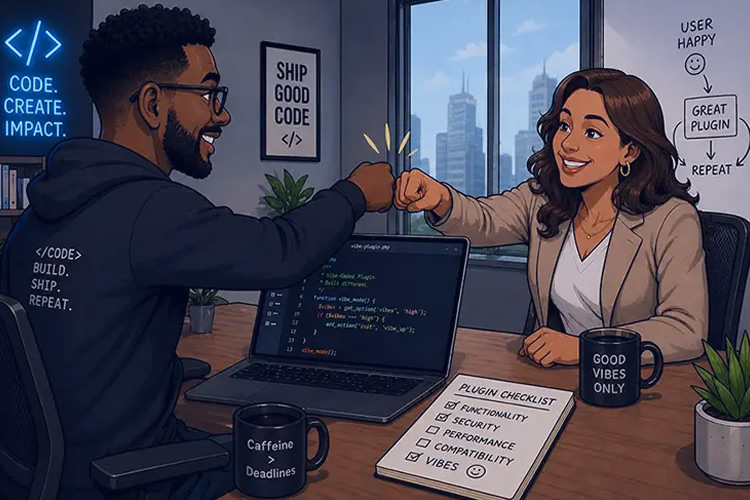
As a professional, your role has shifted from manual labor to curation and governance. You are the architect who verifies that the AI’s output adheres to security best practices and performance benchmarks. Without this critical human intervention, the risk of "technical debt" increases exponentially. Clients need to understand that when they pay for your services, they are not paying for the code itself—which is now a commodity—but for the expertise, architectural vision, and accountability that ensures the project doesn’t fail under pressure.
Supporting Data: Efficiency vs. Efficacy
Data suggests that AI can reduce the time spent on "boilerplate" tasks by 30% to 50%. However, this efficiency is often misunderstood by clients as a 50% reduction in total project time.
The industry reality is that development is rarely about just writing code. A typical project lifecycle involves:
- Requirements Discovery: Understanding the business goal.
- Architectural Planning: Mapping out the database and user flow.
- Development/Execution: The coding phase (where AI helps).
- Integration & Testing: Ensuring the site functions under real-world traffic.
- Refinement: Addressing accessibility, SEO, and user experience (UX).
If AI speeds up Step 3, the total time saved on the overall project is significantly lower than the client anticipates. Furthermore, the time saved in the development phase is often better spent on higher-level tasks, such as performance optimization, security hardening, or accessibility auditing—areas that are often neglected in the "rush to launch."
The Value Proposition: Quality Over Commodity
The current temptation to engage in a "race to the bottom" regarding pricing is a strategic trap. When a client asks, "If AI does the work in half the time, why shouldn’t my bill be halved?" they are fundamentally misunderstanding the value proposition of a professional agency.
The Analogy of the Modern Professional
Consider the construction industry. A carpenter using a pneumatic nail gun does not charge less than one using a hammer and nails. The speed of the tool does not equate to a decrease in the value of the final structure. Similarly, a surgeon using robotic surgical arms does not offer a discount; they charge for the precision and the successful outcome.
In WordPress development, the value lies in:
- Business Growth: Does the site convert?
- Stability: Will the site remain secure against evolving threats?
- Scalability: Can the site handle future growth?
If you lower your prices to accommodate AI efficiency, you are essentially commoditizing your own expertise. Instead, the focus should be on shifting your service model. Offer more value in the same amount of time. Use the extra hours saved by AI to perform a comprehensive SEO audit, implement advanced schema markup, or conduct rigorous usability testing. By increasing the quality of the outcome, you justify your price point and differentiate yourself from "budget" developers who use AI as a shortcut.
Implications for Agency Workflow and Communication
The future of the agency-client relationship hinges on radical transparency. If you are using AI, be open about it, but position it as a tool that enhances your capabilities rather than replacing them.
Setting Realistic Expectations
Agencies must move away from selling "hours" and start selling "outcomes." When a proposal is centered on the final business goal rather than the number of hours spent coding, the conversation regarding AI becomes irrelevant to the client’s bottom line.
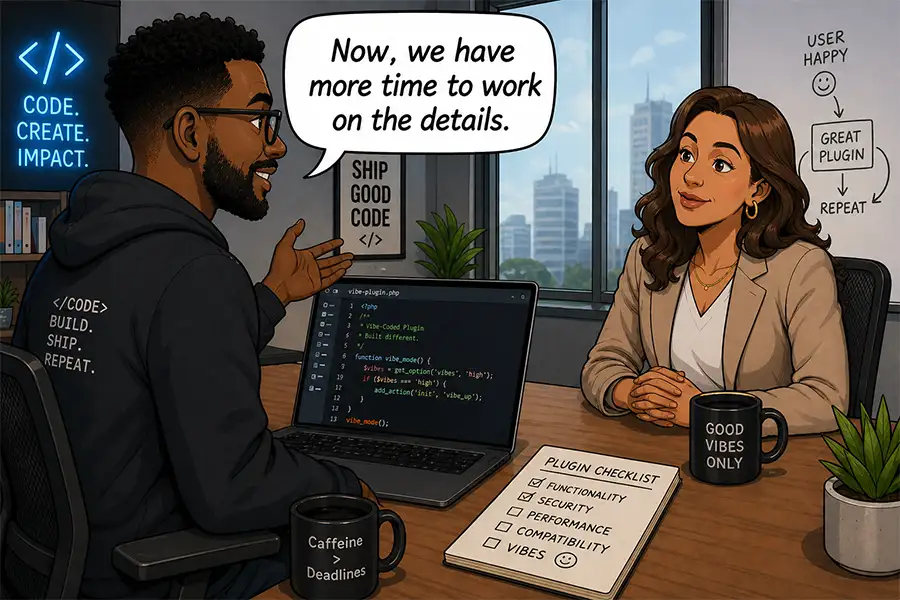
Actionable Strategies for Communication:
- The "Human-in-the-Loop" Guarantee: Explicitly mention in your contracts that all AI-generated code is audited, tested, and maintained by human developers to ensure security and performance.
- Shift the Focus to Strategy: When a client pushes for a lower price, pivot the conversation to the additional features you can now include within the same budget, thanks to your AI-augmented workflow.
- Transparency on Limitations: Be clear about what AI cannot do. It cannot empathize with a target audience, it cannot understand complex business logic, and it cannot replace the strategic relationship you build with your clients.
Conclusion: The Voice of Reason
The AI revolution is here to stay, and it will continue to reshape the WordPress ecosystem. The most successful agencies will be those that embrace these tools to improve efficiency while doubling down on the human elements that software can never replicate: creativity, strategy, empathy, and technical oversight.
By positioning yourself as the voice of reason—someone who uses technology to build better, more robust digital experiences rather than just faster, cheaper ones—you will not only survive this transition but thrive in it. You are not competing with AI; you are managing it. And in that management lies the true value for the modern digital client.

 Sagoh
Sagoh
 Asep Darmawan

 Reynand Wu


 Azzam Bilal Chamdy
 Ali Ikhwan