Neng Nana
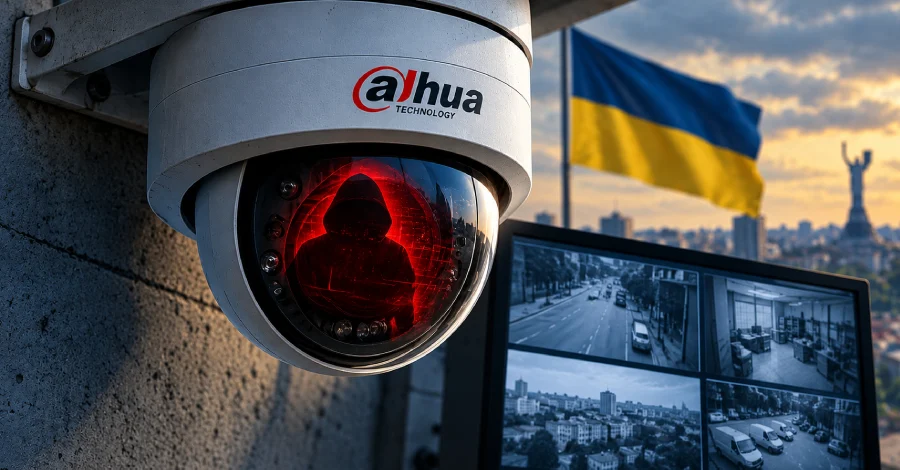
The global cybersecurity landscape is currently grappling with a sophisticated and persistent threat targeting video surveillance infrastructure. The Computer Emergency Response Team of Ukraine (CERT-UA), operating under the State Special Communications Service (SSSCIP), has issued a critical alert regarding widespread unauthorized remote access to Dahua-manufactured surveillance systems. This development highlights a catastrophic intersection of predictable hardware identification, insecure cloud-relay protocols, and the weaponization of legacy vulnerabilities.
As geopolitical tensions escalate, these compromised devices have become more than mere privacy concerns; they have transformed into a front-line intelligence tool for state-sponsored actors. From unauthorized configuration changes to the installation of persistent, hidden backdoors, the integrity of thousands of IP cameras and Digital Video Recorders (DVRs) across Europe and beyond is currently in question.
The Anatomy of the Vulnerability: Predictable Architecture
At the heart of the current crisis is the abuse of the Easy4IP peer-to-peer (P2P) platform. Designed for convenience, the platform allows users to access their security feeds remotely by scanning a QR code or entering a hardware Serial Number (SN). While efficient for consumers, the underlying architecture has proven to be a security liability.
The investigation revealed that Dahua’s serial number generation follows a predictable pattern. Each unit features a 10-character model prefix—standardized across specific product families—followed by a five-character hexadecimal counter. Because these counters increment almost sequentially, the total search space for a functional serial number is significantly reduced.
Attackers are utilizing this predictability to conduct large-scale, automated brute-force attacks against the P2P cloud infrastructure. By cycling through potential serial numbers, adversaries can identify active, cloud-connected devices without ever triggering traditional rate-limiting or account lockout mechanisms. As CERT-UA poignantly stated in their advisory, "The assumption that the serial number is unknown to anyone is not a reason to consider the device secure."
Chronology of Compromise: From Isolated Exploits to "Operation CameraSwarm"
The exploitation of Dahua infrastructure is not a singular event but part of a multi-year trend of increasingly sophisticated campaigns.
The Rise of Targeted Exploitation
Earlier in 2026, cybersecurity researchers at Hunt.io identified a surge in activity targeting IP cameras across Ukraine and Russia. One specific campaign, attributed to a Russian-speaking threat actor, utilized the "Ingram" vulnerability scanner to identify internet-exposed devices. This campaign specifically leveraged known flaws in Dahua and Hikvision firmware to compromise 58 high-value targets, signaling an intent to move beyond mass-infections toward precision intelligence gathering.

Operation CameraSwarm
The most significant escalation occurred between June 17 and July 22, 2026, in an event dubbed "Operation CameraSwarm." A single, highly effective threat actor successfully compromised over 14,530 Dahua IP cameras.
The modus operandi was methodical:
- Reconnaissance: Scanning for TCP port 37777, the default management port for Dahua devices.
- Identification: Harvesting valid serial numbers via the P2P cloud relay.
- Infiltration: Leveraging a combination of credential brute-forcing and the exploitation of known authentication bypass vulnerabilities (CVE-2021-33044 and CVE-2021-33045).
- Persistence: Deploying a custom backdoor account—dubbed "p2pwn" or "p2password"—on nearly 2,000 of the compromised units.
Crucially, this backdoor is stored independently of the standard administrator password. In many instances, the backdoor survives both password changes and factory resets, effectively granting the attacker indefinite "god-mode" access to the hardware.
Supporting Data: The Expanding Threat Perimeter
The danger posed by these compromises is not confined to the Ukrainian conflict zone. Research indicates that threat actors are actively scanning for, and exploiting, infrastructure in 15 European countries, including Poland, Romania, Moldova, Germany, France, Italy, and the United Kingdom.
The threat landscape is characterized by a "horizontal" expansion. In parallel to the camera compromises, actors are targeting critical network infrastructure, specifically TP-Link and MikroTik routers, utilizing vulnerabilities such as CVE-2024-53375 and CVE-2024-57049. By controlling the gateway (the router) and the sensor (the camera), attackers achieve a total tactical overview of a target’s digital and physical environment.
Official Responses and Intelligence Warnings
The gravity of the situation has prompted intervention from the highest levels of European intelligence. In July 2026, Dutch intelligence agencies released a comprehensive advisory detailing how Russian state-sponsored actors are weaponizing these vulnerabilities.
The intelligence report paints a chilling picture of modern digital warfare. Rather than simply watching feeds, these actors are using automated image recognition software to process the video data. The goal is to detect and track military assets in real-time. By monitoring specific transit routes, the actors can map the delivery of weapons to Ukraine, identify the movement of military cargo, and pinpoint the locations of personnel.

The implications are lethal. The data harvested from these civilian-grade surveillance systems is being used to coordinate kinetic strikes, facilitating the destruction of military equipment and the neutralization of personnel. The use of commercial, off-the-shelf surveillance technology for military targeting represents a paradigm shift in how intelligence is gathered in asymmetric conflicts.
Technical Implications and Mitigation Strategies
For organizations and homeowners currently utilizing Dahua infrastructure, the situation requires immediate technical intervention. The primary challenge is that many of these devices are effectively "orphaned" by their owners—installed and forgotten, with outdated firmware and default configurations.
Essential Remediation Steps:
- Disable P2P/Cloud Features: If the remote monitoring functionality is not strictly required for daily operations, it should be disabled immediately within the device configuration settings.
- Network Isolation: Move all surveillance devices to a separate VLAN (Virtual Local Area Network) that is not directly routable from the public internet. Access should be restricted through a secure VPN tunnel.
- Firmware Hygiene: Perform an immediate audit of all device firmware versions. Apply all patches released by the manufacturer to mitigate CVE-2021-33044, CVE-2021-33045, and other known vulnerabilities.
- Credential Hardening: Replace all default usernames and passwords with high-entropy, unique credentials. Avoid common patterns that can be easily guessed by automated brute-force scripts.
- Port Filtering: Ensure that proprietary management ports (such as TCP 37777) are never exposed to the public internet.
The Future of Surveillance Security
The crisis surrounding Dahua cameras is a symptom of a larger, systemic problem: the "Internet of Things" (IoT) paradox. As manufacturers push for ease of use and plug-and-play connectivity, security is often relegated to an afterthought. The reliance on centralized, proprietary cloud relay systems like Easy4IP creates a single point of failure that, when exploited, provides a skeleton key to thousands of private networks simultaneously.
As long as manufacturers continue to prioritize consumer convenience over secure-by-design principles, and as long as users neglect the basic maintenance of their connected devices, these surveillance systems will remain the "low-hanging fruit" for state-sponsored intelligence operations.
The events of 2026 serve as a stark reminder: the cameras meant to provide security are, in the hands of the wrong actors, the ultimate surveillance tool against those they were intended to protect. In an era of constant digital reconnaissance, the integrity of the hardware sitting on our walls is as vital as the integrity of the data sitting on our servers. Cybersecurity must move beyond the desktop; it must encompass every sensor, every bridge, and every connection point that defines our modern, hyper-connected world.


 Nila Kartika Wati

 Layla Zulfa

 Azzam Bilal Chamdy

 Laily UPN