Nana
In the modern professional landscape, the transition to hybrid work has brought with it an persistent, often unspoken challenge: the "inclusion gap." While video conferencing tools have bridged the physical distance between colleagues, they have often struggled to bridge the psychological distance. The standard grid of two-dimensional boxes, while functional, frequently leaves remote participants feeling like passive observers rather than active collaborators.
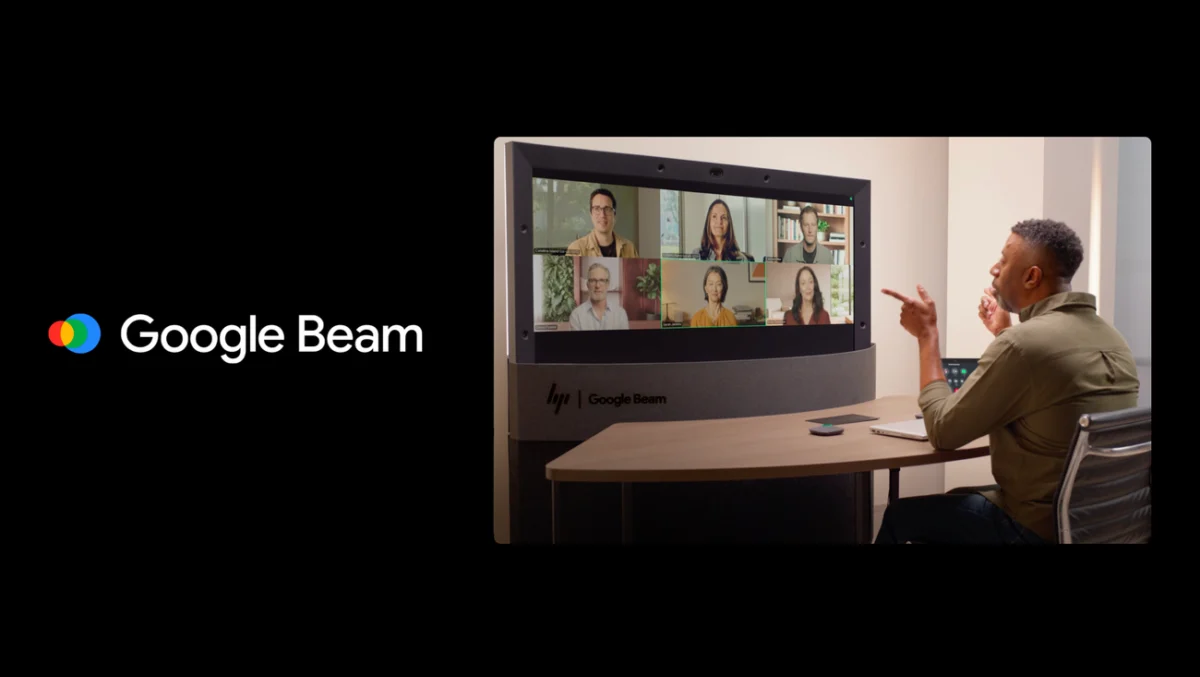
Google is now taking a significant leap forward in addressing this friction. With its latest advancements to Google Beam, the company is aiming to transform the nature of virtual interaction, moving beyond simple screen-sharing to create a "true-to-life" communication environment that mimics the nuances of physical presence.
The Core Problem: Why Modern Meetings Fall Short
To understand the necessity of Google Beam’s latest evolution, one must first examine the limitations of current teleconferencing technology. Traditional video platforms rely on a flat, uniform presentation. Whether a participant is in a boardroom, a home office, or a coffee shop, they are flattened into an identical rectangle.
This uniformity strips away the spatial cues humans rely on for natural social interaction. When we sit around a physical table, our brains use peripheral vision, spatial audio, and relative size to process who is speaking, their emotional state, and their engagement level. In a standard Zoom or Google Meet call, these cues are absent. Participants often report "Zoom fatigue," a phenomenon attributed to the cognitive load required to decode non-verbal communication in a high-latency, two-dimensional environment.
Google Beam was designed to solve this by creating an immersive, photorealistic experience. By utilizing advanced displays—such as the HP Dimension—the platform renders participants as if they are sitting across from you, effectively "breaking the screen" to restore the depth and presence lost in traditional video calls.
Chronology of Development: From Concept to Immersive Reality
The journey toward Google Beam’s current state is rooted in years of intensive research into light-field technology and spatial computing.
- The Research Phase: Google’s internal teams spent years studying human perception in group settings. They sought to identify exactly what creates the "feeling" of being in the same room. The findings highlighted two critical factors: life-sized representation and spatial audio.
- The Early Prototypes: Initial versions of the technology focused on one-on-one communication. The goal was to perfect the rendering of a single individual, ensuring that eye contact and facial expressions were transmitted with absolute fidelity.
- The Scaling Challenge: The primary hurdle was moving from one-on-one to group environments. How do you maintain the illusion of depth when multiple people are joining from various locations, often using different devices?
- The Latest Experiment: Today, Google is rolling out an experimental update to Beam that integrates these learnings into a broader ecosystem. By leveraging the HP Dimension’s immersive display, the platform can now render multiple remote participants at true-to-life scale, positioning them dynamically around a virtual table.
Supporting Data: Quantifying the Impact of Presence
The effectiveness of these new tools is not merely anecdotal. Google’s internal research department has conducted extensive testing to measure the impact of immersive technology on team dynamics. The results underscore a profound shift in participant behavior.
Closing the Inclusion Gap
The data indicates that when participants are represented in their true size, the psychological barrier between "in-room" and "remote" employees begins to evaporate.
- 50% Stronger Social Connection: Participants reported a significantly higher sense of belonging and interpersonal connection when using Beam’s immersive interface compared to traditional video grid layouts.
- 21% Increase in Contributions: Perhaps most importantly for corporate productivity, the study found a 21% increase in the frequency and quality of contributions. When people feel "present," they are more likely to participate, interrupt naturally, and engage in the spontaneous ideation that characterizes high-functioning teams.
These figures suggest that the "inclusion gap" is not just a cultural problem, but a technical one. By refining the hardware and software interface, companies can lower the barrier to entry for remote workers, ensuring that the best ideas are heard regardless of the contributor’s physical location.
Official Responses and Strategic Partnerships
Google’s strategy for Beam is not to create a closed, proprietary island, but to integrate with the tools that businesses already rely on. This is where the collaboration with Zoom becomes a cornerstone of the project.
"Zoom is known for meetings that just work," says Jeff Smith, Head of Product for Zoom Workplace. "And now, we’re bringing our most-loved features into Google Beam for Zoom to deliver a best-in-class collaboration experience for every meeting."
This partnership is crucial because it addresses the friction of transition. Users do not want to learn a new operating system to join a meeting. By embedding Zoom’s interface and functionality within the high-fidelity environment of Google Beam, the companies are aiming to provide a "best-of-both-worlds" scenario: the reliability and familiarity of Zoom, coupled with the spatial realism of Google’s immersive display technology.
Implications: The Future of the Digital Workplace
The implications of this technology extend far beyond the corporate boardroom. As these systems become more efficient and less hardware-intensive, we are looking at a fundamental shift in how human beings interact at scale.
The Death of the "Second-Class" Remote Citizen
Historically, remote employees have often felt like second-class citizens in a hybrid meeting. They are the faces on the wall, often struggling to hear the side conversations in the room or failing to catch the speaker’s attention. If Google Beam succeeds in its goal of normalizing "true-to-life" presence, the physical location of a meeting attendee will become irrelevant. If everyone is rendered in 3D, space-aware, and life-sized, the distinction between "in-person" and "remote" dissolves.
Impact on Global Collaboration
Global teams are currently hindered by time zones and the "unnatural" nature of long-distance collaboration. By creating an environment where a colleague in Tokyo feels as though they are sitting across the table from a colleague in New York, companies can foster deeper mentorship, more effective brainstorming sessions, and a stronger organizational culture that isn’t dependent on the physical office.
The Next Frontier: Spatial Audio and AI
The integration of spatial audio is the final piece of the puzzle. By anchoring each voice to the location of the person on the screen, Google is tapping into the brain’s "cocktail party effect"—the ability to focus on a single voice in a noisy environment. As AI continues to advance, we can expect future iterations of Beam to include real-time, context-aware audio filtering, further reducing the background noise and confusion that often plagues large group calls.
Looking Ahead: What to Expect Next
While the current experiment is a significant milestone, it is still in the early stages of development. Google has indicated that the rollout will be incremental, focusing on refining the rendering accuracy and expanding device compatibility.
For those interested in following the evolution of this project, Google has established beam.google as a centralized hub for updates, research findings, and technical documentation. As the technology matures, the question for many businesses will no longer be "how do we conduct this meeting?" but rather "how can we use immersive presence to deepen our collaboration?"
The transition to a truly immersive hybrid environment is no longer a matter of science fiction. Through the marriage of high-fidelity hardware like the HP Dimension and sophisticated software interfaces, the future of work is beginning to look less like a series of disconnected screens and more like a shared, human experience. The "inclusion gap" is shrinking, and with it, the possibility for a more connected, efficient, and collaborative global workforce.


 Dwi Wanna
 Siti Muinah

 Asep Darmawan

 Layla Zulfa

 Suro Senen
 Evan Lee Salim