
 Azzam Bilal Chamdy

In the competitive, crowded landscape of the “better-for-you” snack industry, success is rarely a straight line. It is a grueling, iterative process of trial, error, and high-stakes decision-making. Erica Groussman, the founder and CEO of Trubar, knows this better than anyone. What began as a humble experiment with a wooden tray and a handful of protein bars from a local Bed Bath & Beyond has culminated in a staggering $173 million acquisition by Turkish snack giant Eti Gida. Today, Trubar is a household name in 32,000 U.S. retail locations, having shipped nearly 46 million bars in 2026 alone—a testament to a founder who refused to quit even when faced with $7 million in debt.
The Genesis of a Better Bar: A Mother’s Epiphany
The origins of Trubar were not found in a boardroom, but in the discomfort of a Disney family vacation. As a stay-at-home mother raising two children, Groussman was an avid consumer of protein bars. However, she found that while these snacks served their purpose, they often left her feeling physically ill—distended, uncomfortable, and weighed down by the ingredients common in the industry at the time.
“I remember just feeling very ‘ucky,’” Groussman recalls. “My belly was very distended and uncomfortable. That was my epiphany. There has to be a better way.”
Driven by the need for a snack that satisfied the palate like a decadent dessert while maintaining a clean, health-conscious profile, Groussman began the arduous process of product development. She bypassed the typical corporate route, instead tapping into her personal network to find a food scientist willing to experiment. The development phase was deeply sensory; Groussman became the primary arbiter of taste, focusing intensely on texture, flavor profiles, and, crucially, the elimination of unpleasant aftertastes.
Chronology of a High-Growth Journey
The trajectory of Trubar is a masterclass in bootstrapping and strategic pivots.
- 2018: Trubar officially launches. Groussman adopts a "boots-on-the-ground" sales strategy, placing bars on the counters of local juice shops, delis, and salons. This grassroots testing validates the product, as the high sell-through rates prove that consumers are hungry for exactly what she created.
- The Mid-Stage Crisis: In an attempt to scale, Groussman brought on an outside operator to manage the business. The move proved disastrous; the individual’s spending far outpaced revenue, plunging the company into $7 million in debt. It was a dark moment that tested Groussman’s resolve, with family members urging her to liquidate and walk away. She refused.
- 2020-2021: Through sheer persistence, Groussman secured a trial in 30 Whole Foods locations. With no marketing budget, Trubar defied the odds, becoming the top-selling bar in those stores. In 2021, the company was acquired by a publicly traded holding company to facilitate further growth.
- 2024-2025: The holding company’s other assets struggled, but Trubar flourished. Groussman was appointed CEO of the entire public entity, which was eventually rebranded to center on the Trubar business. The brand hit a gross revenue of $100 million in 2025.
- 2026: Eti Gida acquires Trubar for $173 million, marking the beginning of a new chapter of global expansion.
Supporting Data: The Scale of Success
The numbers behind Trubar’s growth are as compelling as the story of its founder. The brand’s expansion from small-scale counter placements to 32,000 retail outlets across the United States highlights the efficacy of its distribution strategy.
By 2026, the company was shipping nearly 46 million protein bars annually. This volume is backed by a robust, albeit lean, team of 28 employees who operate under Groussman’s direct and hands-on leadership style. The financial performance of the company—reaching $100 million in gross revenue in 2025—positioned it as the crown jewel of its former holding company and an attractive target for international acquisition.
The "Mama Bear" Leadership Style
Perhaps the most distinctive aspect of Trubar’s success is the management philosophy of its founder. Groussman rejects the archetype of the distant, high-level executive. Instead, she remains embedded in the operational weeds, often personally intervening when crises arise.
Her "mama bear" approach was clearly demonstrated during a critical rollout for Walmart. When a shipment was threatened by logistical delays, Groussman personally reached out to alternative packaging suppliers, securing a solution in two weeks that saved the launch. On another occasion, when a labeling error misidentified ingredients (a critical risk in the food industry), she didn’t wait for a corporate directive. She dispatched her team to local stores, bought every available green sticker, and manually corrected the packaging on-site.
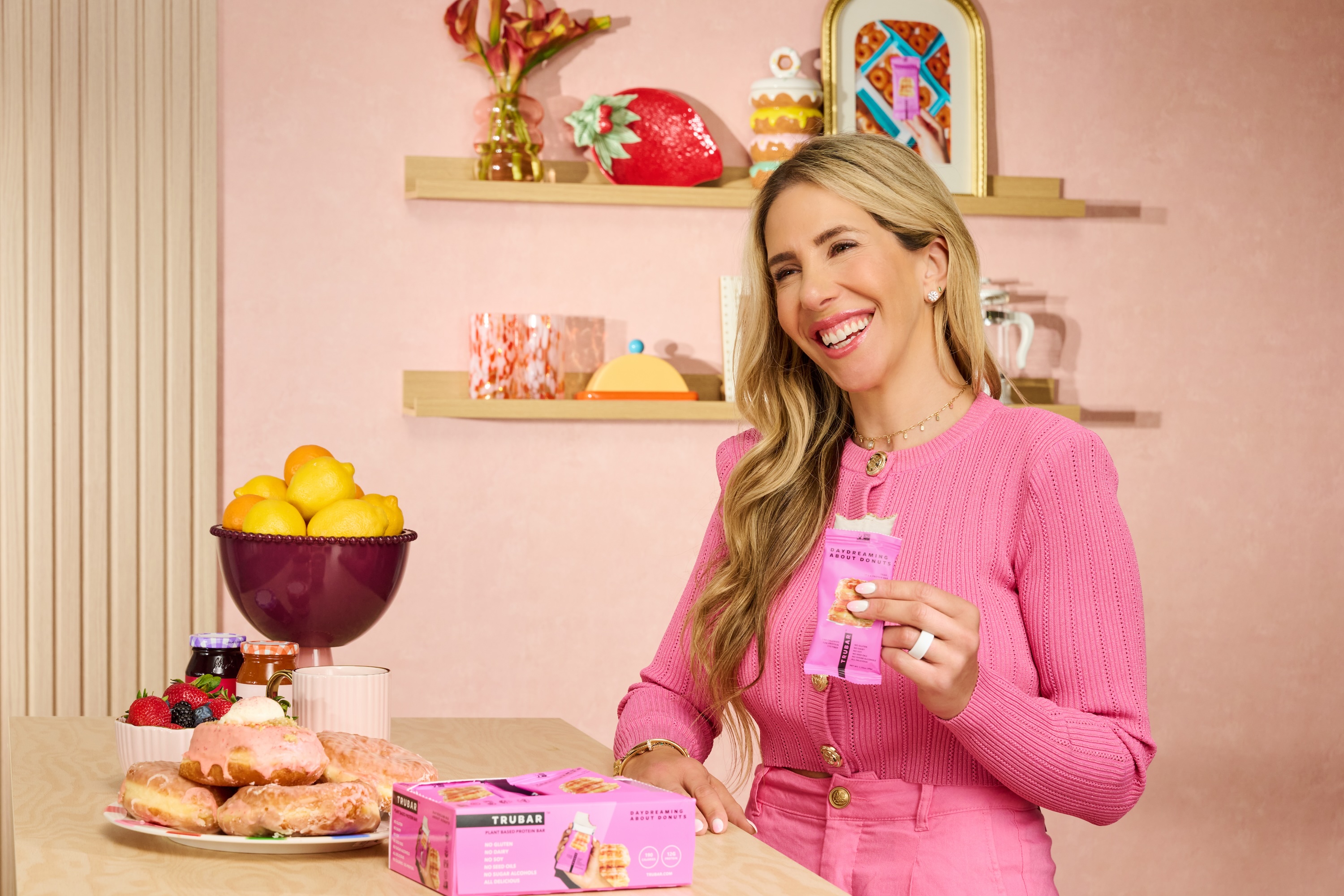
“I like to make sure the wheels are moving,” she explains. “When anything is slightly going wrong, I’m like a mama bear. What do I gotta do? Who do I need to talk to?”
Strategic Implications: Lessons for Future Founders
Groussman’s journey offers several key takeaways for entrepreneurs looking to navigate the volatile CPG (Consumer Packaged Goods) market.
1. Solve, Then Diagnose
Groussman emphasizes that many founders fall into the trap of analysis paralysis. She argues that in a fast-paced environment, "solving" is a priority. "Just get 80%, just go," she advises. By acting first, you gain the data necessary to diagnose deeper issues later. This bias toward action is what allowed her to survive the $7 million debt crisis; she kept the business moving until the product market fit became undeniable.
2. Hire for Chemistry, Interview for Resumes
In her experience, the most successful hires are not those with the most impressive pedigree, but those with the ability to take initiative. In a startup environment, the ability to make a decision—even if it isn’t perfect—is more valuable than the ability to follow a perfect process. "I want my team to be able to make decisions and to grow," she says. "If they come up with an idea, try it. What’s the harm?"
3. The Value of Resilience in Distribution
The Canadian Costco launch, which initially struggled, serves as a vital lesson in global scaling. It taught Groussman that a failed entry in one market is not an indictment of the product itself. Pricing, brand awareness, and timing are distinct variables. By remaining agile and refusing to let a single regional failure define her global strategy, she eventually found the right cadence for the U.S. market.
Looking Forward: The Next Phase
The $173 million acquisition by Eti Gida is, in Groussman’s view, not an exit, but an acceleration. She retains her role as CEO and has kept her core team intact—a non-negotiable condition of the sale. With the launch of Trubar Kids and Trubar Pro, the company is aggressively diversifying its product line.
The story of Trubar is not just about a protein bar that tastes like a donut; it is about the power of ownership. Erica Groussman’s journey from a childhood paper route to the CEO of a multi-million dollar global brand underscores the importance of tenacity. She didn’t just build a company; she navigated it through the valley of the shadow of bankruptcy, championed it through a publicly traded corporate structure, and emerged on the other side with a brand that has fundamentally changed the snacking habits of millions.
As she looks toward the future, her message to other entrepreneurs remains simple, echoing the grit that got her here: "Really getting it into every hand that you can possibly get it into." For Groussman, the work is never finished—it is just getting started.


 Ali Ikhwan

 Nila Kartika Wati

 Raul Delapena Setiawan

 Reynand Wu

 Sagoh

