
 Nana Muazin
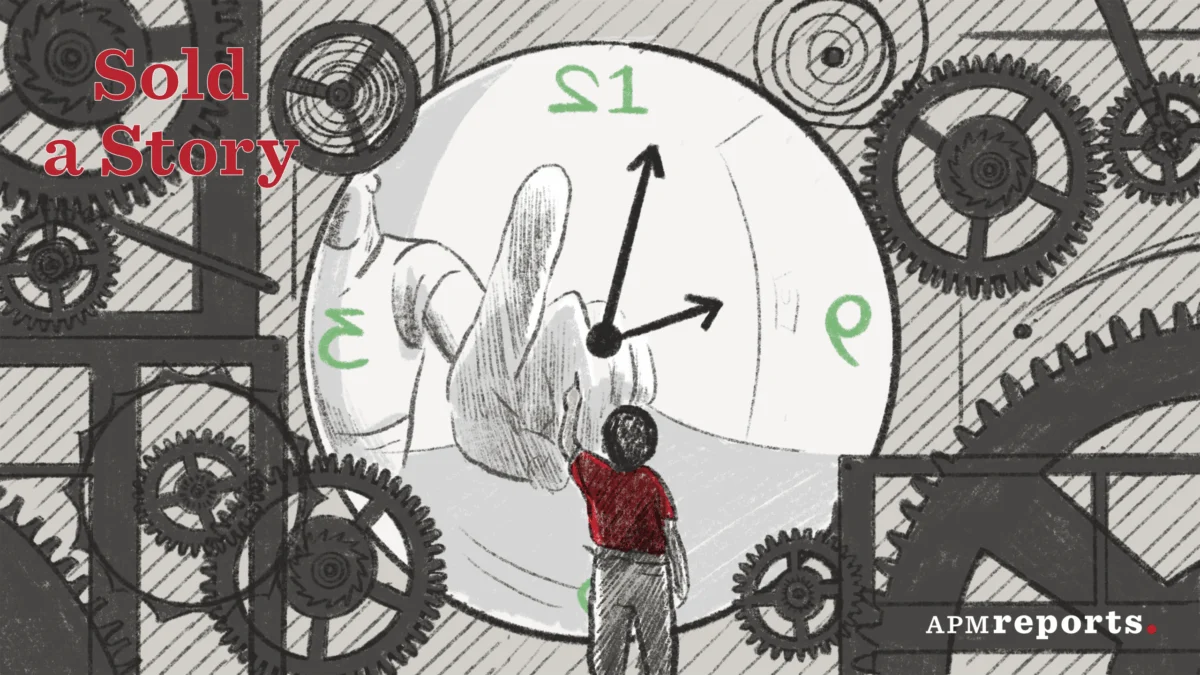
This investigative report is based on the debut episode of Season 2 of "Sold a Story," an award-winning podcast production by APM Reports. The series continues its deep dive into the disconnect between cognitive science and classroom practice.
The American education system has long been defined by a fundamental tension: the battle between progressive, child-centered philosophies and structured, evidence-based instruction. For decades, this tug-of-war has left millions of students caught in the middle, struggling to master foundational skills while educators and policymakers debate the "best" way to teach.
In Season 1, the Sold a Story podcast exposed the widespread failure of reading instruction in American schools, detailing how flawed theories—often devoid of rigorous scientific backing—became the standard for teaching children how to decode text. Now, in the highly anticipated Season 2, the investigation pivots from the mechanics of literacy to the broader, more complex landscape of teaching itself. At the heart of this inquiry is a man who was once the ultimate education outsider: Zig Engelmann.
The Outsider Who Taught Toddlers Algebra
To understand the current state of American classrooms, one must look back to the 1960s, a decade of profound social and educational upheaval. It was during this era that Siegfried "Zig" Engelmann, a man who possessed no traditional credentials in education, began to disrupt the pedagogical status quo.
Engelmann was not interested in the abstract theories of child development that dominated teacher preparation programs at the time. Instead, he was interested in results. He operated on a simple, radical premise: if a student failed to learn, it was not the student’s fault—it was the fault of the instruction.
To prove his point, Engelmann turned his attention to the most unlikely of subjects: his own 4-year-old twins. While the educational establishment of the 1960s argued that young children lacked the cognitive maturity for abstract mathematical reasoning, Engelmann saw no such limitations. Through a series of structured, repetitive, and carefully calibrated lessons, he began teaching his children basic algebra.
The results were astonishing. His children were not just memorizing rote facts; they were grasping the underlying logic of mathematical operations. Yet, when Engelmann attempted to share his findings with the academic establishment, he was met with skepticism, dismissal, and outright hostility. He was an interloper in a field that valued degrees, tenure, and tradition over empirical evidence.
A Chronology of Disruption: From Kitchen Table to Classroom
The journey from Engelmann’s home-based experiments to a full-scale educational movement is a story of persistence against a rigid bureaucratic machine.
- 1964: Engelmann begins his private experiments, refining his techniques for clear communication and logical sequencing. He realizes that the "language of instruction" is just as important as the content itself.
- 1966: A pivotal moment occurs when a professor—seeing potential in Engelmann’s unorthodox methods—provides him with an opportunity to test his theories in a classroom setting. This marked the beginning of a long, often fraught relationship between Engelmann and the institutional world.
- 1967: Engelmann becomes a key figure in "Project Follow Through," the largest and most expensive educational experiment in American history. Funded by the federal government, the project sought to determine which instructional methods were most effective for children in low-income schools.
- 1970s: Data begins to emerge from Project Follow Through. Despite the intense scrutiny and opposition from proponents of "open classroom" and child-centered models, Engelmann’s approach—later known as Direct Instruction (DI)—consistently produced the highest achievement gains in reading, math, and language.
- 1980s–Present: Despite the success shown in the data, the adoption of structured, evidence-based methods remains sporadic. The influence of "constructivist" theories continues to hold sway in many colleges of education, leading to a persistent divide between what research dictates and what is actually taught in schools.
Supporting Data: Why Methods Matter
The friction surrounding Engelmann’s work is not merely a matter of personality clashes; it is a matter of data. The Follow Through experiment provided a massive, longitudinal dataset that proved, unequivocally, that structured, explicit instruction yields superior outcomes for students from diverse backgrounds.
In classrooms where Direct Instruction was implemented with fidelity, students showed significant improvements in standardized test scores. Critics, however, argued that the curriculum was "too scripted" or "too rigid," ignoring the fact that the "rigidity" was the mechanism by which the instruction was standardized and, therefore, made effective.
Research has consistently shown that children—particularly those who do not have the benefit of extensive background knowledge or literacy-rich home environments—thrive when instruction is systematic. The "discovery learning" models, which were the ideological antithesis of Engelmann’s work, often left these students behind, assuming they would "pick up" complex concepts through exploration rather than explicit teaching.
The Official Response: A Legacy of Skepticism
The educational establishment’s resistance to Engelmann’s work was rooted in a deep-seated belief that "teacher autonomy" and "creative freedom" were the highest virtues of the profession. To many educators of that era, the idea of a "scripted" curriculum felt like an insult to their professional training.

University programs often framed Engelmann’s methods as dehumanizing. They argued that by stripping away the teacher’s ability to improvise, the school system was turning teachers into technicians. This narrative became so powerful that it effectively marginalized evidence-based practices for decades.
In recent years, however, there has been a shift. As reading scores have stagnated or declined, and as the "science of reading" movement has gained national momentum, school districts are finally beginning to revisit the lessons that Zig Engelmann tried to teach them sixty years ago. The realization that students deserve clarity, structure, and proven methods is finally superseding the preference for feel-good, yet ineffective, instructional philosophies.
The Implications for Modern Classrooms
The story of Zig Engelmann is not just a historical footnote; it is a mirror reflecting the current crisis in American education. When we look at the systemic failures in reading, math, and critical thinking, we are often looking at the same refusal to prioritize evidence over ideology.
1. The Death of "Discovery Learning"
The pedagogical shift back toward explicit instruction suggests that the era of unguided "discovery learning" may finally be drawing to a close. While inquiry is a valuable tool for advanced learners, it is a poor substitute for foundational knowledge in the early grades.
2. Professional Development Reimagined
If teachers are to succeed, they must be trained in the science of how children learn. This requires a radical overhaul of teacher preparation programs. Educators need to understand cognitive load theory, the importance of explicit sequencing, and the necessity of data-driven instruction.
3. Bridging the Equity Gap
Perhaps the most significant implication of Engelmann’s work is the role of instruction in social equity. By providing every child with high-quality, effective instruction, the school system can act as the great equalizer. When schools rely on "soft" methods that only benefit students who are already well-supported at home, they inadvertently perpetuate systemic inequality.
4. The Power of "Sold a Story"
As the Sold a Story podcast series explores, the problems in our schools are not the result of malicious intent, but rather a collective adherence to flawed ideas that were never vetted against reality. By uncovering the history of these ideas, the podcast provides a roadmap for what we must avoid in the future.
Conclusion: A Call to Clarity
The legacy of Zig Engelmann is a challenge to all who work in education: are you more committed to the comfort of your theories, or the success of your students?
As we move further into the 21st century, the demand for accountability in the classroom will only increase. Parents, taxpayers, and students are no longer satisfied with the vague promises of "innovative" teaching methods that yield no tangible progress. They are demanding the rigor, the evidence, and the clarity that Engelmann championed long before the world was ready to listen.
The lesson of the 1960s—that children are capable of extraordinary learning when given the right tools—is more relevant today than ever. The transition toward a more scientific, evidence-based approach to teaching is not just an academic exercise; it is an moral imperative. If we are to provide a quality education to every child, we must be willing to abandon the stories we have been told about teaching and replace them with the science of what actually works.
For those interested in the full scope of this investigation, Season 2 of "Sold a Story" is available now on all major podcast platforms. By examining the roots of our pedagogical choices, we can begin to build a system that truly serves the potential of every child.


 Layla Zulfa

 Ali Ikhwan

 Raul Delapena Setiawan

 Reynand Wu

 Sagoh


 Azzam Bilal Chamdy

