
 Ammar Sabilarrohman
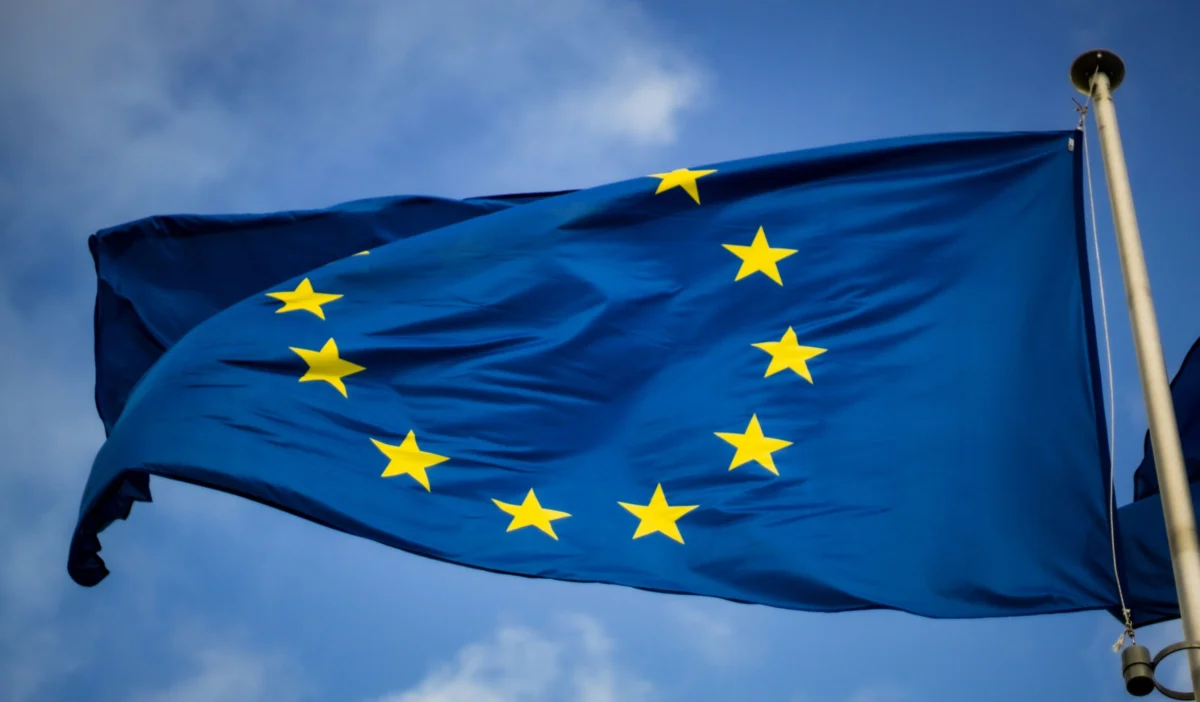
In the corridors of power across Brussels, Paris, and Stockholm, a quiet revolution is unfolding. European government agencies, long tethered to the dominant ecosystems of US-based technology giants, are increasingly pivoting toward open-source, decentralized communication standards. At the heart of this movement lies Matrix, an open-source protocol for secure, real-time communication that is rapidly becoming the gold standard for European digital sovereignty.
As geopolitical tensions rise and concerns regarding data privacy and vendor lock-in intensify, organizations like the European Commission and Swedish government agencies are integrating Matrix-based tools into their workflows. While these agencies are not yet abandoning established platforms like Microsoft Teams, they are deploying Matrix as a critical, sovereign layer of their infrastructure, ensuring that sensitive internal communications remain under their own control and ownership.
The Genesis of a Movement: Digital Sovereignty in Europe
The modern enterprise software landscape has long been dominated by a few Silicon Valley titans. For many European institutions, this dependence has become a source of strategic vulnerability. The turning point for many was not merely a philosophical preference for open source, but a pragmatic response to real-world risks.
In early 2026, the suspension of an International Criminal Court (ICC) prosecutor’s Microsoft account sent shockwaves through the European administrative sector. The incident served as a stark reminder that political pressure could potentially lead to the restriction of access to essential communication services.
"Matrix began as an interesting experiment in creating a communication standard for the wider internet, but it has since become the poster child for digital sovereignty," said Matthew Hodgson, co-founder of the Matrix Foundation and CEO of Element. During the recent Matrix Conference in Malmö, Sweden, Hodgson noted that his organization is currently tracking 65 major national and international-scale deployments of the protocol across Europe.
Chronology: From Experimental Protocol to Institutional Standard
The evolution of Matrix from a niche project to a government-grade utility has been a decade in the making:
- 2014: Matrix is launched as an open-source standard for decentralized, encrypted messaging.
- Early 2020s: France’s Interministerial Directorate for Digital Affairs (DINUM) pioneers the use of Matrix for government communications with the launch of "Tchap," a secure messaging app currently serving over 400,000 civil servants.
- Summer 2025: The European Commission initiates a project to roll out a Matrix-based application to its staff.
- December 2025: A successful proof-of-concept (PoC) for the Commission’s rollout is completed.
- September 2026: The desktop client deployment for Commission laptops reaches completion, marking a major milestone in the move away from total reliance on proprietary software.
- Ongoing (2027): Swedish agencies under the eSam program are finalizing reports on federated communication models, with a focus on cross-agency interoperability.
The European Commission’s Strategic Rollout
For the European Commission, the shift to Matrix is driven by a desire for business continuity and "contractual leverage." Diana Gheorghe, head of sector for Communication and Collaboration Services, emphasizes that the primary goal is not to replace existing suites overnight, but to establish a resilient, owned infrastructure.
"We wanted to have data control and ownership of the platform," Gheorghe explained at the Malmö conference. The Commission is currently in the adoption phase, encouraging employees to utilize the Element-based application while gathering feedback to refine the user experience.
However, the transition has not been without friction. Reports from staff—some of which have surfaced in the media—have highlighted performance issues, such as difficulties with colleague discovery and the temporary deactivation of "live presence" features to maintain system stability. The Commission has been quick to manage expectations, clarifying that the Matrix-based tool is intended to complement, rather than act as a direct functional clone of, platforms like Microsoft Teams.
Swedish Agencies and the Power of Federation
While the European Commission navigates the complexities of a single-institution rollout, Swedish agencies are tackling the next frontier: federation.
Under the umbrella of eSam, a collaborative program for digital transformation across 42 Swedish government bodies, agencies are exploring how to make different Matrix-compatible apps talk to each other. Kenneth Edwall, an IT architect at the Swedish Social Insurance Agency (Försäkringskassan), views this as a vital step toward a unified, secure public sector network.
"The idea is not that these solutions need to be exactly like Microsoft Teams," Edwall noted. "That is not the driver—it’s the sovereignty part. We can live without the ‘coolest’ features if it means we own the communication channel."
The Swedish model is already demonstrating success. A recent PoC connected the Matrix-based systems of Försäkringskassan and Trafikverket. Despite running on different software (Element and Rocket.Chat, respectively), the two agencies were able to interoperate effectively. This federation capability addresses a major security concern: the current reliance on "guest accounts" across disparate platforms, which creates significant governance and offboarding headaches.
Supporting Data and Technical Realities
The technical feasibility of a pan-European, sovereign communication network was put to the test during the Matrix Conference. A live demonstration successfully federated the communication systems of:
- The European Commission
- France’s DINUM
- Sweden’s Försäkringskassan
- NATO
- The German state of Schleswig-Holstein
This "proof of concept" underscores that the infrastructure for a federated, sovereign Europe is technically viable. However, the hurdle remains one of policy rather than engineering. Determining who is allowed into this "federated garden" and how open the communication should be are questions that remain under intense debate by policymakers.
Implications: The Long Road to Digital Independence
While the momentum behind Matrix is undeniable, industry experts urge a balanced perspective on the timeline of this transition. Dario Maisto, a principal analyst at Forrester, argues that the "Teams vs. Element" debate often misses the broader strategic picture.
"This is not just an IT problem; it is a board-level, strategic decision," Maisto says. "The risk that an organization might wake up tomorrow and find their primary collaboration tool inaccessible is material. It has happened before, and it will happen again."
The "Sunk Cost" Barrier
A major impediment to rapid adoption is the heavy investment organizations have already made in proprietary cloud suites during the COVID-19 pandemic. "If an agency is still amortizing the cost of a multi-million-euro migration to a cloud-based productivity suite, they are not going to start an entirely new, expensive project overnight," Maisto observes.
The Holistic Sovereignty Challenge
Furthermore, observers warn that replacing a chat app is only the tip of the iceberg. True digital sovereignty requires a reassessment of the entire productivity stack—email, cloud storage, document editing, and identity management. If an agency uses a sovereign chat tool but relies on proprietary cloud services for every other function, the security gains remain limited.
Future Outlook
As the European public sector moves forward, the adoption of Matrix-based messaging is expected to follow a tiered trajectory. Most organizations will likely adopt a "dual-track" strategy: maintaining proprietary suites for general-purpose productivity while shifting sensitive, mission-critical communications to sovereign, Matrix-based platforms.
The coming year will be critical as the European Commission decides the scope of its federation efforts and eSam publishes its final recommendations for Swedish agencies. What is clear is that the conversation has shifted. Digital sovereignty is no longer an abstract ideal for European policymakers; it is a technical requirement, a contractual lever, and an essential component of modern statecraft.
As Kenneth Edwall succinctly put it, the goal is to lower "digital stress." By providing a secure, reliable, and owned environment, European agencies are attempting to ensure that their communications remain resilient, regardless of the political winds blowing from across the Atlantic or elsewhere. For the public sector, the era of unquestioned reliance on external platforms is drawing to a close, replaced by a new, more deliberate approach to building the digital infrastructure of the future.


 Muslim

 Azzam Bilal Chamdy

 Jia Lissa

 Nila Kartika Wati

 Lina Hope

 Rifan Muazin
