
 Pevita Pearce
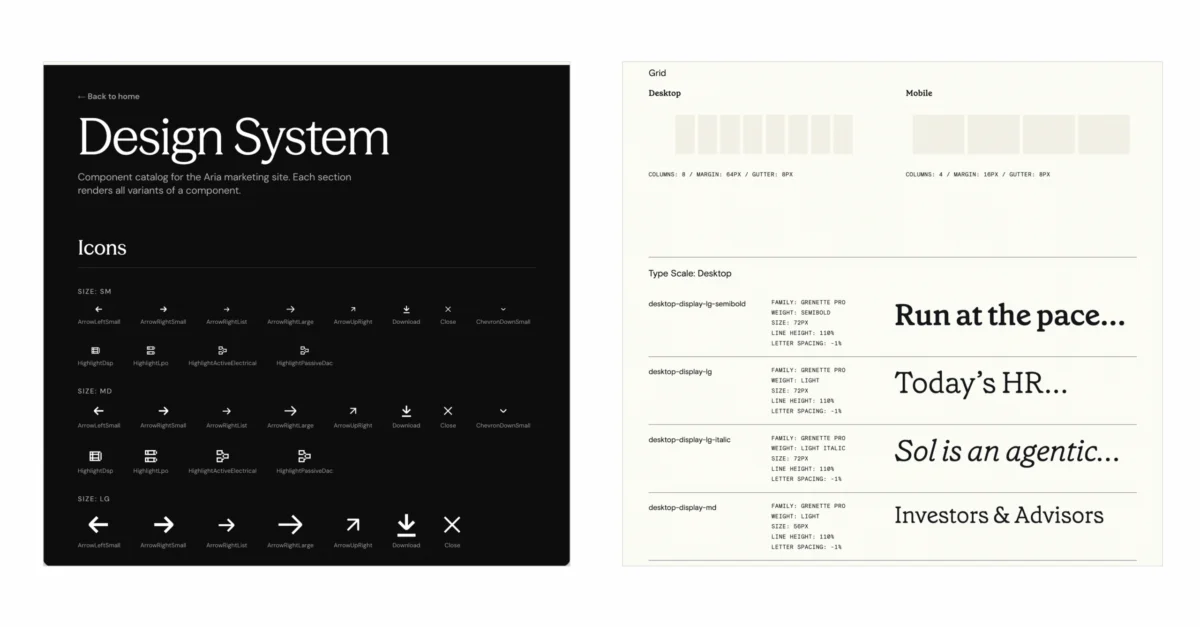
For over two decades, the lifecycle of a corporate design system has followed a predictably tragic trajectory. A team of dedicated designers and developers spends months—sometimes years—meticulously crafting a library of components, typography scales, and color palettes. It is launched with fanfare, heralded as the "source of truth." Yet, within months, the gap between the documentation and the live product begins to widen. As the product evolves, designers move on, priorities shift, and the documentation becomes a ghost of a product that no longer exists.
This cycle of obsolescence is now facing a definitive end. By shifting the role of the design system from a static reference guide to an "AI steering layer," industry leaders are redefining how organizations maintain brand integrity at scale.
The Chronology of Stagnation: Why Systems Fail
To understand the current paradigm shift, one must look back at the historical reliance on manual governance. Historically, when design systems drifted from the live product, organizations responded by throwing human capital at the problem. Centralized "design system teams" were formed, and rigorous design reviews were instituted to police every pull request.
While well-intentioned, these measures created bottlenecks. The friction of human review often discouraged experimentation, and the manual upkeep required to synchronize Figma files, documentation sites, and production code became an unsustainable tax on engineering velocity. For 20 years, the industry operated under the assumption that the "source of truth" could be a document. We now know that in a fast-moving agile environment, a document is merely a snapshot in time.
The arrival of Large Language Models (LLMs) and AI agents has fundamentally altered this timeline. We have moved from the era of "Static Documentation" (2000–2015) and "Design Tokens/Sync" (2015–2023) to the current era of "Autonomous Steering" (2024–Present).
The AI Steering Layer: A New Philosophy
The core innovation presented by modern design leaders is the conceptualization of the design system as an "AI steering layer." In this model, the design system acts as the guardrails for autonomous agents.
When an AI agent is tasked with building a new landing page, updating a pricing table, or generating documentation, it does not act in a vacuum. By embedding design system instructions—tokens, component definitions, and accessibility standards—directly into the agent’s context window (often via files like AGENTS.md or system prompts), the agent becomes a tireless enforcer of brand standards.
The Mechanics of Collaborative Steering
"Collaborative steering" is the process by which a design lead and a front-end lead define the grid, color, and component logic once, ensuring that every AI agent in the organization "snaps" to these constraints.
Unlike human developers, who may occasionally deviate from a design system due to time pressure or a misunderstanding of the guidelines, AI agents are algorithmic. If the steering layer is correctly defined, the agent will not simply "try" to use the existing button component; it will be mathematically incapable of creating a button that does not conform to the predefined CSS variables. This ensures that as marketing teams, product managers, and engineers deploy AI to accelerate their workflows, the site maintains a unified aesthetic and functional integrity.
Supporting Data and Real-World Implementation
The efficacy of this model is best observed through recent projects like Intent, Sol, and Aria. These projects demonstrate that the most robust design systems are not those that sit in a separate Figma file, but those that live within the codebase itself.
The Intent Case Study
On the Intent website, the team bypassed the traditional "documentation-first" approach. Instead, they utilized an AGENTS.md file that explicitly instructs AI agents to reference global stylesheet variables rather than defining new values.
The results are striking:
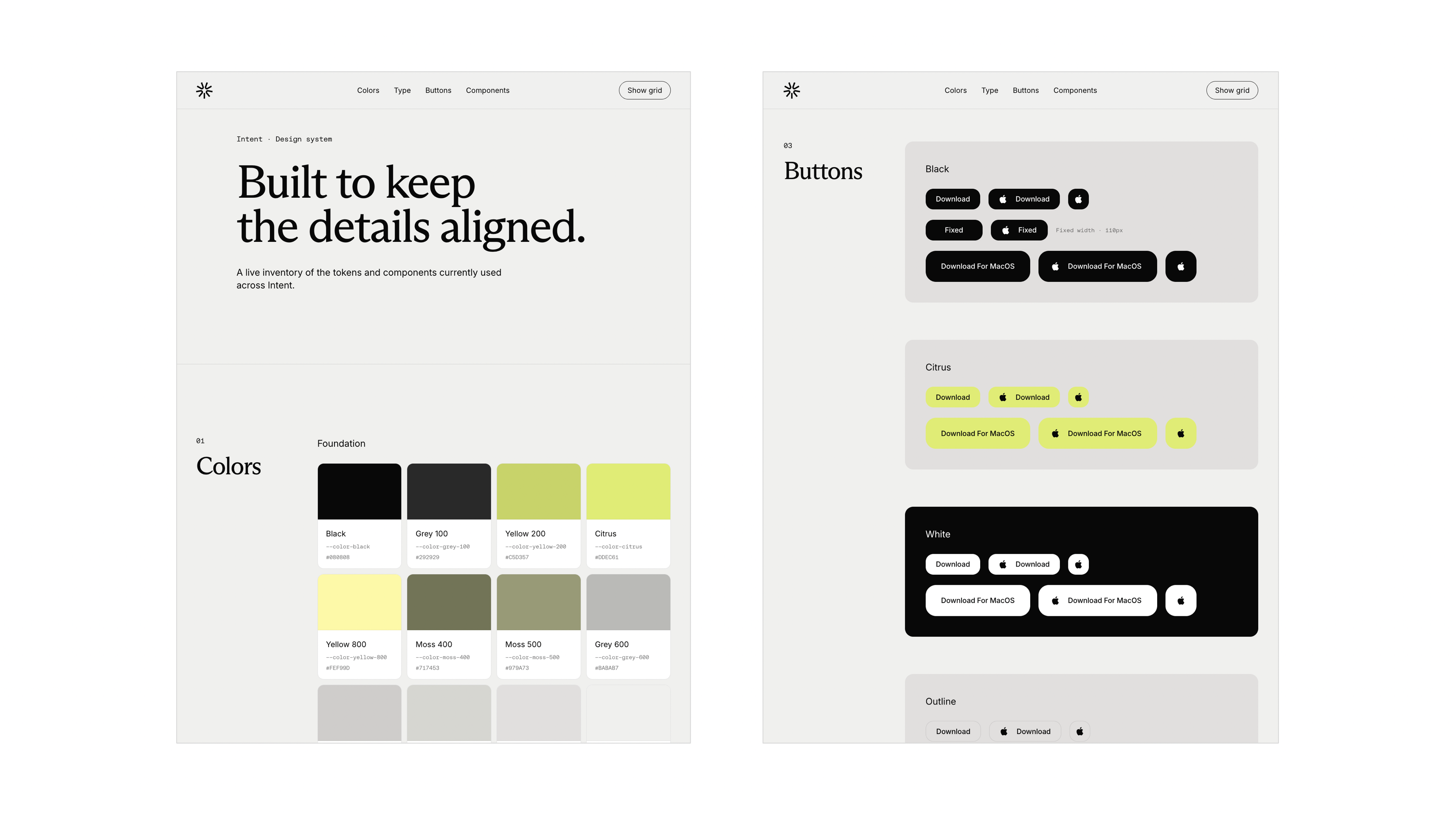
- Source of Truth: The design system is generated directly from the site’s live CSS variables.
- Automatic Adaptation: When an agent is prompted to add a component, it pulls from the live library, which automatically supports dark mode and responsive breakpoints.
- Figma-to-Code Loop: While the team utilized Figma MCP (Model Context Protocol) connections to translate initial specs into code, the code quickly became the primary source of truth. The team found that once the code was established, they could actually have agents write changes back to Figma, though they rarely find it necessary because the code itself is always up to date.
Parity via Code-Based Documentation
The websites Sol and Aria utilize a similar architecture. By hosting their design systems as live, functional pages built from the same repository as the product, they ensure that the documentation is never "out of sync." If a font size changes in the site’s base CSS, the documentation page updates instantly. The documentation is no longer a manual entry task; it is a side effect of good engineering.
Implications for the Future of Design
The implications of this shift are profound, affecting everything from organizational structure to the nature of the "Designer" role.
1. The Death of Documentation Debt
For years, designers have bemoaned the fact that stakeholders "never read the documentation." With AI agents, this argument becomes moot. Agents read the documentation every single time they execute a task. They do not get tired, they do not skip sections, and they do not "interpret" guidelines loosely. The documentation is the agent’s constitution.
2. The Shift in Human Roles
If agents are handling the implementation of design systems, what happens to the design team? The role of the designer is shifting from "Creator of Components" to "Architect of Systems." Designers will spend less time drawing individual buttons and more time defining the constraints and rules that govern the AI’s behavior. The "Design Lead" becomes a "Systems Engineer of Taste."
3. Accelerated Velocity
The bottleneck of design review is eliminated. Because the AI is constrained by the steering layer, the need for a human to check if a margin is 16px or 20px vanishes. Human designers can focus their cognitive load on higher-order problems—user flows, conversion strategy, and overall brand narrative—leaving the "pixel-pushing" to the steering layer.
4. Enterprise Scalability
For large enterprises, the challenge has always been consistency across hundreds of micro-sites and thousands of pages. Manual design systems cannot scale to this level. However, a standardized AI steering layer can be deployed globally. A company can ensure that every agent, whether in London, New York, or Tokyo, is pulling from the same central design tokens. This creates a level of brand consistency that was previously impossible to maintain.
Expert Perspective: The Shift in "Source of Truth"
The transition from Figma-as-truth to Code-as-truth is a pivotal realization. In the past, designers clung to Figma because it provided a visual interface that code could not easily replicate. However, with modern front-end frameworks and the ability for AI to inspect and manipulate DOM structures in real-time, the visual interface is now a byproduct of the code, not the source of it.
Industry experts note that the most successful design systems in the coming decade will be those that prioritize "Agent-Readable" formats. This means moving away from prose-heavy design manuals and toward structured, semantic, and programmatic definitions that an LLM can parse and implement with 100% fidelity.
Conclusion: A New Era of Digital Integrity
The narrative of the "dying" design system is actually a story of evolution. By treating design systems as the fundamental steering layer for AI, we are moving away from the fragile, manual systems of the past and into an era of automated, immutable brand integrity.
Organizations that fail to adopt this mindset will continue to struggle with "design drift," where their digital products become a patchwork of inconsistent, unmaintained experiences. Conversely, those that embrace the AI steering layer will find themselves with a massive competitive advantage: the ability to iterate at the speed of thought while maintaining the precision of a master craftsman.
The design system is no longer a static document collecting digital dust. It is now a living, breathing, and active component of the development lifecycle. As we move forward, the most important question for any design leader will not be "How do we get people to read the documentation?" but rather "How well have we defined the rules for our agents?"
The era of the "Dead" design system is over. The era of the "Steering Layer" has arrived.

 Sagoh
 Asep Darmawan

 Raul Delapena Setiawan

 Reynand Wu



 Azzam Bilal Chamdy

 Ali Ikhwan
