
 Iffa Jayyana
By PS Editors
October 23, 2026
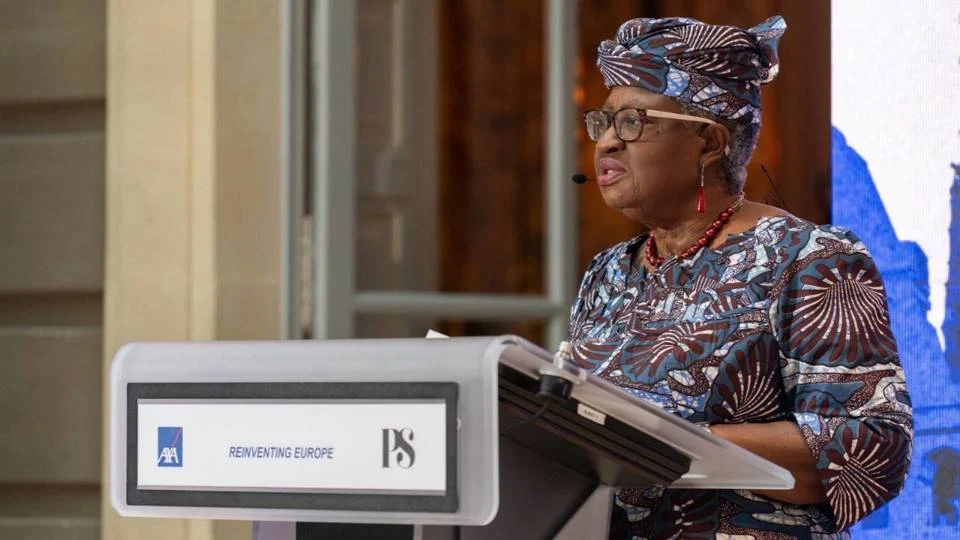
In an era defined by geopolitical volatility, rapid technological disruption, and shifting global supply chains, the imperative to "reinvent" Europe has become a recurring mantra in policy circles. However, according to Ngozi Okonjo-Iweala, Director-General of the World Trade Organization (WTO), the current discourse on European decline is often fueled by a misplaced sense of urgency that ignores the continent’s fundamental strengths.
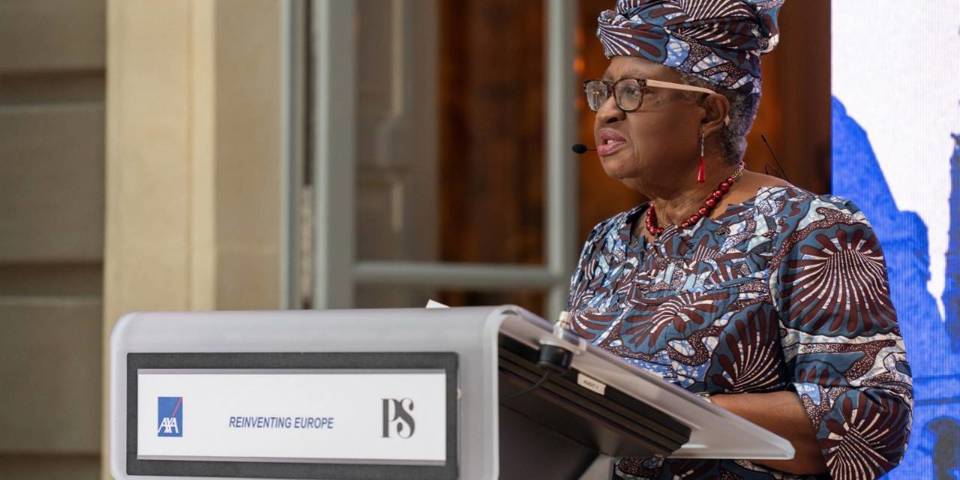
Speaking as the closing keynote speaker at a recent high-level event on the future of the European economy, Okonjo-Iweala challenged policymakers to pivot away from a narrative of panic and toward a strategy of measured, confident reform. Her assessment highlights a critical paradox: while Europe faces undeniable competitive headwinds, its structural resilience and scientific prowess remain underappreciated assets that could serve as the bedrock for a new era of global engagement.
Main Facts: The Resilience of the European Model
The central thesis of Dr. Okonjo-Iweala’s intervention is that the rhetoric of European "obsolescence" is both dangerous and factually incomplete. While it is true that Europe lacks the concentrated tech giants that dominate the landscapes of the United States and China, the continent remains a powerhouse of global commerce, science, and research.
The Trade Powerhouse
Despite the supply chain shocks of the past five years—ranging from pandemic-induced bottlenecks to the fracturing of energy markets—the global trading system has proven remarkably resilient. Europe remains at the heart of this system. Okonjo-Iweala noted that Europe’s integration into global value chains is not a vulnerability to be dismantled, but a sophisticated network that continues to drive innovation in high-value manufacturing, pharmaceuticals, and green technologies.
The Scientific Edge
While Silicon Valley and Shenzhen often grab the headlines for consumer-facing tech, Europe’s dominance in industrial research, fundamental science, and intellectual property remains robust. The continent’s ability to foster collaborative research environments—supported by robust academic institutions and deep-seated investment in R&D—provides a stable foundation for the next generation of industrial technology.
Chronology: A Trajectory of Transformation
To understand where Europe is heading, one must look at the recent timeline of events that have shaped the current European economic outlook:
- 2020–2022 (The Resilience Test): The onset of the COVID-19 pandemic and the subsequent geopolitical shocks caused by the invasion of Ukraine forced a radical reassessment of European strategic autonomy. The period saw a transition from reliance on "just-in-time" supply chains to a focus on "just-in-case" security.
- 2023–2024 (The Competitive Audit): As inflation soared and energy costs hit European industry hard, EU leadership initiated a series of audits regarding the continent’s external competitiveness. These reports often painted a bleak picture of "lost decades," prompting calls for radical industrial policy changes.
- 2025 (The Policy Shift): The European Union began moving toward a more protectionist stance, exemplified by subsidies for green tech and efforts to decouple sensitive sectors from adversarial markets.
- October 2026 (The Okonjo-Iweala Intervention): At the latest summit, the WTO Director-General warned that this shift toward protectionism and panic-driven policy may be counterproductive. She argued that Europe’s path to growth lies not in imitating the models of its rivals, but in leveraging its unique position as a trade powerhouse.
Supporting Data: Understanding the European Landscape
Critics of the European economy often point to the "productivity gap" compared to the US. However, data provided by the WTO and partner institutions suggest that this gap is nuanced.
- Trade Integration: Europe’s intra-continental trade accounts for a significant share of its GDP, providing a cushion against global downturns.
- Export Sophistication: Europe remains the global leader in the export of high-complexity machinery and chemical products, areas where technological barriers to entry remain high.
- Green Investment: Europe has arguably the world’s most advanced regulatory framework for carbon reduction, creating a "first-mover" advantage in the global transition to a circular economy.
- The Africa Opportunity: Okonjo-Iweala highlighted that Africa is set to become the world’s next great manufacturing and consumer hub. With a burgeoning youth population and a projected middle class of over a billion people by 2050, the potential for trade and investment ties between the EU and the African Continental Free Trade Area (AfCFTA) is a massive, largely untapped economic lever.
Official Responses and Strategic Implications
The implications of Dr. Okonjo-Iweala’s remarks have sent ripples through the European policy establishment.
The Call for Measured Reform
European officials have traditionally responded to crises with legislative "sprints." The WTO chief’s warning against acting from a "sense of panic" suggests that the current tendency toward over-regulation—which some argue stifles innovation—should be replaced by more targeted, long-term structural reforms. This includes streamlining the Single Market to allow capital to flow more freely to high-growth startups and deepening trade agreements with emerging economies.
Reimagining the Transatlantic and Global Partnership
There is a growing realization that Europe cannot "go it alone." The implications for the US-EU relationship are clear: instead of competing on subsidies, the two blocs should align on standards for the digital and green economies. Simultaneously, by prioritizing the African market, Europe can diversify its supply chains, reducing its reliance on both Chinese manufacturing and American tech platforms.
The Risk of Protectionism
The most significant implication of the WTO’s stance is a warning against the "beggar-thy-neighbor" policies currently gaining traction in various European capitals. Okonjo-Iweala suggests that if Europe retreats into a protectionist shell, it will lose the very global influence that makes its economy relevant. Maintaining an open, rules-based trading system is not merely an act of idealism; it is a pragmatic necessity for a continent that depends on global markets for its standard of living.
Conclusion: The Path Forward
The "reinvention" of Europe should not be an exercise in mourning what has been lost, but in identifying the latent potential that has been obscured by short-term crisis management.
As Ngozi Okonjo-Iweala articulated, Europe possesses the institutional stability, the scientific depth, and the historical trade relationships to remain a global hegemon. However, this success requires a shift in mindset. Europe must stop viewing itself as a reactive power—constantly defending its borders and its legacy—and start acting as a proactive leader that sets the rules for the 21st-century global economy.
The message is clear: Europe’s future is not behind it. By shedding the panic of the last few years and embracing a strategy of confident, measured, and outward-looking reform, the continent can ensure that it remains not just a witness to history, but one of its primary architects. The untapped synergy between European capital and the rising promise of the African market serves as the most potent symbol of this new, revitalized path forward.
For policymakers, the challenge is now to translate this vision into legislation that fosters, rather than stifles, the unique strengths that have defined Europe for decades. The time for panic has passed; the time for strategic, deliberate, and confident action has begun.


 Nana Wu
 Reynand Wu

 Raul Delapena Setiawan


 Sagoh


 Azzam Bilal Chamdy

 Ali Ikhwan
