
 Asep Darmawan
For over half a century, the cornerstone of American environmental policy has been a simple, democratic premise: those who live with the consequences of industrial development deserve a voice in its approval. From the landmark passage of the National Environmental Policy Act (NEPA) in 1969 to the Clean Air Act, the federal government has been legally bound to invite—and incorporate—public feedback.
However, a sweeping shift is underway. Under the current administration, federal agencies are systematically curtailing public participation in environmental decision-making. By leveraging strained interpretations of executive power, invoking questionable national security exemptions, and bypassing traditional notice-and-comment periods, the administration is effectively sidelining the stakeholders—scientists, local communities, and industry experts—who have historically served as the system’s primary check and balance.
The Mechanics of Disenfranchisement
The pattern is unmistakable and broad in scope. Across the Department of the Interior, the Department of Energy, and the Environmental Protection Agency (EPA), the administration is deploying a multi-pronged strategy to reduce the transparency of regulatory processes.
The primary target is the "notice-and-comment" process, a mechanism designed to ensure that when the government plans a project—be it a massive highway, a sprawling data center, or a new power plant—the public is informed of the environmental risks before shovels hit the ground. By withholding draft impact statements and narrowing the scope of what constitutes an "environmental impact," agencies are ensuring that public input is either impossible to provide or entirely ignored.
Chronology of a Regulatory Retreat
The erosion of public oversight did not happen overnight, but the pace has accelerated significantly since 2025:
- Early 2025: Federal agencies, including Transportation and Agriculture, ceased the practice of sharing draft environmental impact statements with the public. This departure from decades of precedent fundamentally crippled the ability of outside groups to offer informed commentary on pending infrastructure projects.
- Spring 2025: The Interior Department invoked a novel "national security" exemption to bypass the Endangered Species Act in the Gulf of Mexico, shielding oil and gas drilling operations from standard environmental scrutiny.
- Summer 2025: The EPA began attempts to relabel California’s clean car waivers as "rules" to subject them to the Congressional Review Act—a procedural maneuver designed to bypass public comment and fast-track their revocation.
- Late 2025 – Present: The administration intervened in a landmark citizen suit against xAI, arguing that the Executive Branch holds the unilateral power to order courts to dismiss private lawsuits against polluters, even when the government is not actively prosecuting the violations itself.
Supporting Data: Why Participation Matters
Critics of environmental regulation often paint the "notice-and-comment" process as mere "red tape." However, the data suggests otherwise. Public engagement is not just a democratic exercise; it is a vital diagnostic tool for the government.
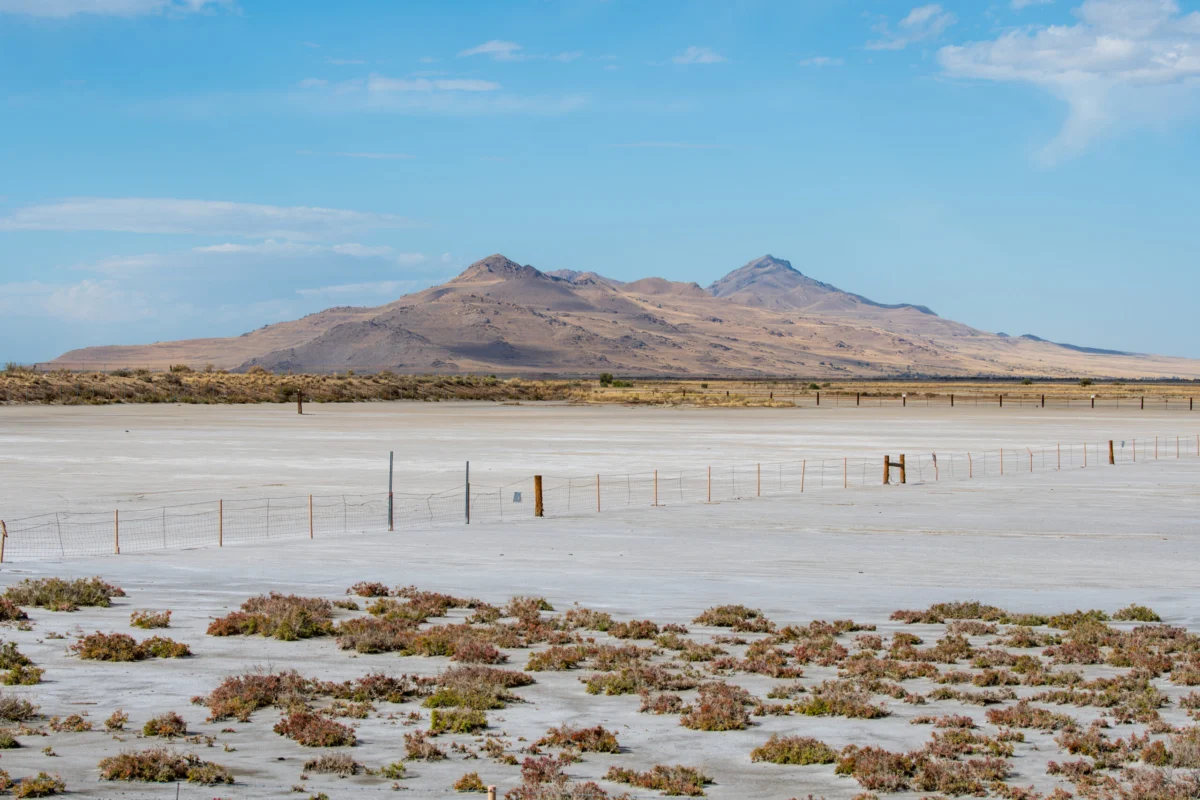
Studies consistently show that public-comment requirements surface environmental risks that agencies—which are often under-resourced or overly focused on project speed—routinely miss. For example, the redesign of Utah’s Legacy Parkway was directly driven by public feedback, which identified critical risks to the Great Salt Lake wetlands that had been initially overlooked. Similarly, the Department of Energy’s inclusion of wildfire-mitigation measures at the Los Alamos National Laboratory was a direct result of public comments regarding regional fire risks. When the fire eventually hit, those mitigation steps proved essential to preventing a larger catastrophe.
When public participation is removed, the policy becomes more prone to "avoidable error." Flawed policies are not only dangerous for the environment; they are also more vulnerable to being struck down by the judiciary, creating the very delays the administration claims it is trying to solve.
The Data Center Dilemma
A prime example of the danger of this new approach involves the booming data center industry. The EPA is currently proposing to remove requirements for public comment on "minor" air pollution permits. By allowing data centers to fragment their power generation—effectively treating a massive facility as a collection of smaller, individual sources—the government could bypass air quality reviews entirely.

These facilities, often powered by high-emission gas or diesel generators, have significant impacts on local air quality. Under the proposed rule change, these sources could be fast-tracked without a single local resident having the opportunity to weigh in on the health consequences of living near such infrastructure.
Official Responses and the "Good Cause" Exception
The administration’s defense rests largely on the "good cause" exception of the Administrative Procedure Act (APA). The APA generally mandates that agencies publish proposed rules in the Federal Register to trigger a 30-to-60-day comment period. The "good cause" exception is meant for emergencies—such as preventing imminent terrorism or responding to a public health crisis.
The current administration has increasingly cited this exception to finalize rules without prior input, arguing that the urgency of the nation’s economic and infrastructure needs justifies the shortcut. However, legal experts argue this is an abuse of the statute. By framing infrastructure projects as national security imperatives, the administration is attempting to transform an emergency provision into a permanent tool for policy-making.
The Threat to Citizen Suits
Perhaps the most alarming development is the attempt to weaken the "citizen suit" provision. Included in almost every major environmental law passed in the 1970s and 80s, these provisions allow citizens to sue polluters or federal agencies when the law is being violated.
The administration’s intervention in the lawsuit against xAI regarding Clean Air Act violations marks a dangerous new precedent. By claiming the President can demand the dismissal of these suits for any reason, the administration is effectively seeking to eliminate the only mechanism the public has to hold powerful corporations accountable when federal regulators refuse to do so.
Broader Implications: The Crisis of Legitimacy
The consequences of this trend reach far beyond individual infrastructure projects. Research into regulatory behavior indicates that when people are included in the decision-making process, they are significantly more likely to view the outcome as legitimate—even if they disagree with the final result.
By systematically closing off these avenues, the government is not just silencing critics; it is eroding the foundational trust between the state and its citizens. The current push for "permitting reform" in the Senate, which includes provisions to drastically limit the ability of courts to pause projects even when blatant errors are identified, signals a future where environmental oversight is treated as an optional formality rather than a legal requirement.
The argument for speed is understandable. The federal permitting system is, by many accounts, cumbersome and slow. However, the solution to a broken process is not to remove the public, but to improve agency efficiency. If federal agencies followed environmental laws closely from the inception of a project, rather than waiting for public comment to uncover errors, timelines would naturally shorten.
True reform would prioritize transparency and early engagement. Instead, the current strategy of suppression risks building a future of infrastructure that is not only environmentally hazardous but fundamentally disconnected from the communities it is supposed to serve. In the race to build faster, the administration is ignoring the reality that a government which refuses to listen eventually loses the mandate to lead.


 Raul Delapena Setiawan

 Laily UPN

 Reynand Wu

 Sagoh


 Azzam Bilal Chamdy

 Ali Ikhwan
