
 Basiran
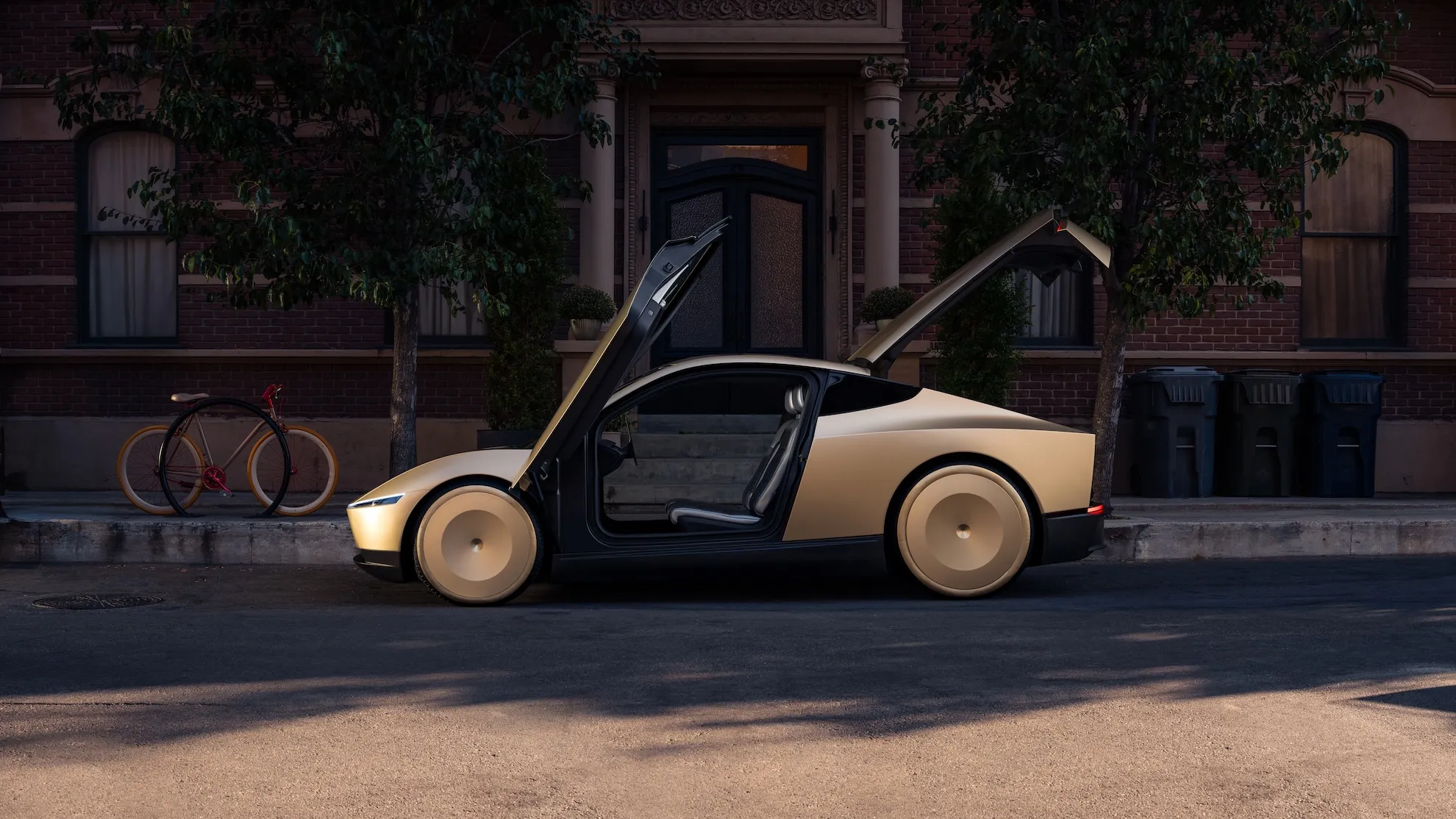
In a bold move that underscores the high-stakes gamble currently defining the automotive sector, Tesla announced this Wednesday that it plans to begin commercial sales of its Cybercab—a radical, steering-wheel-less autonomous vehicle—by the end of the year. This aggressive timeline, however, is unfolding against a backdrop of increasing friction with federal regulators, as the National Highway Traffic Safety Administration (NHTSA) launches a formal investigation into whether the vehicle’s design adheres to established safety mandates.
The Cybercab, a striking, gold-hued two-seater, represents a departure from traditional vehicle design. By stripping away manual controls, including the steering wheel and brake pedals, Tesla is not just introducing a new car; it is challenging the very framework of American road safety regulations.
The Shift in Strategy: From Consumer Cars to "Transport as a Service"
During Tesla’s third-quarter earnings call, the company provided rare insight into its commercial roadmap. Lars Moravy, Tesla’s Vice President of Engineering, clarified that while current production units are earmarked for the company’s internal robotaxi fleet, the long-term vision involves selling these vehicles to third-party operators.
"As our fleet grows, we will mainly deliver fully designed autonomous vehicles to our customers," Moravy stated, emphasizing a phased rollout. Tesla intends to scale its operations incrementally, prioritizing a deep understanding of fleet management, ownership dynamics, and the logistical challenges of autonomous delivery before flooding the market.
This represents a notable pivot for CEO Elon Musk. For years, Musk’s public narrative regarding autonomy centered on the "software-defined" vehicle: the idea that millions of existing Tesla Model 3 and Model Y vehicles would, via a simple over-the-air update, become autonomous robotaxis. That vision has yet to materialize in a fully unsupervised form, leading to a shift in strategy. Musk now frames the Cybercab as a "transport as a service" product, distinct from the consumer-owned vehicles that remain the bedrock of the company’s portfolio.
"Cybercab is primarily going to be something that is offered as transport as a service," Musk noted during the call. "The vast majority of the Cybercab stuff will be essentially Tesla-owned and operated."
Chronology: The Road to the Cybercab
The trajectory toward this week’s announcement has been marked by years of anticipation, multiple missed deadlines, and a recent acceleration in regulatory scrutiny:
- 2019–2023: Elon Musk repeatedly claims that a million "robotaxis" will be on the road within a year, relying on the Full Self-Driving (FSD) software suite installed in consumer vehicles.
- September 2026 (Early): Tesla hosts a major event in Austin, Texas, showcasing the Cybercab prototype and soliciting interest from potential fleet operators through an online inquiry form.
- September 2026 (Mid): The Cybercab begins limited operation on public streets in Austin. Within hours, the NHTSA announces an investigation into the vehicle’s compliance with safety standards.
- October 2026 (Earnings Call): Tesla confirms it intends to sell Cybercabs to customers by the end of the year, while announcing a delay in the release of the "unsupervised" version of FSD for consumer vehicles until Q2 of next year.
Supporting Data and the Regulatory Obstacle Course
The central tension lies in the mismatch between Tesla’s hardware and the Federal Motor Vehicle Safety Standards (FMVSS). These standards were written decades ago under the assumption that a human is always behind the wheel. They mandate the presence of manual controls, rearview mirrors, and physical brake pedals.
Currently, manufacturers are permitted to "self-certify" that their vehicles meet these requirements. Tesla has applied this process to the Cybercab, effectively claiming that the vehicle is compliant despite its lack of traditional controls. However, the NHTSA is now challenging this, stating they are investigating the "process and technical data" behind Tesla’s certification.
The regulatory environment is in a state of flux. While the Department of Transportation has proposed removing the mandate for manual controls on autonomous vehicles, these proposals have yet to be fully codified into law. Consequently, the Cybercab exists in a gray area—a high-tech innovation that is technically incompatible with the letter of current federal law.
The "Unsupervised" Bottleneck
Tesla’s ability to execute its plan is further complicated by the delayed rollout of its software. The company’s current flagship offering, "Full Self-Driving (Supervised)," remains an advanced driver-assistance system. Despite its name, it requires constant human oversight. The promise of an "unsupervised" version—where the car can legally navigate roads without a human paying attention—has been a moving target for years.
Musk’s announcement that the unsupervised version of FSD is now slated for the second quarter of next year creates an awkward paradox. If the timeline holds, third-party fleet operators might be permitted to buy and deploy the hardware-specialized Cybercab before individual Tesla owners gain access to the same level of autonomy in their own personal vehicles. This inversion of the previous, consumer-first strategy highlights the immense technical hurdles still facing the company’s AI development team.
Implications: A Future in Flux
The implications of the ongoing NHTSA investigation are profound. If the regulators determine that the Cybercab’s design is non-compliant, Tesla could be forced to perform a costly redesign or face a total prohibition on the vehicle’s operation on public roads.
Furthermore, the public perception of autonomous technology remains fragile. While proponents argue that robotaxis could drastically reduce traffic fatalities caused by human error, skeptics point to the videos surfacing on social media of current Tesla owners "testing the limits" of the Supervised FSD system. The transition from a "driver-assist" culture to a "fully autonomous" model requires not only technological perfection but a complete restoration of trust between manufacturers, regulators, and the public.
For investors, the stakes are equally high. The shift toward a "transport as a service" model requires significant capital expenditure. Unlike selling a car to an individual, operating a fleet of robotaxis necessitates a massive infrastructure for maintenance, charging, and liability management. Tesla is essentially attempting to pivot from being a hardware manufacturer to becoming a logistics and service giant.
As the industry watches, the question remains: Can Tesla bridge the gap between its ambitious engineering vision and the cautious, often sluggish pace of federal regulation? The end-of-year deadline for Cybercab sales is an aggressive marker, one that signals Tesla is willing to force the hand of regulators rather than wait for explicit permission. Whether this move secures Tesla’s lead in the race to autonomy or triggers a protracted legal battle that stalls the company’s progress remains to be seen.
Ultimately, the Cybercab is more than just a car—it is a test case for the future of transportation in the United States. If it succeeds, it could usher in an era where the concept of car ownership is fundamentally redefined. If it fails, it will serve as a cautionary tale of how even the most innovative technologies can falter when they attempt to outpace the regulatory systems designed to protect the public.


 Reynand Wu

 Sagoh

 Raul Delapena Setiawan


 Azzam Bilal Chamdy

 Ali Ikhwan
