
 Lina Hope

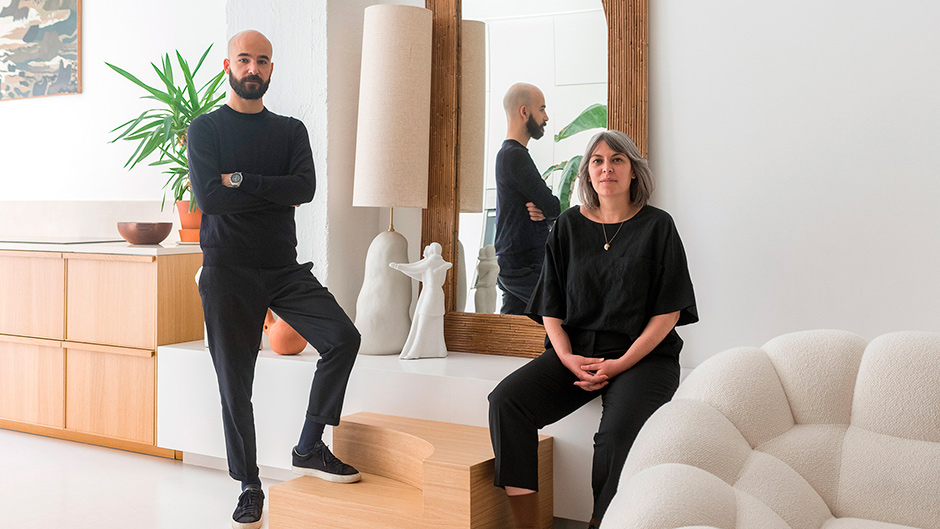
In the rapidly shifting landscape of digital design, where trends flicker and fade with the speed of a browser refresh, Paris-based studio Bonhomme has emerged as a beacon of longevity and strategic depth. Founded in 2013 by the creative duo Emmanuel Cruellas and Morgane Urbain, the agency has spent over a decade bridging the gap between high-end branding and immersive digital architecture.
As Emmanuel Cruellas marks his 20th year in the creative industry, the studio’s trajectory—marked by over 200 international awards—offers a masterclass in how to build a brand that transcends the fleeting nature of digital fads.
The Genesis of Bonhomme: A Strategic Foundation
The story of Bonhomme began with a simple but radical premise: digital design should not merely be a "skin" applied to a business, but the very embodiment of its strategic DNA. Both Cruellas and Urbain entered the industry as designers, but their shared vision was to move beyond the aesthetic. They sought to create a synthesis where brand strategy, visual identity, and user experience exist as a singular, cohesive ecosystem.
Since its inception, the studio has focused on the luxury and premium sectors, industries that demand not just technical proficiency, but a profound understanding of heritage, exclusivity, and emotional resonance. Their work is characterized by a "timeless" philosophy—a deliberate rejection of the ephemeral graphic trends that often render websites and identities obsolete within a few seasons.
Chronology: Two Decades of Creative Evolution
To understand the philosophy of Bonhomme, one must look at the evolution of the creative industry over the last 20 years.
- The Early Years (2004–2012): Cruellas’ formative years were defined by the emergence of the web as a visual medium. This was an era of experimentation, where the primary challenge was technical viability.
- The Foundation (2013): Bonhomme is officially launched. The agency’s early work established a reputation for clean, functional, and highly polished digital experiences.
- The Consolidation (2014–2019): The studio began garnering international acclaim, particularly from platforms like Awwwards. This period saw them moving into more complex, narrative-driven digital projects for luxury labels.
- The AI Pivot (2020–Present): With the explosion of generative AI, Bonhomme shifted its internal culture. Rather than viewing AI as a replacement for human creativity, they integrated it as a tool, refocusing their designers on conceptual thinking, artistic nuance, and "subtle relevance."
The Philosophy of "Relevant Creation"
When asked about his creative process, Cruellas emphasizes a departure from the "competitor-centric" model. "We’re not really interested in the codes used by competitors," he explains. "The idea is rather to try to make the client stand out from the market."

The Strategic Immersion
For Bonhomme, the design process is not a linear sprint but a cyclical journey of discovery. Every project begins with an immersion phase:
- Strategic Audit: Analyzing existing materials and conducting workshops to distill the brand’s essence.
- Strategic Interviews: Uncovering the "why" behind the brand’s existence.
- Concept Development: The team presents two to three distinct graphic pathways, each tied to a strategic pillar, allowing the client to select a vision that aligns with their business objectives.
Cruellas and Urbain act as the "bulwark" of these projects. By shielding their design teams from the administrative friction of client relations, they allow their art directors to maintain a singular focus: the pursuit of relevance over mere beauty.
Supporting Data: Performance at the Intersection of Art and Commerce
The success of Bonhomme is not merely anecdotal; it is measured in high-stakes metrics. Their ongoing collaboration with TAG Heuer serves as a primary case study for how immersive storytelling drives tangible business results.
- TAG Heuer Eyewear: By implementing real-time 3D immersive landing pages, the studio achieved 100% visibility on primary calls-to-action and a 74% attraction rate on product carousels.
- TAG Heuer x Super Mario: The challenge of blending Swiss horology with Nintendo’s playful aesthetic was met with a digital experience that resulted in 3,500 limited-edition units selling out in under 20 minutes.
- The Carrera Skipper Experience: Utilizing progressive 3D modeling, the studio created a narrative that paced the user’s experience to the speed of their scroll, effectively communicating the brand’s sailing heritage without sacrificing conversion performance.
These figures underscore a vital point: in the luxury sector, digital storytelling is not a distraction from sales—it is the catalyst for them.
Navigating the AI Paradigm Shift
Perhaps the most significant challenge in the current design climate is the proliferation of generative AI. Cruellas is notably pragmatic regarding this shift. He acknowledges that AI has mastered the technical aspects of production—graphic rendering, basic 3D modeling, and layout generation.
"The goal is no longer to create beauty," Cruellas notes. "It is to create relevance with subtlety."
This philosophy has forced a change in the studio’s hiring and training priorities. Bonhomme now pushes its designers to return to the basics of drawing and artistic theory. The logic is clear: if AI can generate a technically "perfect" image in seconds, the human designer’s value now lies in their ability to curate, direct, and imbue that work with a distinct artistic soul that an algorithm cannot replicate.
The Implications for the Future of Design
Looking ahead, Cruellas sees a return to the "International Style"—a movement defined by clarity, objectivity, and functional typography. This return to form, bolstered by modern motion design and high-performance web technology, represents a maturation of the digital landscape.
Essential Qualities for the Modern Designer:
- Curiosity: A lifelong commitment to sharpening the eye.
- Conceptual Depth: The ability to move beyond software mastery into the realm of strategic storytelling.
- Adaptability: Viewing AI not as a competitor, but as a lever to elevate one’s own creative output.
Conclusion: The Art of the "Carte Blanche"
The recurring theme in Cruellas’ reflection is the necessity of trust. When a client grants the studio carte blanche, the responsibility is immense. It is in this high-pressure environment that the most iconic work is born.
"Creativity has no constraints; only thoughts are limiting," says Cruellas. As he reflects on two decades in the industry, his conclusion is clear: the future of branding lies in the ability to balance the cold, hard logic of data with the warm, unpredictable nature of human expression. For Bonhomme, the next chapter is not about finding the newest tool, but about continuing to find the right way to tell a story that lasts.

 Sagoh
 Asep Darmawan

 Raul Delapena Setiawan

 Reynand Wu



 Azzam Bilal Chamdy

 Ali Ikhwan
