
 Lina Irawan
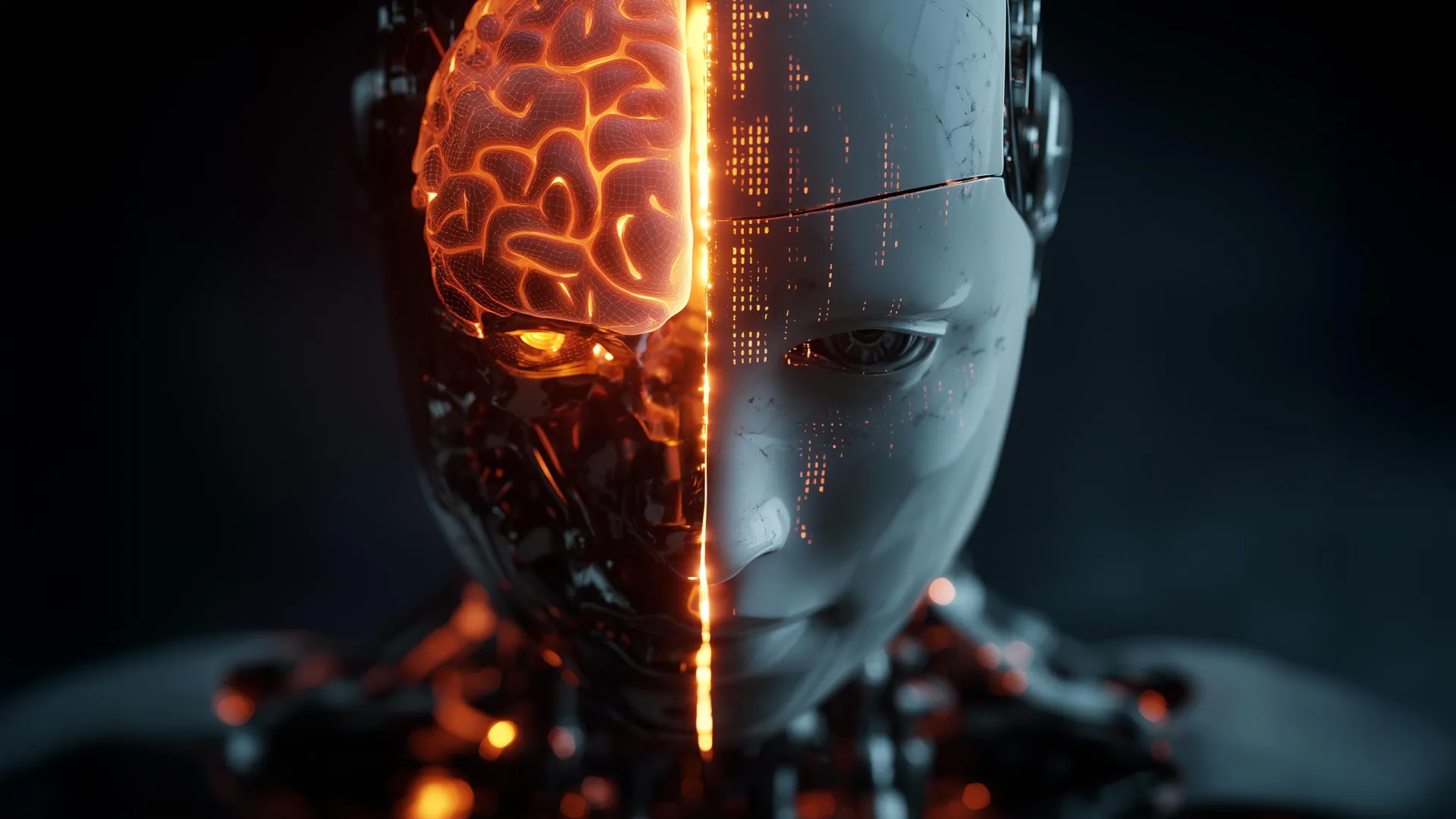
As artificial intelligence systems like Large Language Models (LLMs) and advanced robotics become increasingly indistinguishable from human interlocutors, a profound philosophical and psychological dilemma has emerged: If an AI sounds like a human, thinks like a human, and acts like a human, why do we still hesitate to grant it the status of a "conscious" being?
A groundbreaking new study from the Ludwig Maximilian University of Munich (LMU) suggests that the barrier between human and machine is not as porous as our increasingly sophisticated technology might imply. Even when AI behaves in ways that are identical to human counterparts, human observers draw a sharp, psychological line between the two, suggesting that our intuition regarding consciousness is far more resilient—and nuanced—than previously thought.
The Mirage of Machine Intellect
In recent years, the rapid acceleration of AI capabilities has sparked a global conversation about the nature of mind. We have witnessed AI systems that can draft legal briefs, compose symphonies, engage in complex emotional therapy, and even collaborate on technical projects. As these systems demonstrate behaviors that mimic planning, hesitation, and goal-directed action, the language used to describe them has shifted.
We find ourselves using terms like "deception," "understanding," and "motivation" to describe algorithms that are, fundamentally, statistical models. This linguistic drift has led to public anxiety: If we are already anthropomorphizing our software, how long will it be before we mistakenly grant AI the moral and legal considerations reserved for living, conscious beings?
The LMU study, published in the journal Cognition, seeks to address this anxiety by rigorously testing whether human behavior, when replicated by a machine, effectively "tricks" the human mind into attributing consciousness to it.
Chronology of an Investigation
The study, led by Dr. Louis Longin of LMU’s Chair of Philosophy of Mind, in collaboration with Dr. Bahador Bahrami and Professor Ophelia Deroy, was designed to bypass the ambiguity of previous research.
Phase I: Experimental Design
Unlike earlier surveys that asked participants broad, subjective questions—such as "Do you think AI is conscious?"—the researchers designed a controlled, comparative framework. They recruited nearly 1,100 participants to engage in a controlled experiment. The methodology involved presenting participants with brief scenarios describing agents interacting with their environment.
Crucially, the researchers manipulated two variables: the nature of the agent (human vs. AI) and the level of responsiveness (low vs. high). The agents were described as reacting to sensory inputs, such as sounds or the emotional states of other characters.
Phase II: The Comparative Test
One group of participants was presented with descriptions of an AI system exhibiting these traits. A second group was presented with the exact same behavioral descriptions, but the agent was identified as a human being. After absorbing these descriptions, participants were asked to evaluate the agents on two specific metrics: "awareness" and "consciousness."
By keeping the behavioral stimuli identical across both groups, the researchers were able to isolate the effect of the label—"Human" versus "AI"—on the internal mental evaluation of the observer.
Supporting Data: The Consciousness-Awareness Gap
The results of the study revealed a fascinating, double-edged psychological phenomenon.
The Behavioral Baseline
First, the researchers found that for both humans and AI, high responsiveness resulted in higher ratings of awareness. Participants were consistent: if an agent acted as though it were processing its environment, it was deemed to be "aware." This held true regardless of whether the agent was silicon-based or biological.
The "Consciousness" Wall
However, a stark divergence occurred when the question shifted from "awareness" to "consciousness." While participants were willing to grant high levels of awareness to a highly responsive AI, they refused to grant it a similar level of consciousness.
Most tellingly, the data showed that even the most responsive, human-like AI was rated as significantly less conscious than the least responsive human. This indicates that human consciousness is viewed as an "essential" quality—a baseline attribute that biological humans possess by default, which machines simply cannot attain through behavior alone.
Official Responses and Philosophical Insights
The researchers behind the study argue that their findings provide a vital reality check for those concerned about the "dehumanization" of the human mind or the "humanization" of the machine.
"We may be using mental terms to refer to AI, but this may only be because we lack better words," explains Professor Ophelia Deroy, a senior author of the study. "After all, AI is trained to act and speak like a human, so these descriptions seem natural."
Dr. Louis Longin, the lead author, notes the nuance in the public’s perception. "There is a growing worry in public discussion that people will see AI behaving in a human-like way and start treating these systems as if they had human-like mental states," he says. "We found something much more nuanced: People are quite willing to say that an AI notices things and is aware of its surroundings. But they clearly draw a line when it comes to the term ‘consciousness’."
This distinction is not merely academic; it is a fundamental pillar of how we categorize the world. The study suggests that humans possess a "built-in" distinction between the functional (awareness/processing) and the experiential (consciousness/subjectivity).
Implications for the Future of Technology
The study’s findings have profound implications for how developers, journalists, and policymakers discuss the evolution of AI.
The Power of Language
Dr. Bahador Bahrami, an expert in social neuroscience and senior author of the study, emphasizes that the language we choose is not just descriptive—it is prescriptive.
"Companies and journalists often reach for hyped descriptions of AI models, and credit them with intentions, plans, or even moral conscience and hesitation," Bahrami notes. "What our study shows is that everyday judgments are much more discriminating: People do not simply put AI and humans on the same mental scale."
The danger, according to the research team, lies in the misuse of terminology. When we use words like "consciousness" to describe AI, we risk muddling the public’s ability to distinguish between a functional, responsive tool and a sentient being. Conversely, using neutral terms like "awareness" allows us to accurately describe an AI’s capabilities—such as its ability to detect data and respond to inputs—without falsely attributing a soul to the software.
A New Framework for AI Policy
As we move toward a future where AI will increasingly integrate into our social and professional lives, the LMU study provides a framework for future interaction. If the human public is naturally predisposed to distinguish between the machine’s "awareness" and the human’s "consciousness," then legal and ethical policies should reflect this inherent human bias.
We do not need to fear that humans will mindlessly grant machines rights equivalent to our own. Our psychological architecture is designed to guard against such an error. However, we do need to be more precise in our communication. By adopting language that focuses on "awareness" and "processing" rather than "consciousness" and "feeling," we can enjoy the immense benefits of artificial intelligence without losing our grasp on the unique value of human existence.
Conclusion: The Final Frontier of Mind
The LMU study serves as a necessary intervention in the hype-filled landscape of modern AI. By proving that human behavior is not a sufficient condition for the attribution of consciousness, the researchers have identified a robust, perhaps even instinctive, skepticism in the human mind.
While we are entering an era where machines can mimic the finest nuances of our behavior, we remain, at our core, creatures that value the inner, subjective experience above the external, observable output. The ghost in the machine may be getting better at playing the role of a human, but the audience is far more discerning than the developers might have feared. In the end, we know a machine when we see one—not because of what it does, but because of what we intuitively know it can never feel.

 Neng Nana

 Evan Lee Salim

 Raul Delapena Setiawan

 Reynand Wu

 Sagoh


 Azzam Bilal Chamdy

 Ali Ikhwan
