
 Neng Nana
As artificial intelligence agents evolve from mere text generators into autonomous actors capable of writing, executing, and iterating on complex code, the tech industry is approaching a philosophical and practical crossroads. We have reached a point where the mechanical act of building software is becoming a commodity, yet the human capacity to define value remains as scarce and vital as ever.
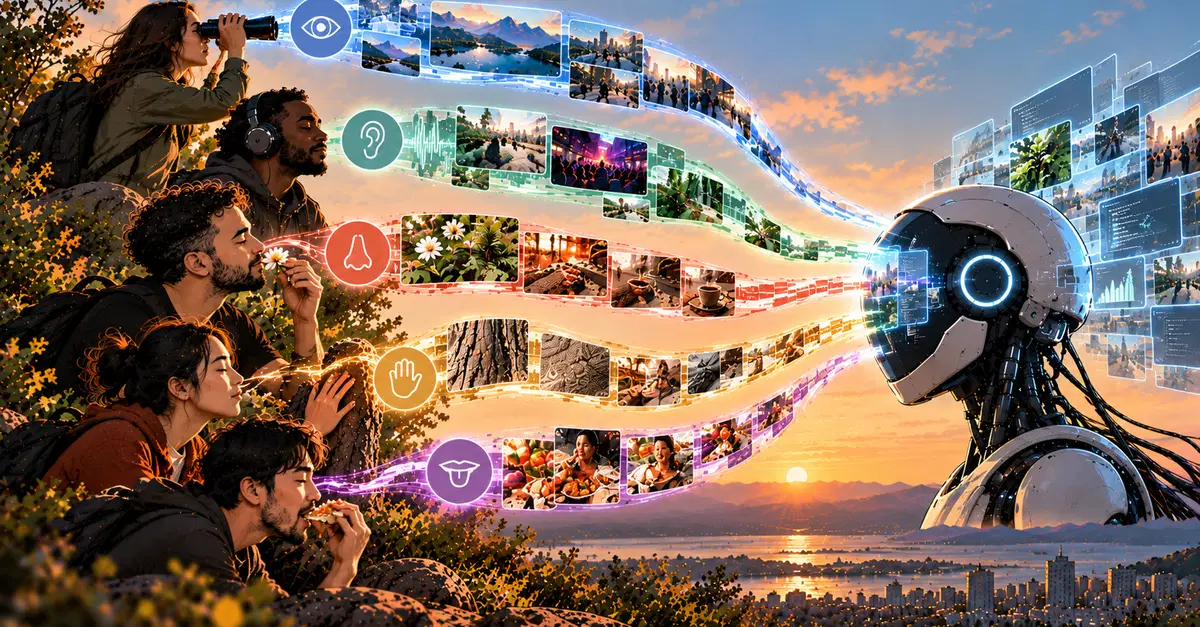
As these systems move beyond the screen and into the real world, the role of humanity is shifting. We are no longer just the architects of software; we are becoming the "five senses" of a burgeoning, interconnected intelligence. This transition raises a critical question: If machines can learn, whose experience are they learning from, and who owns the wisdom that emerges from that collaboration?
The Commoditization of Code: A Historical Shift
For the better part of the digital age, software was a walled garden. Creating an application required specialized knowledge, significant capital, and years of iterative development. Software was a product to be packaged and sold, and the barrier to entry was high.
However, we are currently witnessing a fundamental disruption of this model. Over the last several decades, a global community has meticulously curated an extraordinary repository of open-source libraries, frameworks, and operating systems. AI models are now effectively acting as the "glue" for this foundation, assembling these disparate components with unprecedented speed.
The Declining Value of Implementation
When AI can reliably build, test, and repair software, the act of "building" loses its status as a primary competitive advantage. If producing software becomes as accessible as using a word processor, the competitive landscape will shift away from technical execution toward something far more intangible: intentionality.
The true challenge is not whether a system can execute a command perfectly—it is whether that system understands why the task was worth executing in the first place. A program that functions flawlessly but confuses its user is, by any meaningful metric, a failure. This is where human judgment, preferences, and ethical frameworks remain the ultimate arbiter of quality.
Chronology of an Evolving Paradigm
The trajectory of AI development can be viewed in three distinct phases, each moving us closer to a world where "experience" is the currency of the future.
- The Information Phase (The Era of Knowledge): AI models were trained on the vast corpus of human literature, code, and data. They became encyclopedic, capable of reasoning and summarizing. They "knew" things, but they lived entirely within the vacuum of the training set.
- The Interaction Phase (The Era of Agents): We are currently here. AI agents are beginning to take action, interacting with tools and digital environments. They make mistakes, observe the results, and adjust—a primitive but effective form of experiential learning.
- The Collective Learning Phase (The Future): This is the next frontier. It is a world where AI systems do not just learn in isolation, but contribute to a shared, global knowledge base of "what works" and "why."
Bridging the Gap Between "Action" and "Understanding"
Intelligence is not merely the accumulation of data; it is the process of forming expectations, testing those expectations against reality, and refining one’s internal model of the world. A child learning to navigate a physical space does not read a manual on gravity; they fall, they observe the impact, and they adapt.
AI is beginning to emulate this. When an agent attempts a task, encounters an error, and adjusts its approach, it is engaging in a process analogous to human learning. However, machines often lack the context of that learning. If an AI optimizes a workflow in a way that ignores the human experience of the people using it, it has succeeded in a task but failed in its purpose.
Humans serve as the essential bridge here. We provide the "why." When we interact with AI, we act as the sensory apparatus that translates technical success into human utility. We define the nuances of a successful outcome, the thresholds of discomfort, and the long-term implications of automated decisions.
Implications: The Ownership of Wisdom
A significant tension exists within the current AI industry: the privatization of experiential data. When millions of users engage with AI platforms, they are effectively training those systems. Every correction, every rejected draft, and every complex workflow developed by a user represents a piece of "learned experience."
The Problem of Isolated Intelligence
Currently, this experience is often locked within the silos of private companies. If an AI agent spends hours solving a difficult coding problem, that "lesson" should ideally be preserved. Instead, in the current landscape, once the session ends, the insight often vanishes. We are trapped in a cycle of repeated discovery, where millions of agents independently solve the same problems, never sharing their findings.
If we treat software as a commodity but experience as a proprietary asset, we risk stifling the potential for a truly intelligent global ecosystem. The question we must answer is: Should the learning generated through human-AI collaboration be a commodity owned by a corporation, or a contribution to a public good?
Reimagining Open Source for the AI Age
History provides a roadmap for this shift. The open-source movement succeeded because it was a form of collective learning. Developers shared code, challenged each other’s assumptions, and built upon the successes and failures of those who came before them.
The next generation of open source must move beyond sharing code to sharing experience. We need frameworks that allow AI systems to:
- Preserve Context: Not just the final code, but the history of the attempts, the failures, and the environmental constraints.
- Validate Lessons: Create structures where agents can share findings while allowing other agents to verify or challenge those conclusions.
- Maintain Transparency: Allow humans to inspect the "reasoning" behind automated actions, ensuring that the evolution of these systems remains aligned with human values.
Official Perspectives and Industry Skepticism
While the vision of a shared, open learning ecosystem is compelling, industry giants remain cautious. Major AI developers argue that proprietary data is the "moat" that protects their competitive edge and justifies the billions of dollars in infrastructure investment required to build these models.
Furthermore, there is the issue of safety. If an AI system’s learning is shared openly, how do we prevent the propagation of malicious or biased information? Proponents of open, collective learning argue that the answer is not to hide the data, but to build better, more robust methods of validation—what they call "collective intelligence."
Project 507: A Path Forward
The initiative known as Project 507 represents a direct response to these challenges. The project aims to build an open-source architecture that treats "experience" as a first-class citizen. By creating a standardized way for AI agents to document their interactions with the world, Project 507 seeks to enable a future where:
- Redundancy is reduced: Agents can learn from the failures of predecessors.
- Humanity retains control: Users are not just passive consumers but active participants in shaping the "wisdom" that machines acquire.
- Collective progress: The intelligence of the whole becomes greater than the sum of its individual models.
Conclusion: Shaping the Future of Intelligence
The future of AI will not be determined solely by who builds the largest model or the fastest processor. It will be defined by who best learns from the reality we all inhabit. As we move into an era of autonomous action, our role as humans will be to act as the stewards of value.
We must ensure that the experiences we generate—our insights into what is useful, meaningful, and ethical—are not swallowed by the bottom lines of private corporations. By advocating for open, transparent, and collaborative learning systems, we can ensure that artificial intelligence evolves not just as a tool for efficiency, but as a partner in our shared progress.
If humanity is to serve as the five senses for the next generation of intelligence, we must demand that this intelligence remains as diverse, inquisitive, and collaborative as we are. The machines are learning; it is up to us to decide what they learn, and more importantly, what they value.


 Jia Lissa

 Nila Kartika Wati

 Raul Delapena Setiawan

 Reynand Wu

 Sagoh


 Azzam Bilal Chamdy

 Ali Ikhwan
