
 Asro
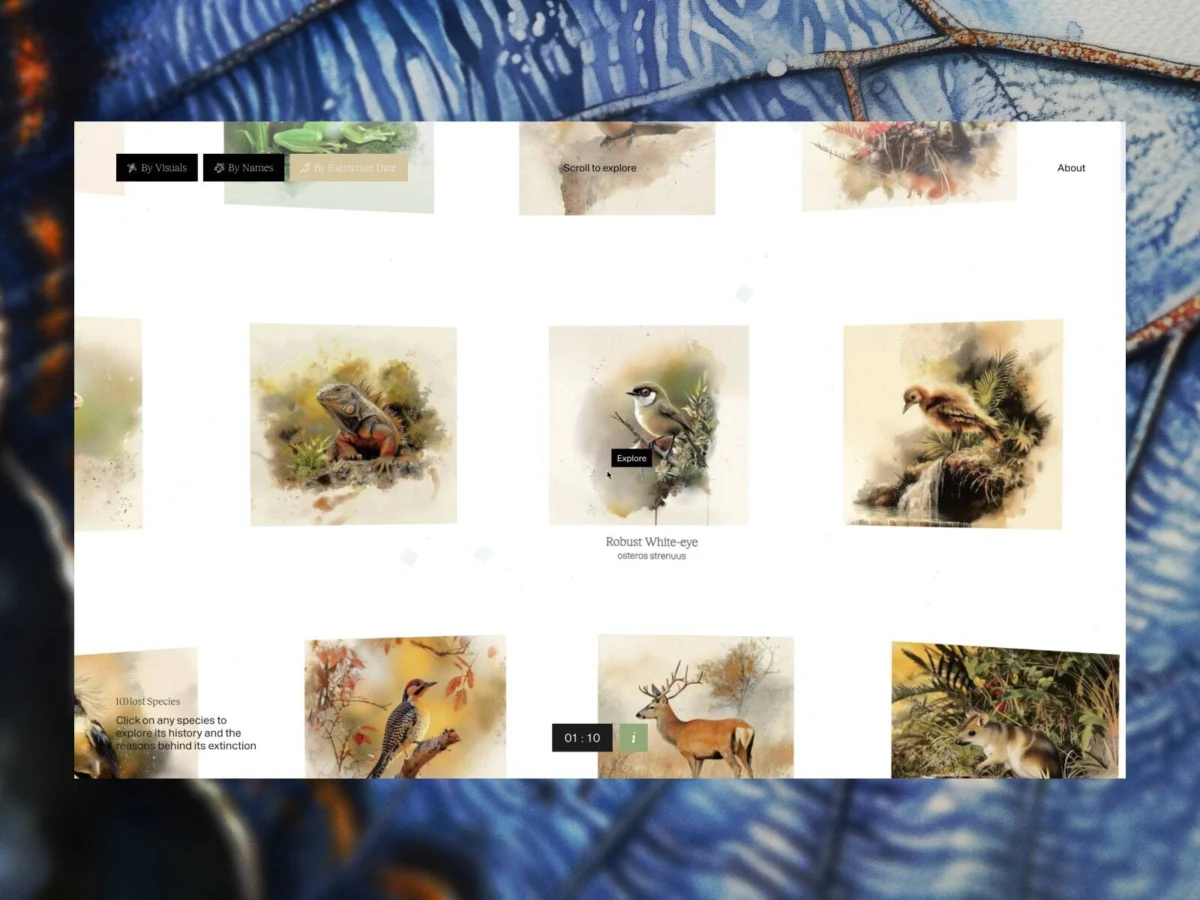
In an era defined by rapid digital consumption and fleeting attention spans, a new collaborative project titled 100 Lost Species is challenging the way we interact with the history of the natural world. Developed by the creative studio Immersive Garden in partnership with the development house 60FPS, the platform is more than a digital gallery—it is a poignant, non-linear narrative exploration of extinction. By marrying high-fidelity design with a sobering, time-sensitive philosophy, the project invites users to confront the irreversible nature of biodiversity loss.
The Genesis of a Digital Memorial
The inception of 100 Lost Species was rooted in a singular, difficult question: How can we make the abstract concept of extinction feel personal and urgent? Unlike traditional educational tools that rely on charts, infographics, or dense scientific data, the creators chose a path of sensory engagement.
"The intention was never to educate through charts or dense data," the project team notes. "The goal was to create a pause. A moment to look closely, reflect on what has already been lost, and consider what can still be protected."
The project functions as an open narrative. Upon entering the digital space, the user is greeted by an interactive carousel—a display of relative abundance that soon gives way to the stark reality of absence. Through a fluid, scroll-based interface, visitors navigate through a curated collection of 100 creatures that no longer walk the earth, deciding for themselves how deep to dive into the history of each species.
Chronology: The Unstoppable March of Time
Perhaps the most striking element of the project is the inclusion of a persistent, continuous timer. This clock does not count down to a specific event or a real-world deadline; it simply advances, indifferent to the user’s presence or progress.
This design choice serves as a narrative anchor. It reinforces a fundamental, uncomfortable truth: extinction is a process that continues whether we observe it or ignore it. By keeping the timer visible throughout the journey, the designers ensure that the user feels the weight of time as a physical force. It acts as a metronome for the experience, emphasizing that every second lost is a moment in which the window for preservation for currently endangered species grows smaller.
The experience is intentionally non-linear. By allowing users to explore based on curiosity—be it by name, visual appearance, or extinction date—the developers ensure that the discovery of loss feels personal. There is no forced progression; the user sets the pace, lingering on the stories that resonate most deeply.
Visual Reconstruction: Reanimating the Extinct
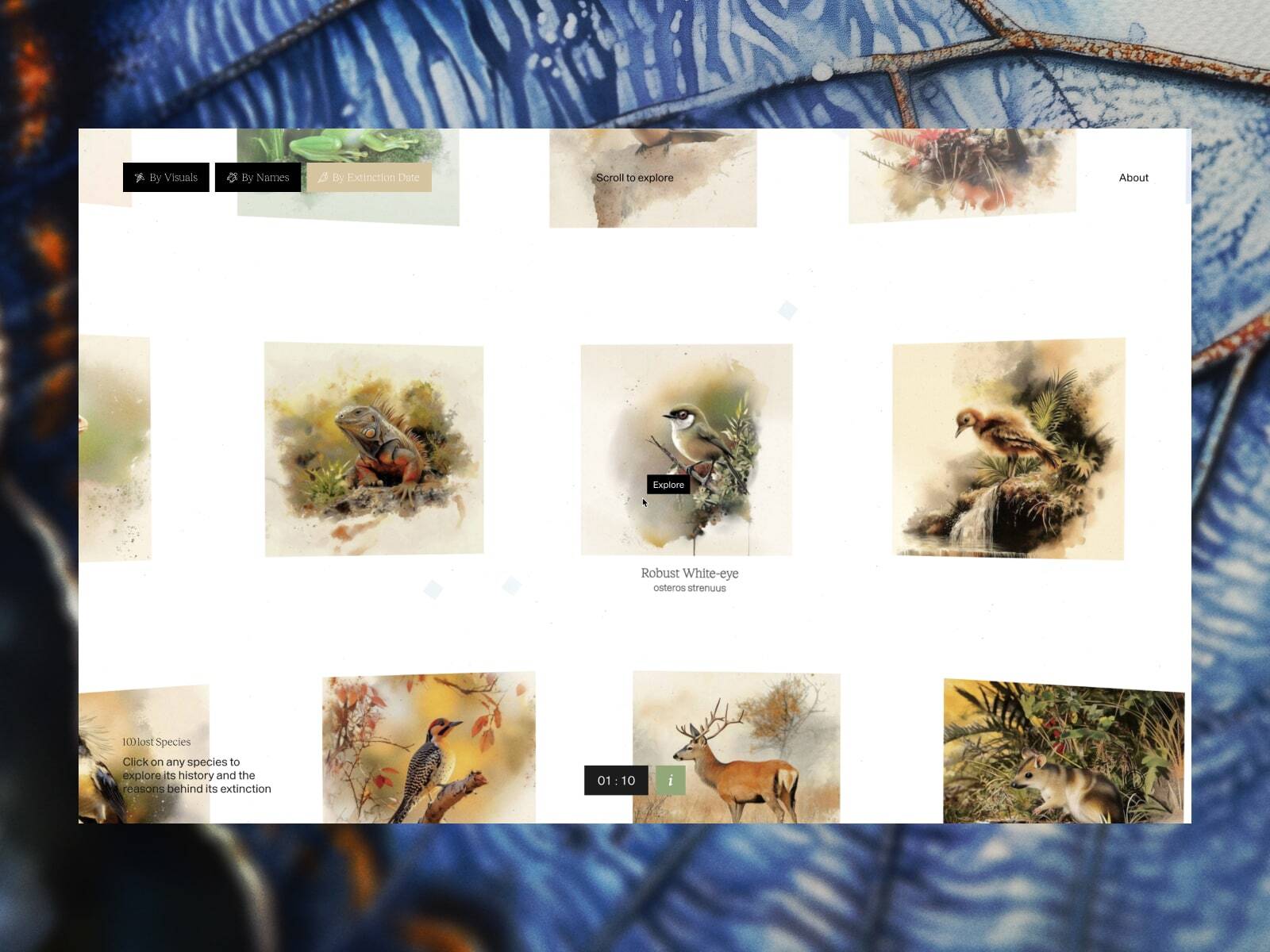
Because the subjects of 100 Lost Species no longer exist, the challenge of visual representation was immense. The creative team, led by Art Director Paul Leroy, opted for a meticulous process that balanced modern technology with deep historical research.
While Artificial Intelligence (AI) was utilized in the workflow, the team was careful to avoid the trap of "spectacle." AI served as a tool for initial generation, but it was subjected to rigorous manual refinement. The team studied anatomical records, 19th-century scientific descriptions, and archival illustrations to ensure accuracy.
The final aesthetic is intentionally restrained. Eschewing dramatic lighting or high-octane motion graphics, the imagery leans toward the ethereal—a "dreamy memory" rather than a hyper-realistic reconstruction. This minimalist approach, characterized by watercolor textures and generous negative space, ensures that the focus remains on the dignity of the creature rather than the technical prowess of the designer.
Supporting Data and Technical Craft
The technical architecture of 100 Lost Species is designed to be invisible, allowing the emotional weight of the content to take center stage. Built using HTML, CSS, and JavaScript, the site relies on GSAP (GreenSock Animation Platform) and a custom scroll-based animation engine to provide a seamless, fluid experience.
The performance requirements were rigorous. Given that the site features high-resolution assets and motion-heavy interactions, the developers at 60FPS prioritized "smooth scrolling behavior" and "controlled asset loading." This ensures that the narrative remains accessible regardless of the user’s device, maintaining the same level of immersion on a mobile phone as it does on a desktop.
Technical Breakdown:
- Front End: HTML, CSS, JavaScript.
- Interaction/Motion: GSAP custom scroll-based engine.
- AI Integration: Custom workflows with multi-pass manual refinement.
- Sound Design: Subtle, immersive soundscapes by Mooders.
Official Responses and Philosophical Implications
The project has garnered significant attention from the design community, notably being featured on Awwwards, where its "human-centric" approach to data visualization has been praised. However, the true "official response" the team seeks is not in accolades, but in action.
The site’s design is a "wake-up call" that avoids the typical, aggressive tactics of alarmism. Instead, it offers a "quiet opportunity to respond." By integrating donation links directly into the narrative flow, the project bridges the gap between digital contemplation and real-world conservation. It reminds the visitor that while the species on the screen are lost forever, the species currently on the "edge of disappearance" still have a chance.
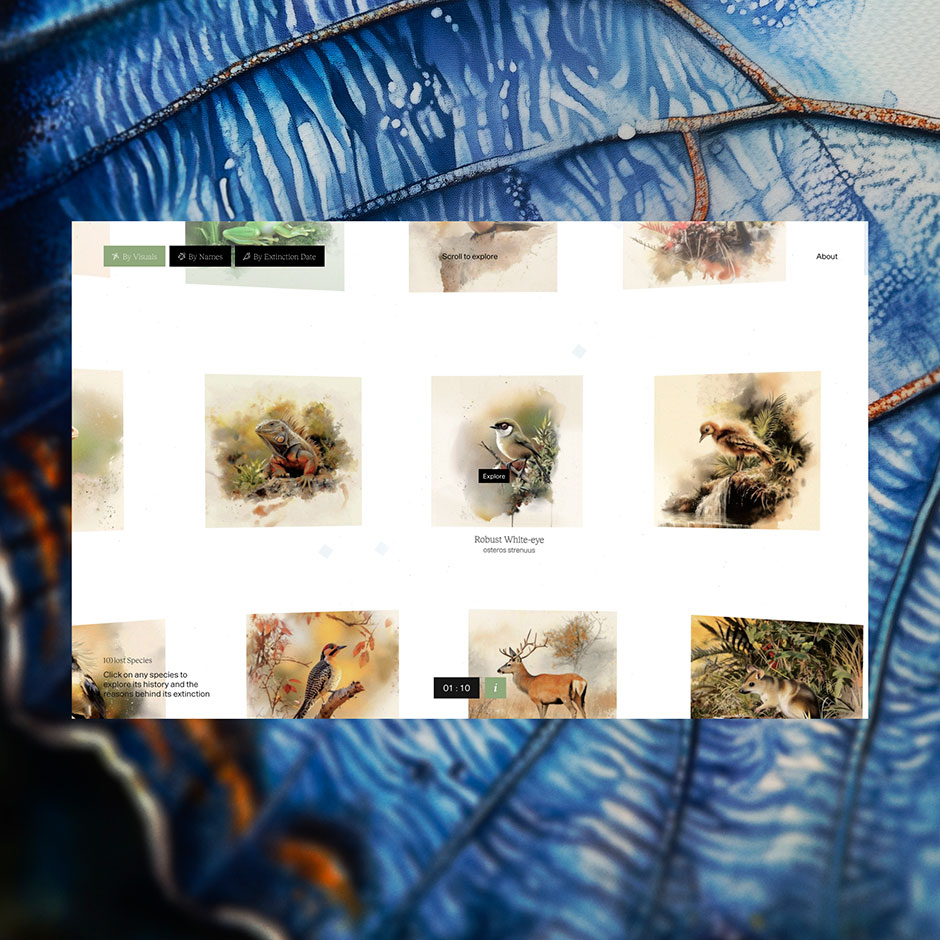
"Does this element add meaning, or does it introduce noise?" This question guided the development team throughout the process. This rigorous adherence to restraint has resulted in a digital experience that feels less like a website and more like a curated exhibit in a museum of the future.
The Future of Digital Activism
The success of 100 Lost Species suggests a shift in how we might use digital media to communicate environmental issues. By choosing beauty and restraint over shock value, Immersive Garden and 60FPS have created a template for "empathetic design."
The project posits that when we are confronted with the scale of extinction, the most effective response is not necessarily more data, but a deeper connection to the individual lives that have been lost. By treating each species with the reverence of a historical figure, the project asks the user to hold the memory of the extinct close, while simultaneously looking toward the horizon to see what can still be saved.
As the timer on the site continues to run, it serves as a final, lingering thought for every visitor: The narrative of the natural world is still being written, and we are its primary authors. The choices we make today will determine which names are added to this digital archive in the decades to come.
The Team Behind the Vision
- Conception: Dilshan Arukatti, Alexandre Saad, Alexis Demachy
- Creative Direction: Dilshan Akuratti
- Art Direction: Paul Leroy
- AI Illustrations: Nicolas Courjean
- Content Creation: Cassandre Gerbouin, Melek Ben Hamida, Alexandre Saad, Alexis Demachy
- Project Management: Melek Ben Hamida
- Development: Maxime Mangin (60fps)
- Sound Design: Mooders
- Design Studio: Immersive Garden
The 100 Lost Species project is a testament to the power of collaboration between technical expertise and artistic intent. It stands as a reminder that even in the digital age, the most profound experiences are those that ask us to slow down, reflect, and acknowledge our place in the fragile tapestry of life.


 Sagoh

 Asep Darmawan

 Raul Delapena Setiawan

 Reynand Wu



 Azzam Bilal Chamdy

 Ali Ikhwan
