
 Nana Wu
By: Editorial Staff
Date: September 24, 2026
For decades, the software industry has operated under a singular, unspoken mandate: build better tools. From the early days of word processors and spreadsheet software to the complex creative suites of the 21st century, the professional world has been defined by our mastery of interfaces. We spent years learning how to manipulate pixels, input formulas, and navigate menus to reach a final product. We became artisans of the "how," valuing the skill required to operate the tool as much as the output itself.
However, as we cross the mid-point of the 2020s, a fundamental shift is underway. The ubiquity of generative AI is forcing a radical reassessment of this paradigm. Industry veteran Luke Wroblewski, in a recent assessment of current design philosophy, argues that the "tool-first, outcome-second" instinct is not only outdated—it is actively hindering the potential of modern technology. As AI capabilities evolve, the tools we once relied upon are increasingly becoming the friction that prevents us from reaching the finish line.
The Chronology of a Paradigm Shift: From Newsroom to "Just-in-Time" Content
The transition from process-based workflows to outcome-oriented delivery can be traced through the evolution of experimental projects like Exposit, an AI-powered news aggregation system launched two years ago.
Phase I: The Digital Newsroom
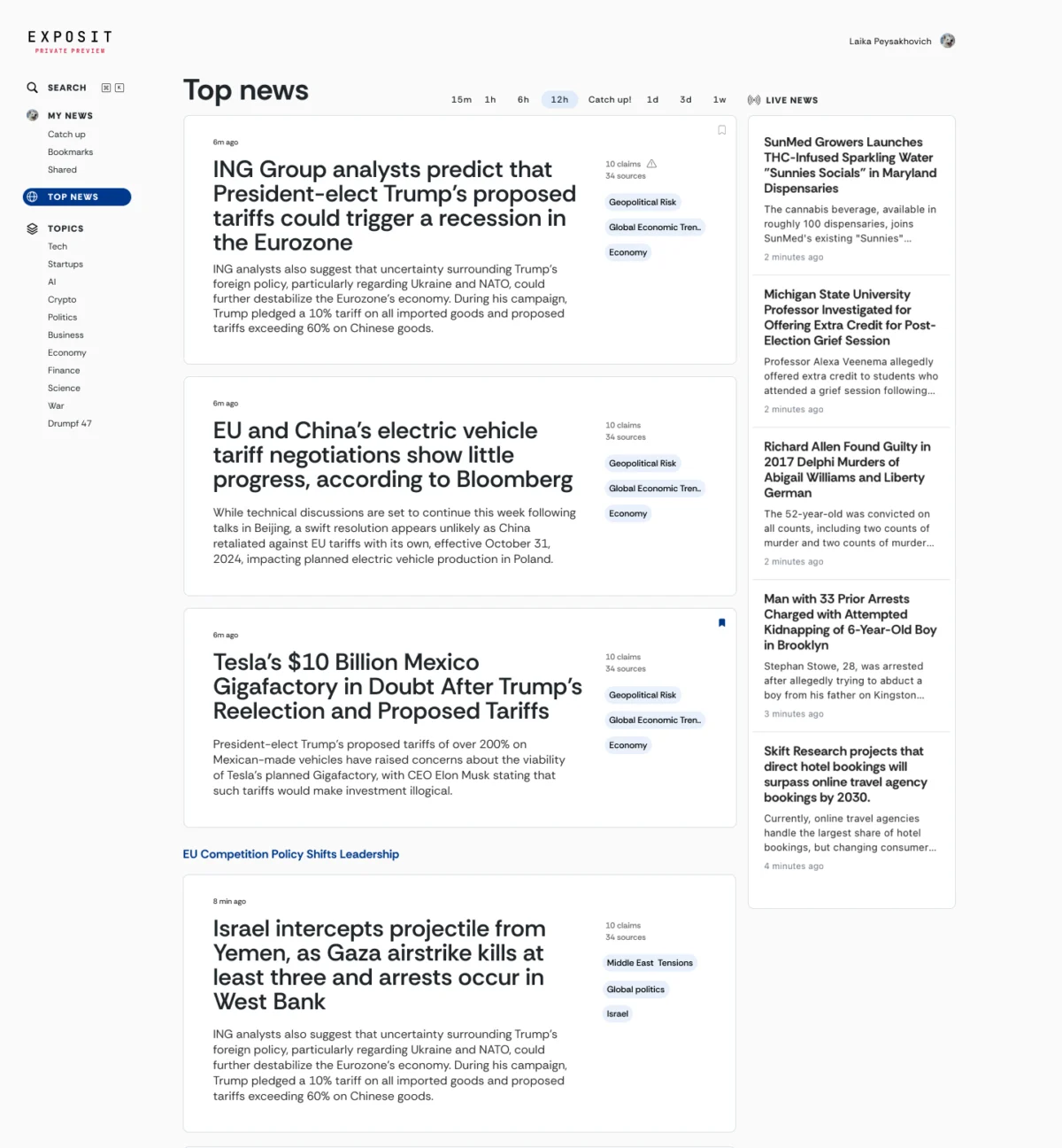
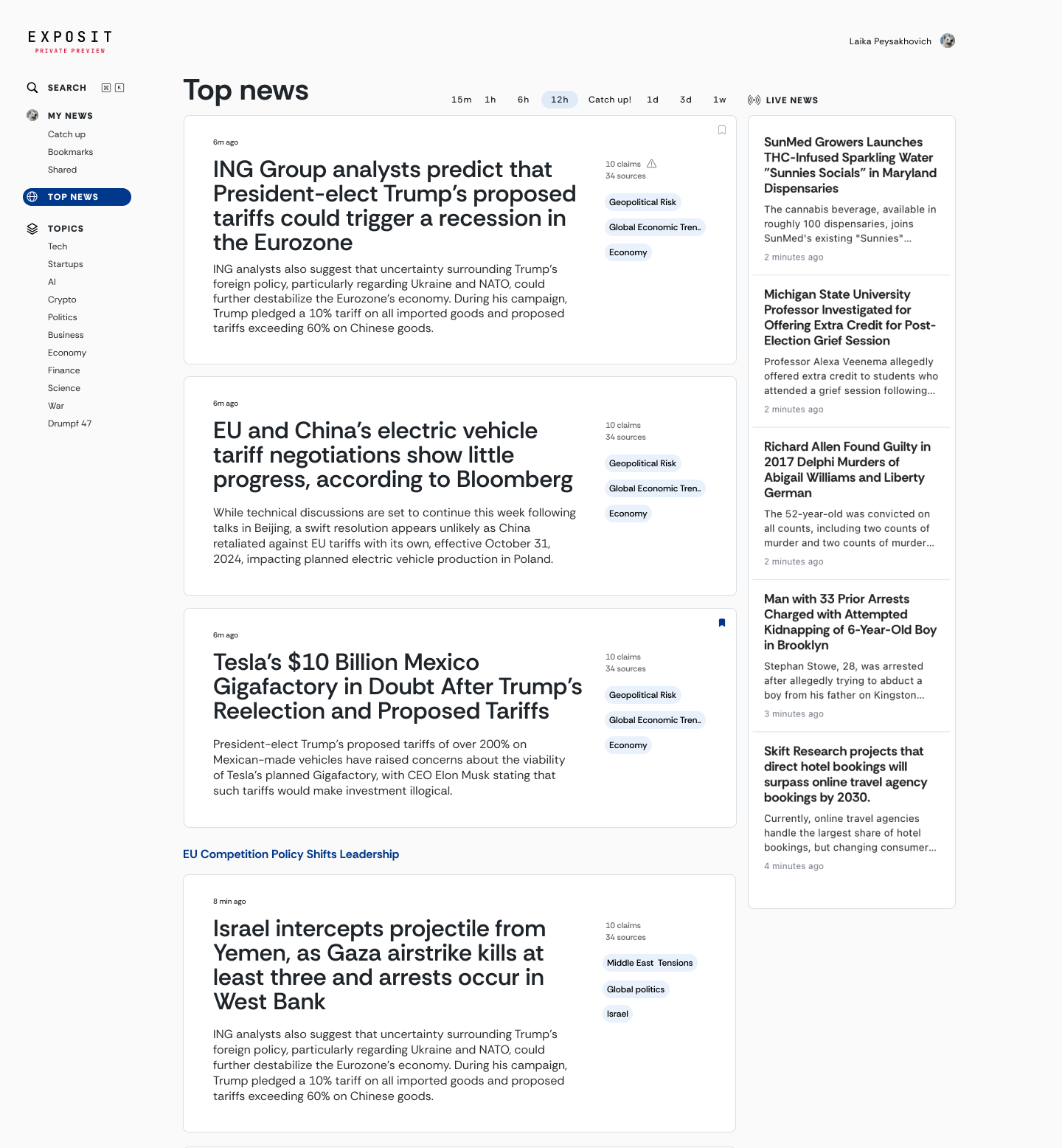
When the team behind Exposit first conceptualized their platform, they followed the traditional blueprint of digital media. They built a system that functioned like a classic newsroom, albeit one staffed by AI agents rather than human journalists. The system was designed to crawl, aggregate, curate, and format global news into a familiar digital structure.
The user experience was built around "the tool." Users were presented with a standard dashboard: headlines, categories, search bars, and scrolling feeds. It was a high-functioning, AI-driven news site, but it was still just a site. It required the user to invest their own time and cognitive load to navigate, parse, and filter the information provided. The "tool" was the destination.
Phase II: The Pivot to Personalization
As the development team continued to iterate, they introduced a "Custom Report" feature. This allowed users to bypass the traditional feed entirely, instead submitting a specific query about a topic or event. The AI would then synthesize a personalized report in real-time, pulling from a vast corpus of data to answer the user’s specific need.
The metrics were immediate and telling: the "Custom Report" feature quickly became the dominant mode of interaction. Users were no longer interested in browsing the "newsroom tool"; they were interested in the answer to their specific questions. By providing the information directly, the developers had effectively removed the need for the user to learn the software.
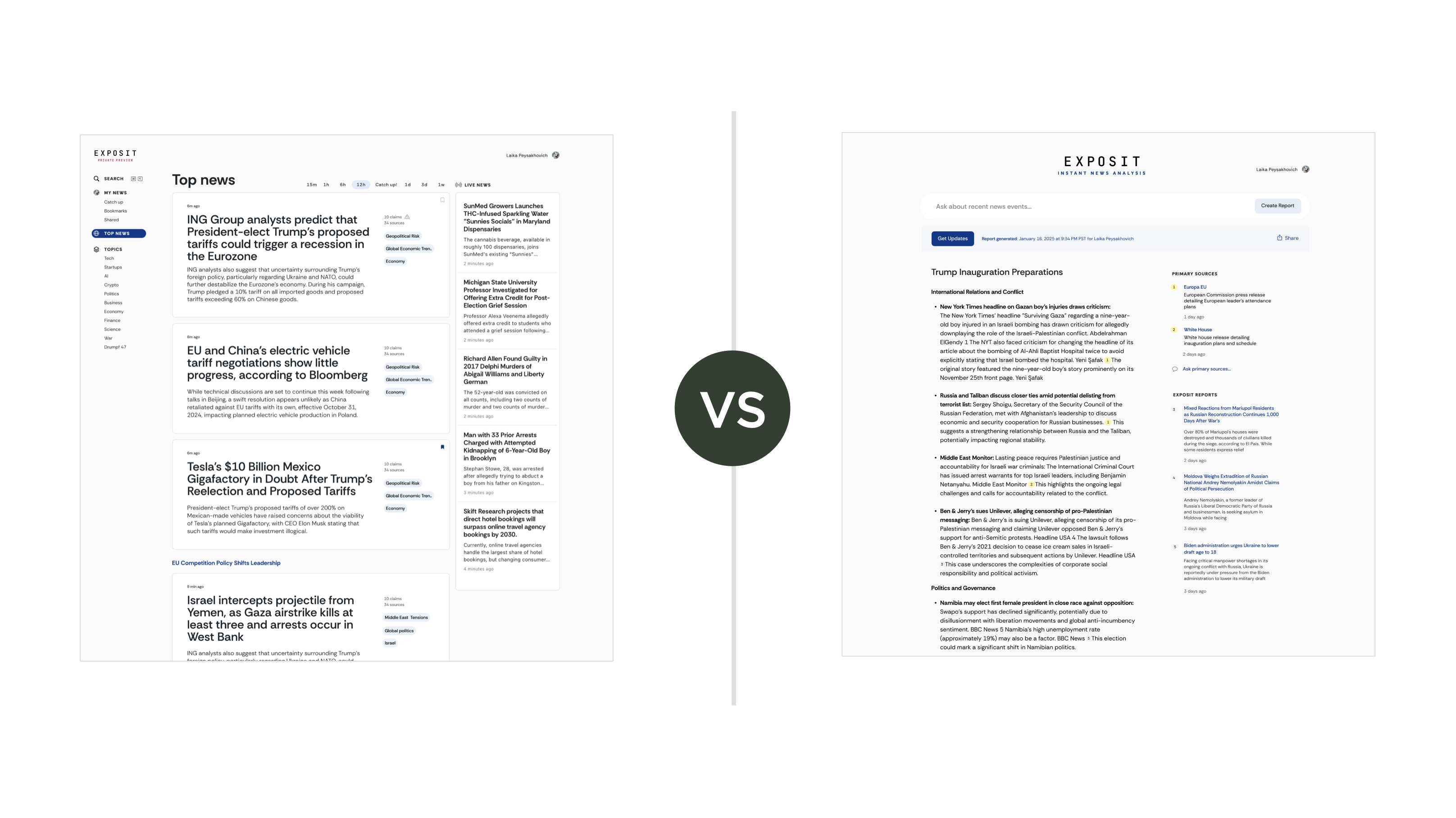
Phase III: The "Just-in-Time" Content Revolution
This shift led to the formalization of what is now called "Just-in-Time" content. In this model, information is not pre-packaged into a static article and published for a general audience. Instead, a dynamic corpus of information is maintained, which can be recombined in milliseconds to provide a bespoke, timely answer to a specific user. This is the hallmark of an outcome-first architecture: the output is the product, and the "tool" is merely the hidden engine driving it.
Supporting Data: Why Efficiency Demands Outcome-First Design
The argument against the traditional "tool" is backed by shifting user behaviors. In a world where information is abundant, the bottleneck is no longer access; it is synthesis.
Data from recent user experience studies suggests that cognitive load—the amount of mental effort being used in the working memory—is significantly lower when users are presented with a direct answer rather than a set of tools to find that answer.
- Reduced Time-to-Value: Traditional software requires an "onboarding" phase, where the user must learn the tool’s interface. Outcome-first AI services have an onboarding time of effectively zero; the user asks, and the system delivers.
- Contextual Relevance: Static articles or dashboards are designed for the "average" user. AI-generated outcomes are designed for the "specific" user, increasing engagement rates by ensuring the information is tailored to the user’s current intent, location, and previous history.
- Continuous Synthesis: The traditional workflow of "create, publish, consume" is inherently lagging. An outcome-first system, which continuously updates its corpus, provides information that is always current, essentially eliminating the latency between an event occurring and an answer being delivered.
Official Perspectives and Industry Implications
The implications of this shift are not limited to news aggregation; they extend to every sector of the professional software market, from design and coding to data analysis and administrative management.
Luke Wroblewski, reflecting on his own "Ask LukeW" feature, notes that the evolution of his site mirrors this larger trend. Initially, his platform required visitors to submit a query to receive any insights. Today, the system automatically compiles his most recent thoughts, tweets, and files, presenting a "what’s current" summary upon arrival.
"I ask myself—and pester others with—the question: are you building another tool, or are you delivering the outcome the tool was supposed to produce?" Wroblewski notes. This question is rapidly becoming the litmus test for product viability in the AI era.
The Death of the "Dashboard"
If the outcome is the primary goal, the traditional "dashboard" becomes a liability. Dashboards are essentially collections of tools meant to help a user monitor a process. If the AI can monitor the process and notify the user only when an intervention is required—or better yet, handle the intervention itself—the dashboard becomes obsolete. We are moving toward a future of "management by exception," where human intervention is only requested when the AI hits a boundary or requires a strategic decision.
Redefining Professional Skills
This shift fundamentally changes what it means to be a "skilled" professional. For decades, skill was measured by one’s proficiency in a specific suite of software (e.g., "Advanced Excel Skills" or "Photoshop Expert"). In an outcome-first world, the value shifts from technical execution to intent definition. The professional of the future must be adept at clearly articulating the desired outcome, vetting the AI’s logic, and handling the strategic nuances that require human empathy, ethics, and long-term vision.
Implications for the Future of Work
The "tool-first" instinct was a survival mechanism for an era where technology was difficult to operate. By mastering the tool, we gained a competitive advantage. Today, the barrier to entry has vanished.
If every competitor has access to the same generative AI tools, the competitive advantage will no longer reside in who can use the tools faster. It will reside in who can define the best outcomes.
The Strategy of Abstraction
Organizations that succeed in the next five years will be those that focus on abstraction. They will stop asking, "How can we build a better tool to help our employees do X?" and start asking, "How can we achieve the result of X without our employees needing to interact with a tool at all?"
This requires a fundamental re-architecture of the software stack. Instead of building monolithic applications with thousands of features, companies will build "outcome engines"—modular systems that ingest data and output answers.
The Human-in-the-Loop
While the goal is to skip the tool, the human element remains central. The "outcome" is not always a simple factual answer; it is often a nuanced judgment call. The transition from tool-user to outcome-director does not remove the human from the loop; it elevates the human to a higher level of oversight. We are moving from being the "manual labor" of software to being the "architects of intent."
Conclusion: The Final Question
As we look toward the remainder of the decade, the software profession faces a reckoning. We have spent years polishing our interfaces and adding "features" that the world may no longer need. The most revolutionary products of the coming years will not be the ones that boast the most robust toolkits; they will be the ones that disappear entirely, leaving behind nothing but the result the user came for.
The next time you sit down to design a product or solve a problem, consider the "outcome-first" test: If your user didn’t have to learn your tool, would they still get what they need? If the answer is no, you are likely still building for a world that no longer exists. The tools of the past are the constraints of the future. It is time to stop building the hammer and start delivering the house.

 Sagoh

 Asep Darmawan

 Raul Delapena Setiawan

 Reynand Wu



 Azzam Bilal Chamdy

 Ali Ikhwan
