
 Asro
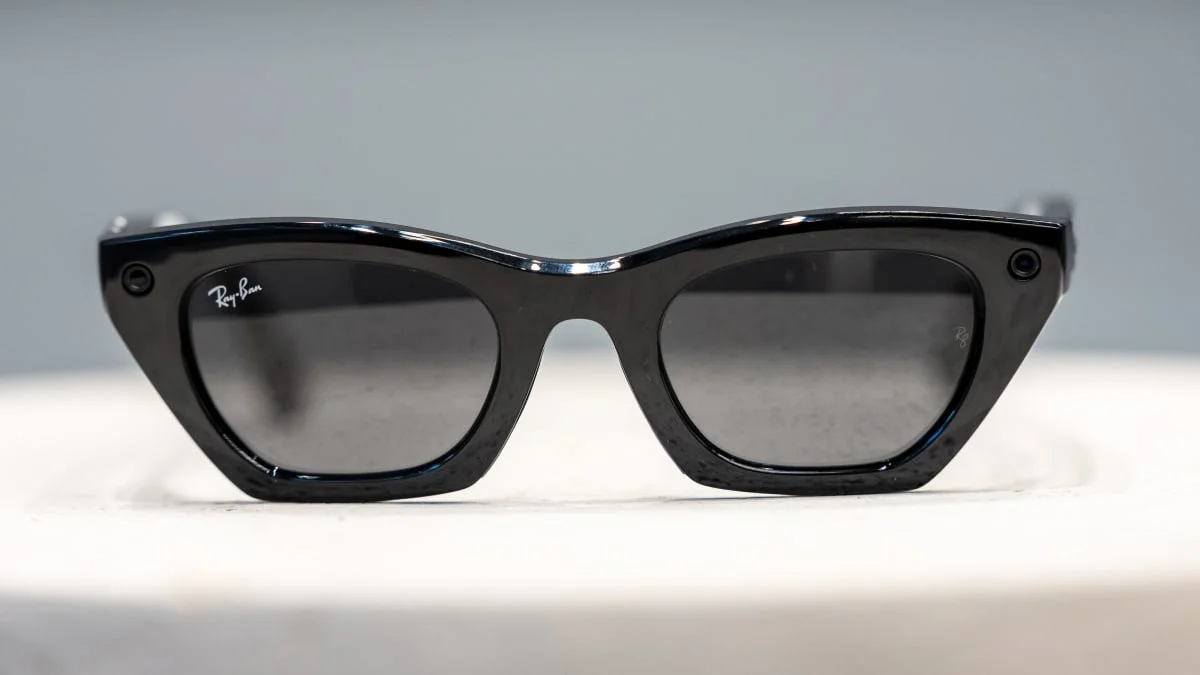
Meta, the technology conglomerate helmed by Mark Zuckerberg, finds itself once again at the center of a firestorm regarding data privacy and user consent. This time, the controversy strikes at the heart of its most intimate hardware venture: the Ray-Ban Meta smart glasses. Following a wave of user reports detailing unauthorized audio recording, the company is facing renewed scrutiny over whether its wearable technology is inherently at odds with the expectation of personal privacy.
While Meta has officially declared the technical glitch "resolved," the incident has reignited a broader, more uncomfortable conversation about the risks associated with AI-integrated wearables that are designed to exist, watch, and listen in our most private spaces.
The Breach: Unauthorized Surveillance
The core of the recent controversy stems from reports that the Ray-Ban Meta smart glasses were recording user conversations without the necessary "Hey Meta" trigger word. For many users, the primary appeal of these glasses is the integration of Meta AI, which requires an explicit verbal prompt to begin processing or recording audio. However, multiple users have reported that the device’s indicator light—a small white LED designed to signal when the glasses are recording—was engaging spontaneously during private interactions.
One particularly damning account emerged on Reddit, where a user detailed their experience with multiple iterations of the hardware. The user noted that the "Hey Meta" activation prompt was completely bypassed, and the recording feature was ostensibly disabled in the settings menu. Despite these precautions, the glasses captured audio transcripts of their daily life. The severity of the claim is amplified by the fact that the user reported the same behavior across three different pairs of glasses, spanning both second and third-generation models.
This suggests a systemic software or firmware failure rather than an isolated hardware defect. The fact that the physical indicator light—the primary safeguard against "surreptitious recording"—was active during these unauthorized sessions implies that the glasses were, to all intents and purposes, functioning as intended by the software, even though the user had not provided consent for that function to be running.
A Chronology of Growing Distrust
To understand the gravity of the current situation, one must look at the timeline of Meta’s trajectory in the wearable market.
- September 2021: Meta launches the first-generation Ray-Ban Stories, marking the company’s first major foray into consumer-grade smart eyewear. Privacy advocates immediately raised concerns about the ability of the device to record video of unsuspecting bystanders.
- Late 2023: Meta introduces the second-generation Ray-Ban Meta glasses, featuring improved AI capabilities and better integration with social media platforms. The company positions these as a "lifestyle" device, emphasizing seamless connectivity.
- Early 2024: Investigative reports reveal that data captured by Meta’s smart devices—including sensitive, intimate, and even potentially illegal footage recorded in private settings like bathrooms—was being processed by third-party human contractors in Kenya. These workers were tasked with "data labeling," essentially watching and transcribing footage to train Meta’s artificial intelligence models.
- Mid-2024: The public discovers that the AI training pipeline involves a massive, global workforce, raising questions about whether users were ever truly aware that their "personal" device was feeding data into a commercial training machine.
- Late 2024/Early 2025: The current reports of unauthorized audio recording surface, suggesting that the "always-on" potential of these devices is no longer just a theoretical privacy concern, but a documented technical reality.
Official Responses and the "Fix"
In response to the recent outcry, a Meta spokesperson issued a brief statement to Android Authority, confirming that the issue had been identified and addressed. "This issue has been resolved," the statement read. "People can manage, review and delete voice logs of their interactions with Meta AI via settings at any time."
While Meta’s statement attempts to put the matter to rest, it notably fails to address the root cause of the glitch. The company has remained silent on how a device could bypass the activation prompt and the user’s own settings. Furthermore, Meta’s advice to "review and delete" logs assumes that the user is aware the logs exist in the first place—a circular logic that does little to comfort those who fear their private conversations have already been processed and stored in Meta’s cloud infrastructure.
The lack of transparency regarding the "why" of the error has left security researchers and privacy advocates unsatisfied. Without a detailed post-mortem or an explanation of how the system "misunderstood" the silence as a trigger, the trust deficit between Meta and its consumer base continues to widen.
The Implications: Are Smart Glasses Inherently Flawed?
The implications of this incident extend far beyond a software bug. They touch upon the foundational philosophy of surveillance capitalism. When a company builds a device designed to collect ambient audio and video, the "off" switch is essentially a software-defined feature, not a physical one. This creates a fundamental imbalance of power between the user and the manufacturer.
The Problem of "Ambient Data"
Modern AI models are ravenous for data. The more information a device collects—the tone of a voice, the content of a conversation, the layout of a living room—the more effective the AI becomes at anticipating the user’s needs. However, this creates a perverse incentive for companies like Meta. If the goal is to make the AI "smarter," the pressure to collect more data, more often, is constant. When the technology fails, it rarely fails toward "more privacy"; it almost always fails toward "more collection."
The "Bystander" Dilemma
While the user may have the ability to delete their own logs, what about the people standing near them? The rise of smart glasses effectively turns every wearer into a mobile, autonomous surveillance node. When these devices malfunction, they don’t just violate the privacy of the owner; they violate the privacy of every person in the room. In this light, the recent technical glitch is not just a consumer protection issue; it is a public policy challenge.
The Erosion of Consent
"Consent" in the digital age is often buried in lengthy terms of service, but even when companies attempt to be transparent, technical glitches can render that consent meaningless. If a user explicitly turns off a feature, they are providing "informed dissent." When the device records anyway, the concept of consent is effectively deleted. This creates a "chilling effect" where consumers may fear using the very technology they purchased, leading to a decline in adoption for wearable tech that could, in theory, offer significant utility.
Future Outlook: A Need for Regulation
As Meta continues to push toward an "AI-first" future, the expectation of privacy will likely become an increasingly rare commodity. The company’s history of data management—from the Cambridge Analytica scandal to the current issues with Ray-Ban Meta glasses—suggests that self-regulation is insufficient to protect the average citizen.
Legal experts are now suggesting that hardware like smart glasses may require more rigorous certification standards. Unlike a smartphone, which is typically held in the hand and can be easily obscured or put away, smart glasses are worn on the face, integrated into the user’s sensory experience. Because they are always present, the "privacy budget" for such devices is much smaller.
Moving forward, three key areas must be addressed:
- Hardware-Level Privacy: Moving away from software-based recording triggers toward physical, mechanical disconnects for cameras and microphones.
- Radical Transparency: Companies must provide clear, auditable logs of exactly when and why a recording was triggered, accessible in real-time.
- Third-Party Accountability: A strict ban on human-in-the-loop processing for sensitive data, or at the very least, an absolute requirement for explicit, granular, and opt-in consent for any data that is reviewed by third-party contractors.
Conclusion
The Ray-Ban Meta smart glasses are a triumph of engineering, blending iconic fashion with cutting-edge AI. However, they are also a stark reminder that technology, when divorced from robust privacy protections, can quickly become a liability. Meta’s latest "fix" may resolve the immediate glitch, but it does little to address the systemic anxiety felt by users. Until the company can demonstrate a fundamental commitment to privacy that supersedes its appetite for data, its wearables will continue to be viewed with suspicion—or worse, fear—by the very people they are meant to assist.
For now, the white LED on the frame of a pair of Ray-Ban Meta glasses remains a symbol of uncertainty. For the user, it is a light that should only blink when they ask; for the rest of the world, it is a reminder that in the age of AI, the walls—and the glasses—have ears.


 Reynand Wu

 Sagoh

 Raul Delapena Setiawan


 Azzam Bilal Chamdy

 Ali Ikhwan
