
 Rifan Muazin
This report was produced by Grist and co-published with Agência Pública.
As Brazilians prepared for the final stage of the 2026 presidential election, the rhetoric on the campaign trail reached a fever pitch. On the ballot, voters face a choice between the three-term incumbent, Luiz Inácio Lula da Silva, and his challenger, Senator Flávio Bolsonaro. While the political establishment focuses on inflation, interest rates, and national security, the global scientific community is watching with bated breath, viewing the election as a de facto referendum on the future of the Amazon rainforest—and, by extension, the global climate.
The Stakes: A Forest on the Brink
The Amazon is not merely a regional asset; it is a global atmospheric engine. Home to approximately 175 billion metric tons of carbon—roughly equivalent to 15 years of total global CO2 emissions—the forest serves as a vital buffer against runaway climate change. Beyond carbon storage, the "flying rivers" created by the transpiration of billions of trees account for up to half of the region’s rainfall, a hydrological cycle that sustains the agricultural heartland of South America.
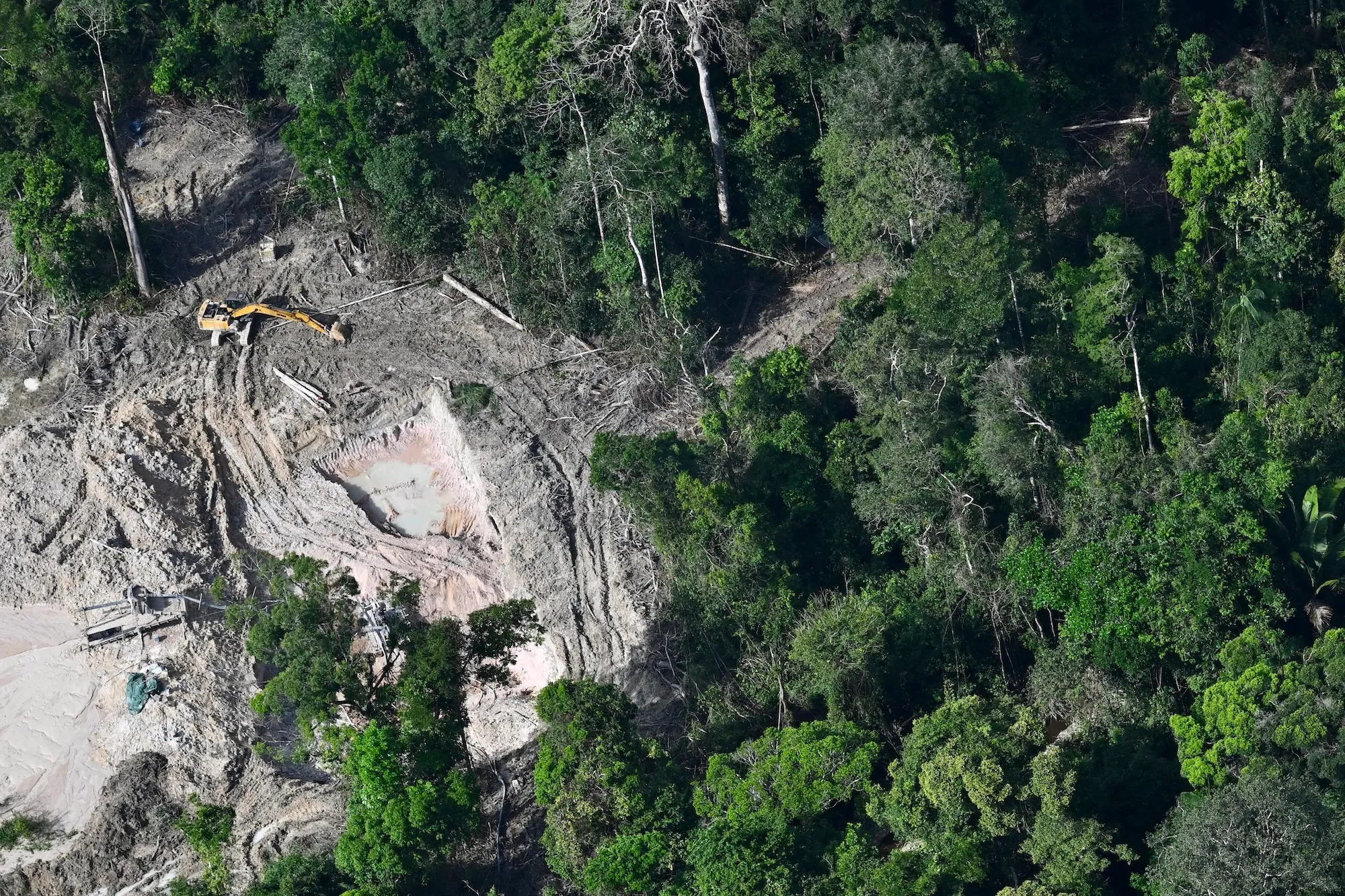
However, the forest is under siege. Between illegal logging, aggressive land clearing, and the encroachment of industrial-scale cattle ranching and soy farming, the ecosystem is rapidly approaching a "tipping point." Climate scientists, including Carlos Nobre of the University of São Paulo’s Institute for Advanced Studies, warn that if 20 to 25 percent of the biome is cleared, the forest will lose its ability to self-generate rainfall, triggering a irreversible transition from lush rainforest to degraded savanna.
A Chronology of Policy and Deforestation
The trajectory of the Amazon has long been tied to the occupant of the Alvorada Palace.
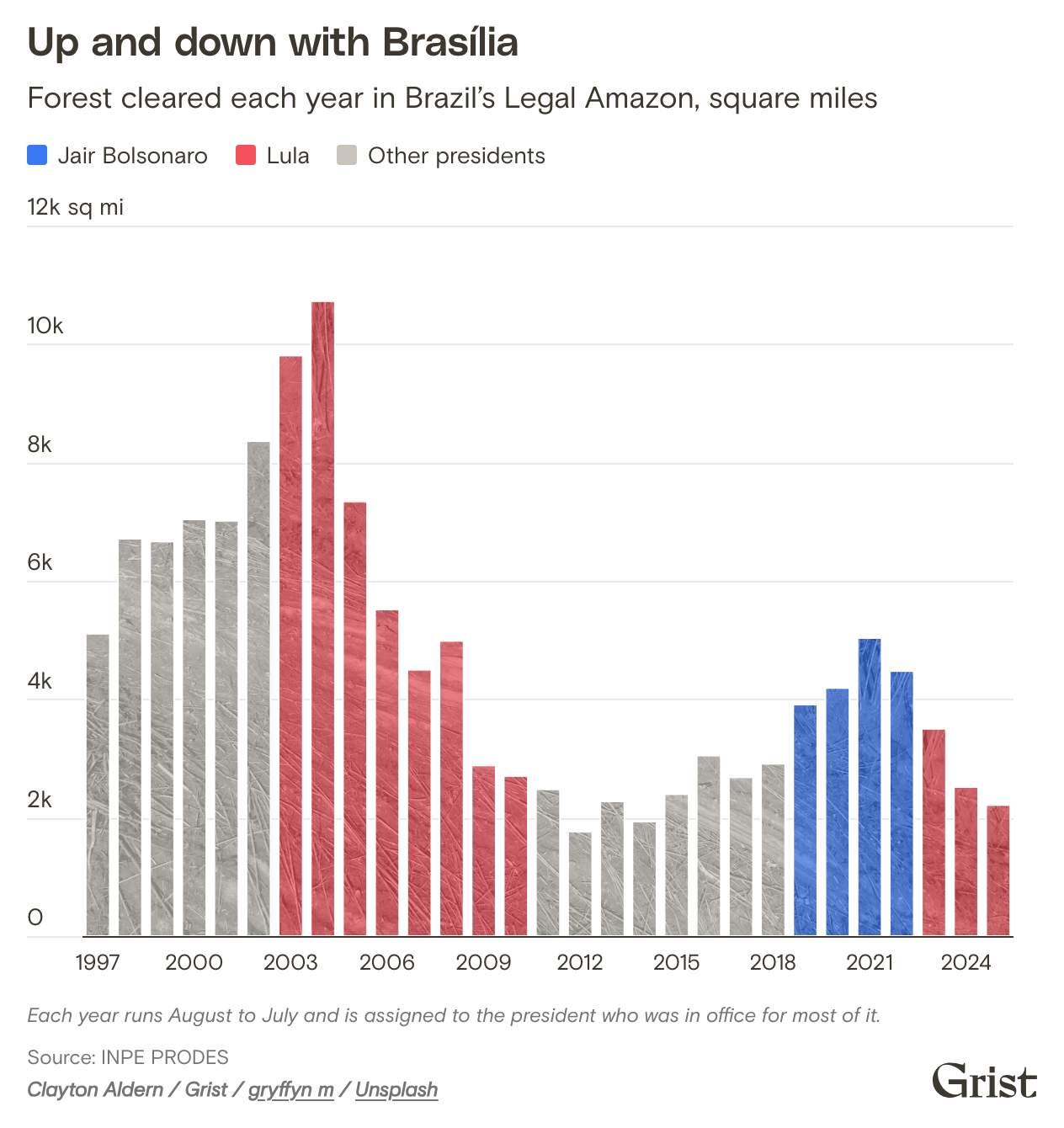
- The Early 2000s: During Lula’s first two terms, aggressive enforcement and monitoring led to a significant reduction in deforestation, which had peaked at over 10,000 square miles annually.
- The Bolsonaro Years (2019–2022): The administration of Jair Bolsonaro saw a radical dismantling of environmental protection agencies, such as IBAMA. This led to a surge in illegal land clearing and a near-doubling of carbon emissions in the Amazon during 2019 and 2020.
- The Present (2026): As the runoff approaches, the political landscape is fragmented. After the first round of voting, Flávio Bolsonaro—the son of the former president—holds a 2.2 million-vote lead over the incumbent, setting the stage for a high-stakes showdown on October 25.
Supporting Data: The Cost of Deregulation
While both candidates present platforms aimed at environmental stability, their approaches to implementation diverge sharply. Lula has pledged a return to net-zero deforestation by 2030, leaning on state-led enforcement. Conversely, Flávio Bolsonaro’s platform calls for an "agile, modern" environmental licensing process. Critics argue this is a euphemism for the wholesale removal of barriers to development.

Economist Monica de Bolle, a senior fellow at the Peterson Institute for International Economics, warns that a Bolsonaro victory would likely usher in a repeat of his father’s administration. "Jair Bolsonaro basically dismantled the entire enforcement structure," de Bolle explains. "If Flávio wins, we are looking at a return to policies that prioritize short-term agribusiness expansion over the structural integrity of the rainforest."
The data supports this concern. A study by MapBiomas suggests that 97 percent of all land clearing in 2025 showed clear signs of illegality. If the country were to return to the deforestation rates seen under the elder Bolsonaro, experts estimate an additional 17,600 square miles of forest would be lost over the next four years—an area roughly the size of Belize.
The Political Geography of the Amazon
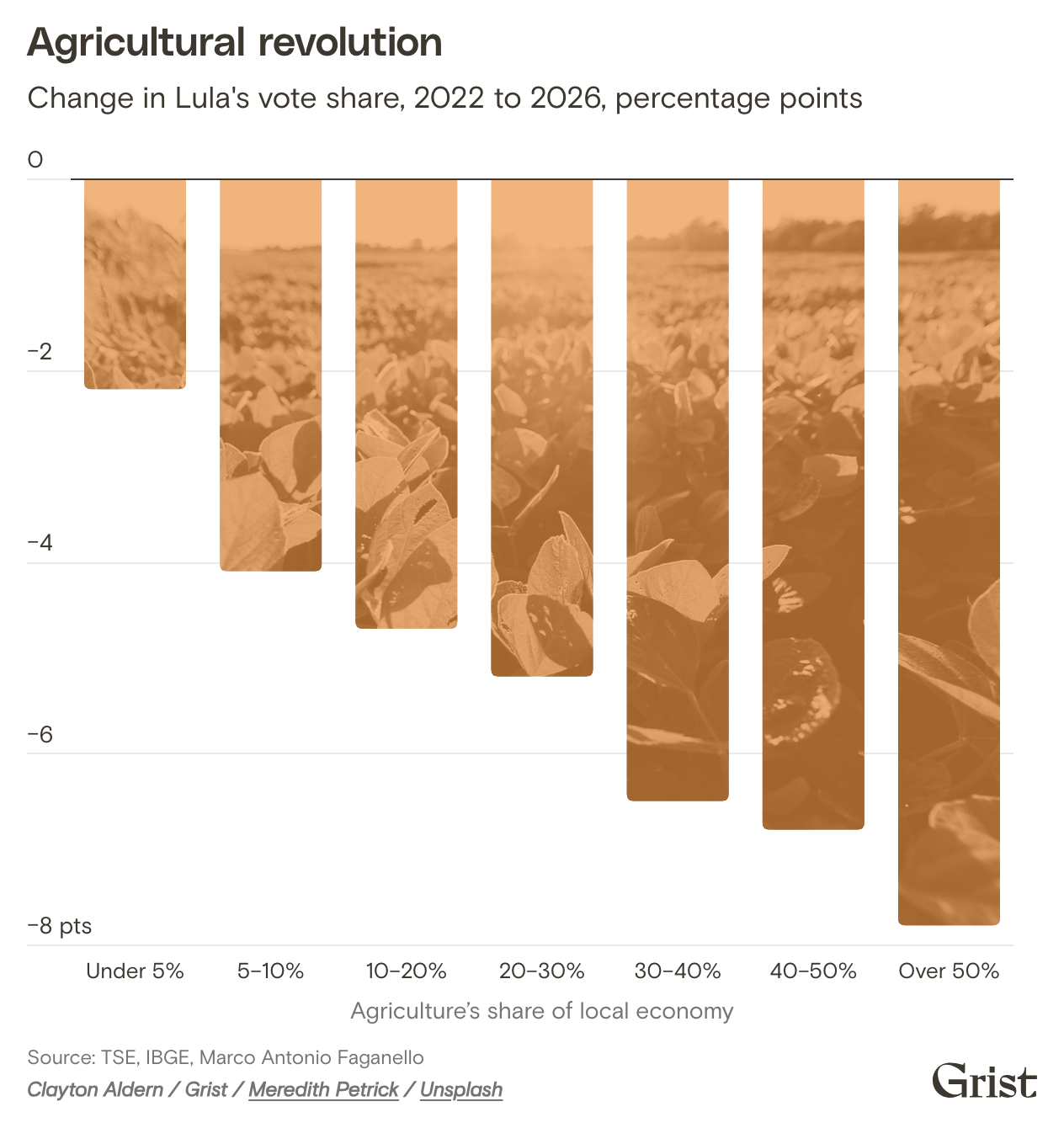
The first-round election results underscore a deep divide in Brazilian society. While Lula lost support across the board, his decline was most pronounced in municipalities where agriculture represents more than 50 percent of the local economy. In these areas, his vote share dropped by nearly eight percentage points, compared to just 2.2 points in urban, non-agricultural centers.
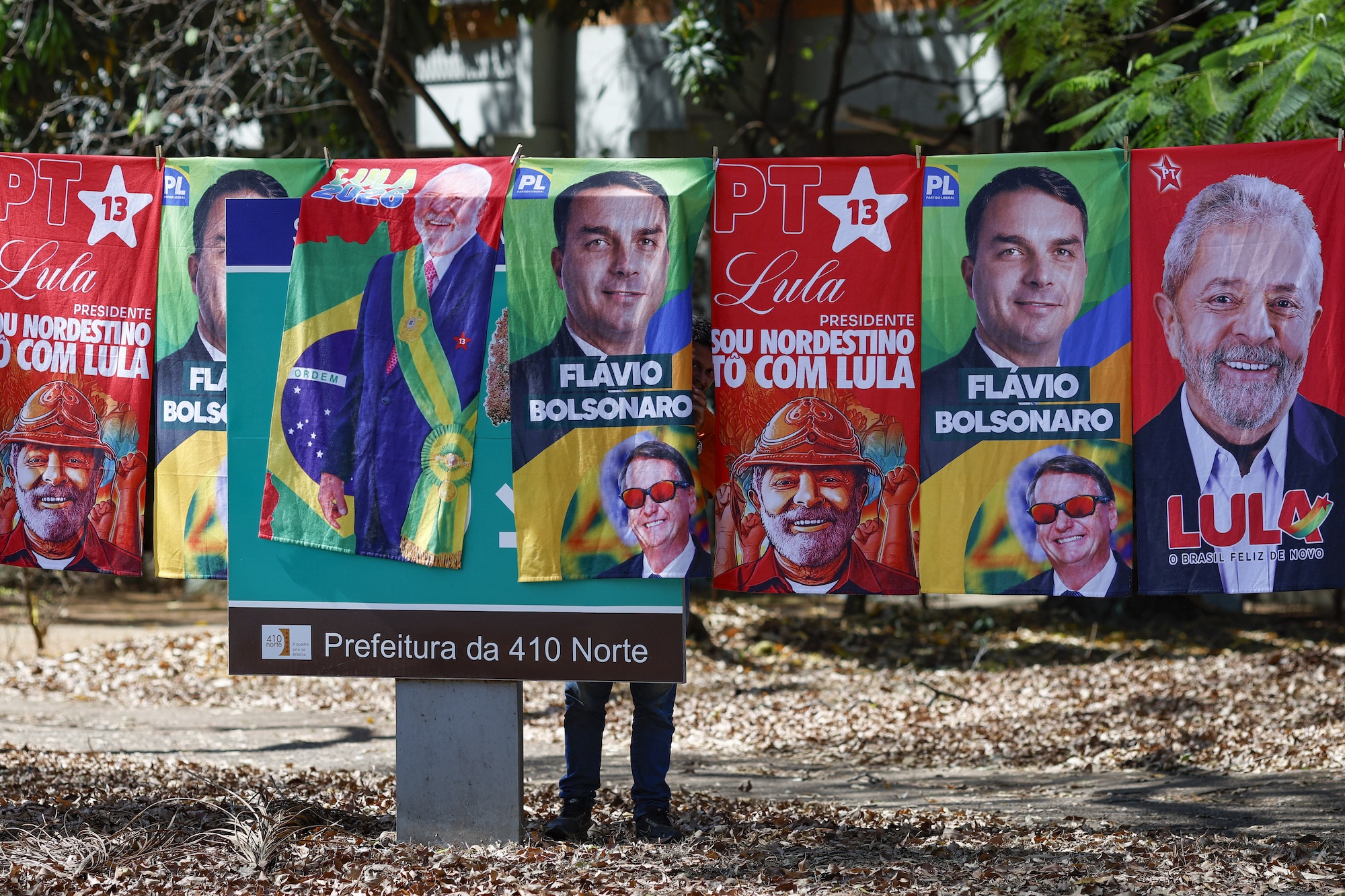
This alignment between the "Ruralist" lobby—the Parliamentary Agricultural Front (FPA)—and the Bolsonaro campaign is not coincidental. The FPA has formally endorsed Flávio Bolsonaro, who has promised that the agricultural caucus will have the power to select his Minister of Agriculture. This promise signals a potential transfer of regulatory power from government scientists to the very industries that rely on the conversion of forest into farmland.
Official Responses and Scientific Warnings
The Bolsonaro campaign has remained largely silent regarding specific environmental policies, ignoring multiple requests for comment. However, his party’s recent electoral success suggests he may not need to address these concerns to secure a mandate. In the October 4 legislative elections, the Liberal Party secured 121 seats in the House, the largest bloc since the 1988 Constitution.
Analysis by Sumaúma indicates that more than half of the incoming House members have previously voted to weaken environmental protections or limit Indigenous land claims. This creates a difficult reality for whoever wins the presidency. "Even if Lula is reelected," says de Bolle, "he is going to be governing from a position of extreme weakness, facing a hostile legislature that is explicitly incentivized to deregulate the Amazon."
The Tipping Point: A Global Insurance Policy
The scientific community is increasingly urgent in its communication. Nico Wunderling, a climate researcher at Goethe University Frankfurt, recently led a study published in Nature that suggests the tipping point for the Amazon may be closer than previously thought—likely between 22 and 28 percent clearing when combined with mid-century global warming projections.
With 22 percent of the Brazilian Amazon already cleared, the margin for error has effectively vanished. Wunderling notes that if Brazil returns to the high-deforestation practices of the recent past, the region could hit the "danger zone" by the late 2030s. "Deforestation is the one lever we can actually pull," Wunderling says. "Climate change is a global process that is harder to arrest, but stopping the physical destruction of the trees is within the power of the Brazilian government."
Ronaldo Christofoletti, an oceanographer at the Federal University of São Paulo, compares the situation to an insurance policy. "We pay for insurance because an accident can happen," he says. "We don’t know when the crash will occur, but we know the probability is rising. Do not expect magic from scientists; just realize that we are driving faster toward the cliff."
Implications: The Road Beyond October 25
The results of the October 25 runoff will resonate far beyond the borders of Brazil. The outcome will dictate whether the Amazon remains a functional carbon sink or becomes a significant source of global emissions.
For the international community, the election is a test of whether a sovereign nation can align its national economic interests with the existential necessity of planetary health. For the millions of Brazilians living in the Amazon, it is a question of survival. As the country moves toward the final vote, the forest itself—silent, vast, and increasingly fragile—awaits a decision that will either begin the process of its recovery or accelerate its irreversible decline.
If the legislative results are any indication, the battle to save the Amazon will not end on election night. Regardless of who sits in the presidential chair, the fight to balance agricultural expansion with environmental conservation will remain the defining challenge of the next four years in Brazil.


 Raul Delapena Setiawan

 Laily UPN

 Reynand Wu

 Sagoh


 Azzam Bilal Chamdy

 Ali Ikhwan
