
 Lina Hope
By Jan-Werner Mueller
October 15, 2026
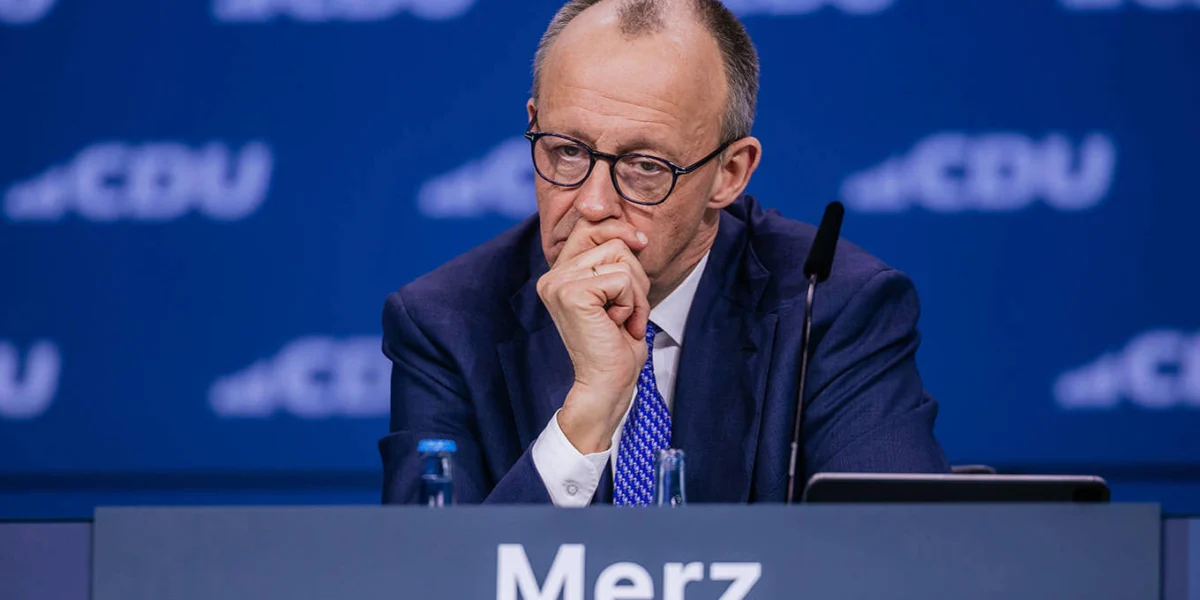
For decades, the Christian Democratic Union (CDU) stood as the bedrock of German stability. From the reconstruction of the post-war era under Konrad Adenauer to the long-standing, pragmatist tenure of Angela Merkel, the party positioned itself as the "People’s Party" (Volkspartei)—a broad, inclusive umbrella designed to harmonize competing interests and prevent the kind of political polarization that defined the Weimar Republic. Their strategy was simple: mediate between capital and labor, tradition and progress, and rural and urban interests to create a harmonious social equilibrium.
However, the political landscape in Germany has shifted beneath the feet of the center-right. Recent state elections have sent a shockwave through Berlin, with the far right securing historic victories. Yet, while the headlines focus on the rise of populism, a more profound crisis is unfolding: the collapse of the CDU’s traditional identity. In the state of Mecklenburg-Vorpommern—a region once synonymous with the party’s reach under former Chancellor Angela Merkel—the CDU has suffered an ignominious defeat, failing to clear the 5% electoral threshold. This is not merely a localized setback; it is an existential failure that signals the end of an era.
The Main Facts: A Structural Collapse
The results from Mecklenburg-Vorpommern are catastrophic by any historical metric. Achieving less than 5% of the vote means the party is effectively excluded from the state parliament, rendering them a political non-entity in a region where they once held the keys to the chancellery.
This collapse challenges the core assumption that the CDU can remain a "catch-all" party. The traditional Christian Democratic model relied on a delicate balance: satisfying the conservative base while maintaining a moderate, centrist appeal that alienated neither the business elite nor the working class. In 2026, that balance has splintered. The far right has successfully peeled away the party’s rural, disillusioned base, while the center-left and Green coalitions have siphoned off the younger, urban, and professional demographics. The CDU is currently trapped in a "pincer movement," squeezed between ideological fringes that leave little room for the moderate consensus-building that once defined German politics.
A Chronology of Decline
The trajectory leading to this moment was not sudden; it was a slow-motion erosion that many in Berlin chose to ignore.
- 2005–2012: Under Angela Merkel’s leadership, the CDU experienced a period of high stability. Merkel’s "asymmetric demobilization"—the strategy of making politics seem so boring that opposition voters stayed home—kept the CDU dominant.
- 2015: The migration crisis served as the first major fracture. The party’s decision to open borders created a rift between the moderate leadership and the conservative grassroots, providing the initial oxygen for the Alternative for Germany (AfD) to move from a fringe movement to a parliamentary force.
- 2021: Following the end of the Merkel era, the CDU struggled to define its post-Merkel identity. The party’s internal leadership contests revealed deep divisions regarding climate policy, social liberalism, and economic reform.
- 2024–2025: The party attempted to regain momentum by pivoting toward a more traditional "law and order" platform. However, these attempts were often perceived as inauthentic, appearing more like reactionary responses to the far right than a coherent vision for the future.
- October 2026: The Mecklenburg-Vorpommern election result confirms that the party’s historical heartlands are no longer immune to the anti-establishment wave.
Supporting Data: The Demographic Shift
Statistical analysis of the 2026 regional elections reveals a stark divide. In Mecklenburg-Vorpommern, the CDU’s voter retention rate among those over 60—traditionally their most loyal cohort—has dropped by 18% compared to the 2021 election.
Furthermore, data from polling firms suggests that 40% of former CDU voters in the state migrated directly to far-right candidates, citing "loss of identity" and "economic insecurity" as their primary motivations. When we cross-reference this with economic data, we see that the CDU has failed to address the specific anxieties of post-industrial rural regions. While the party focused on fiscal discipline and European integration, the electorate in rural Germany was grappling with the decay of local infrastructure and a perceived lack of representation in Berlin’s globalized economy.
The "5% barrier" is not just a statistical floor; it is a psychological one. Once a party falls below this threshold, it loses public funding, parliamentary speaking time, and, most importantly, its status as a viable government alternative.
Official Responses: Denial vs. Reckoning
The reaction from the CDU’s federal headquarters in Berlin has been a mixture of panic and defensive posturing.
"We are witnessing a momentary protest vote," claimed one party spokesperson in a press conference held shortly after the results were confirmed. However, party insiders—speaking on the condition of anonymity—admit that the leadership is deeply divided. Some argue that the party must move further to the right to reclaim its lost voters, effectively adopting the rhetoric of their rivals to survive. Others, including prominent members of the party’s youth wing, argue that the CDU must modernize, embracing a new, more climate-conscious, and socially liberal platform to capture the next generation of voters.
There has been little acknowledgement of the "Merkel factor." In Mecklenburg-Vorpommern, the fact that the party collapsed in the former Chancellor’s own political backyard has been treated as a taboo subject. Critics argue that the party has spent too long resting on the laurels of the Merkel years, failing to develop a successor narrative that resonates in a post-globalization world.
Implications: The End of the "Big Tent"
What does this mean for the future of German democracy? The CDU was designed to be the "center-right stabilizer." If that stabilizer is removed, the German parliament faces the risk of extreme fragmentation.
1. The Challenge of Coalition Building
With the CDU failing to secure seats in some regions, the math for forming stable governing coalitions becomes increasingly impossible. Germany is heading toward a period of "Italianization," where governments are short-lived, unstable, and rely on fragile alliances between parties that have very little in common.
2. A Crisis of Identity
The CDU must decide if it is a conservative party or a centrist party. For years, it tried to be both, believing that the German public would always prefer the "safe" middle. But as the 2026 results show, the middle is shrinking. The party must reconnect with its historical roots—specifically the social market economy (Soziale Marktwirtschaft)—which emphasized not just capital, but the social welfare of the citizenry.
3. The Threat to European Stability
Germany is the economic engine of Europe. A weakened German political center has implications for the European Union. If the primary pro-European party in Germany is in disarray, the continent’s ability to project unity on issues ranging from defense to climate change is severely compromised.
Conclusion: A History Lesson
The Christian Democrats must reconnect with a different part of their history—not the period of complacent dominance, but the early, formative years when the party was built on a genuine desire to reconcile a fractured society. They need to articulate a vision that addresses the legitimate grievances of the rural, the economically anxious, and the culturally alienated, without resorting to the populist tactics that have poisoned the current political discourse.
If the CDU continues to ignore the warning signs displayed in Mecklenburg-Vorpommern, they risk becoming a footnote in history. The "Big Tent" is not failing because it is too large; it is failing because the poles holding it up have rotted. Unless the party can forge a new, authentic identity—one that bridges the gap between the rural heartland and the urban centers—the stability that defined the German post-war miracle may soon be a thing of the past. The time for denial has ended; the time for a fundamental, and perhaps painful, reconstruction has arrived.

 Nana Wu

 Reynand Wu

 Raul Delapena Setiawan


 Sagoh


 Azzam Bilal Chamdy

 Ali Ikhwan
