
 Reynand Wu
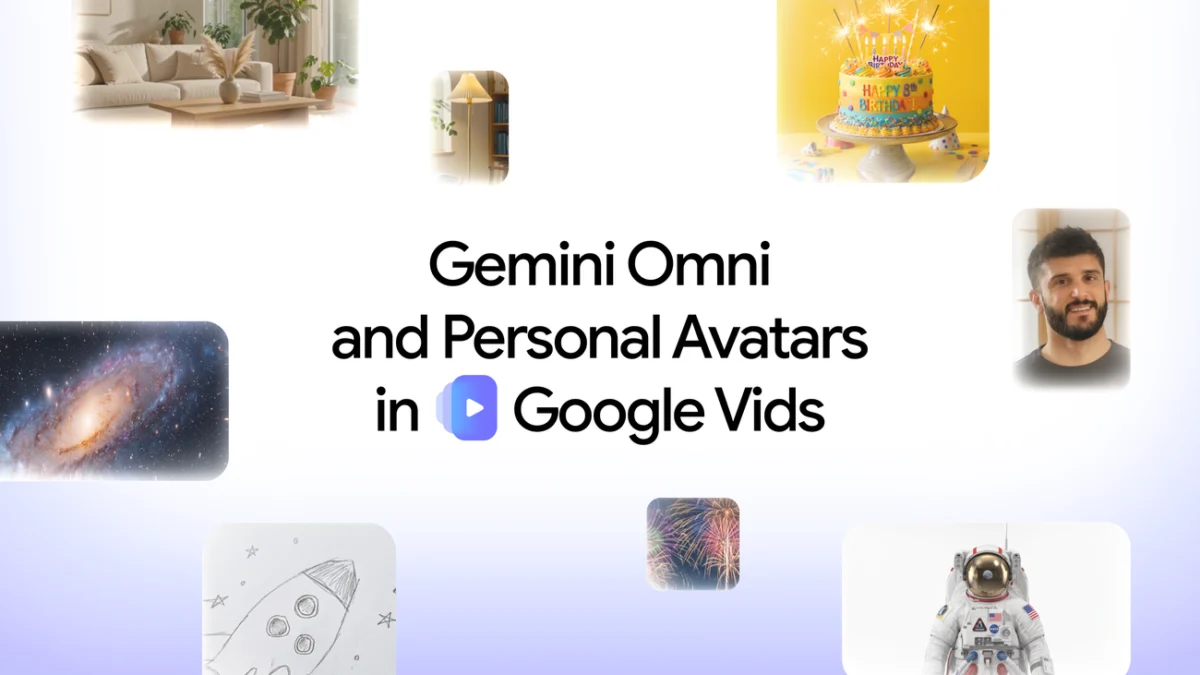
In a significant move that promises to bridge the gap between amateur vision and professional-grade production, Google has announced a major expansion of its AI-powered video creation platform, Google Vids. By integrating its state-of-the-art Gemini Omni 1.1 Flash model, the tech giant is removing the barriers to entry for high-definition video production. For the first time, any user with a standard Google Account can access advanced generative video capabilities at no cost, effectively placing a studio-quality production suite in the hands of everyone from small business owners and community organizers to students and casual creators.
The initiative marks a paradigm shift in how digital content is conceptualized, built, and shared. By removing the requirement for expensive software, specialized hardware, or years of editing experience, Google is signaling a future where the only limit to video production is the user’s imagination.
A New Era of Accessibility: The Core Facts
The integration of Gemini Omni 1.1 Flash into the Google Vids ecosystem is not merely a feature update; it is a fundamental transformation of the platform’s utility. Previously, sophisticated generative video tools were often locked behind enterprise paywalls or complex, steep learning curves. Google’s latest deployment changes this dynamic by offering a streamlined interface where users can generate, extend, and customize high-definition scenes through simple, natural language prompts.
Users can access this capability immediately by navigating to vids.new on their desktop browsers and selecting the "Create AI videos" tile. Once inside, the platform leverages the speed and efficiency of the Omni 1.1 Flash model to translate textual concepts into visual narratives. Whether it is a marketing pitch, an educational explainer, or a personal project, the platform acts as a creative collaborator, automating the tedious technical aspects of video editing while leaving the directorial control in the hands of the user.
The Chronology of Development
To understand the significance of this release, one must look at the rapid evolution of Google’s AI suite. The journey toward this moment began with the initial launch of Google Vids as a productivity tool aimed at streamlining workplace communication.
- Early Development: Google initially introduced Vids as a tool for Workspace users to simplify the creation of presentations and meeting videos, focusing on collaboration and template-based storytelling.
- The Gemini Integration: As Google’s Gemini models matured, the company began exploring how multimodal capabilities—the ability to process and generate text, images, and video simultaneously—could be applied to Vids.
- The Announcement: Following rigorous testing and the refinement of the Gemini Omni 1.1 Flash model, Google determined that the technology had reached a level of reliability and quality sufficient for general consumer release.
- Today’s Milestone: The expansion to all Google Account holders represents the culmination of this strategy, moving from a B2B productivity tool to a democratized creative platform.
Empowering the Creator Economy
The implications for the "creator economy" are profound. Traditionally, producing a high-definition, professional-looking video required a significant investment in time and resources—scriptwriting, filming, lighting, editing, and post-production. Google Vids effectively flattens this production pipeline.
The platform is designed to allow creators to "direct" rather than just "prompt." Users can provide specific stylistic instructions, dictate pacing, and request structural changes to their videos, allowing them to iterate on their vision in real-time. This iterative process is a hallmark of the new Gemini-powered experience, where the AI acts as a partner that understands context and creative intent.
Transparency in the Age of AI
With the rise of generative media comes the critical issue of authenticity. Google has been proactive in addressing concerns regarding deepfakes and misinformation by embedding "SynthID" into every clip generated by the platform.
SynthID is an imperceptible digital watermark integrated directly into the video frames. This watermark remains detectable even if the video is subjected to common editing techniques such as compression, color grading, or cropping. By adopting this standard, Google is setting a precedent for responsible AI development, ensuring that viewers can verify whether content was generated or assisted by artificial intelligence. This layer of transparency is essential for maintaining trust as AI-generated content becomes increasingly indistinguishable from reality.
Future Horizons: Natural Language Narration
Looking ahead, Google has already announced the next phase of the Vids evolution: the integration of Gemini 3.8 Flash-Lite text-to-speech technology. This upcoming feature is slated to turn written scripts into professional, natural-sounding voiceovers across more than 100 languages.
For the small business owner in a global market, this feature is a game-changer. It eliminates the need for voice actors or expensive recording equipment, allowing creators to localize their content for international audiences with a few keystrokes. By bridging the gap between text and audio, Google is ensuring that the "story" remains the focus of the production, regardless of the user’s technical background.
Implications for Businesses and Teams
While the tool is free for individual consumers, Google has structured its offering to scale with enterprise needs. For teams that require higher capacity, more advanced management features, and increased usage limits, Google offers paths through its Workspace Business and Enterprise plans.

These enterprise-grade features include centralized admin controls, allowing organizations to maintain brand consistency and manage asset libraries across teams. This ensures that while the creative process is democratized, it remains compliant and manageable within a corporate structure. For organizations, this means they can leverage the power of Gemini to produce internal communications, training modules, and marketing assets at a fraction of the traditional cost.
The Philosophical Shift: Directing Over Editing
Perhaps the most significant change brought about by the Gemini Omni integration is the shift in the creator’s role. For decades, video editing software was defined by "nle" (non-linear editing) timelines—complex grids of audio and video tracks that required mastery of tools like Adobe Premiere or DaVinci Resolve.
Google Vids is moving the industry toward a "director-centric" model. In this framework, the user defines the narrative arc, the tone, and the visual style, while the AI manages the technical heavy lifting of asset generation and scene construction. This is not to say that the human creator becomes obsolete; rather, the human creator is freed from the technical drudgery of "cutting" to focus on the high-level art of storytelling.
Conclusion: A New Frontier
The introduction of Gemini Omni 1.1 Flash into Google Vids is a testament to how far generative AI has progressed in a remarkably short period. By providing these tools to the public for free, Google is not just releasing a piece of software; it is lowering the barrier to self-expression for millions of people.
As we look toward the future, the integration of more sophisticated audio, better scene consistency, and tighter integration with the broader Google ecosystem will likely make Vids an indispensable part of the digital creator’s toolkit. Whether you are a student making a class presentation, a budding entrepreneur launching a product, or a creative looking to experiment with new mediums, the tools are now at your fingertips.
To begin your journey into this new landscape of AI-assisted creation, you can visit vids.new and start building your first scene today. The era of the "direct-to-video" creator has truly arrived.


 Nana
 Siti Muinah

 Raul Delapena Setiawan


 Sagoh


 Azzam Bilal Chamdy

 Ali Ikhwan
