
 Neng Nana
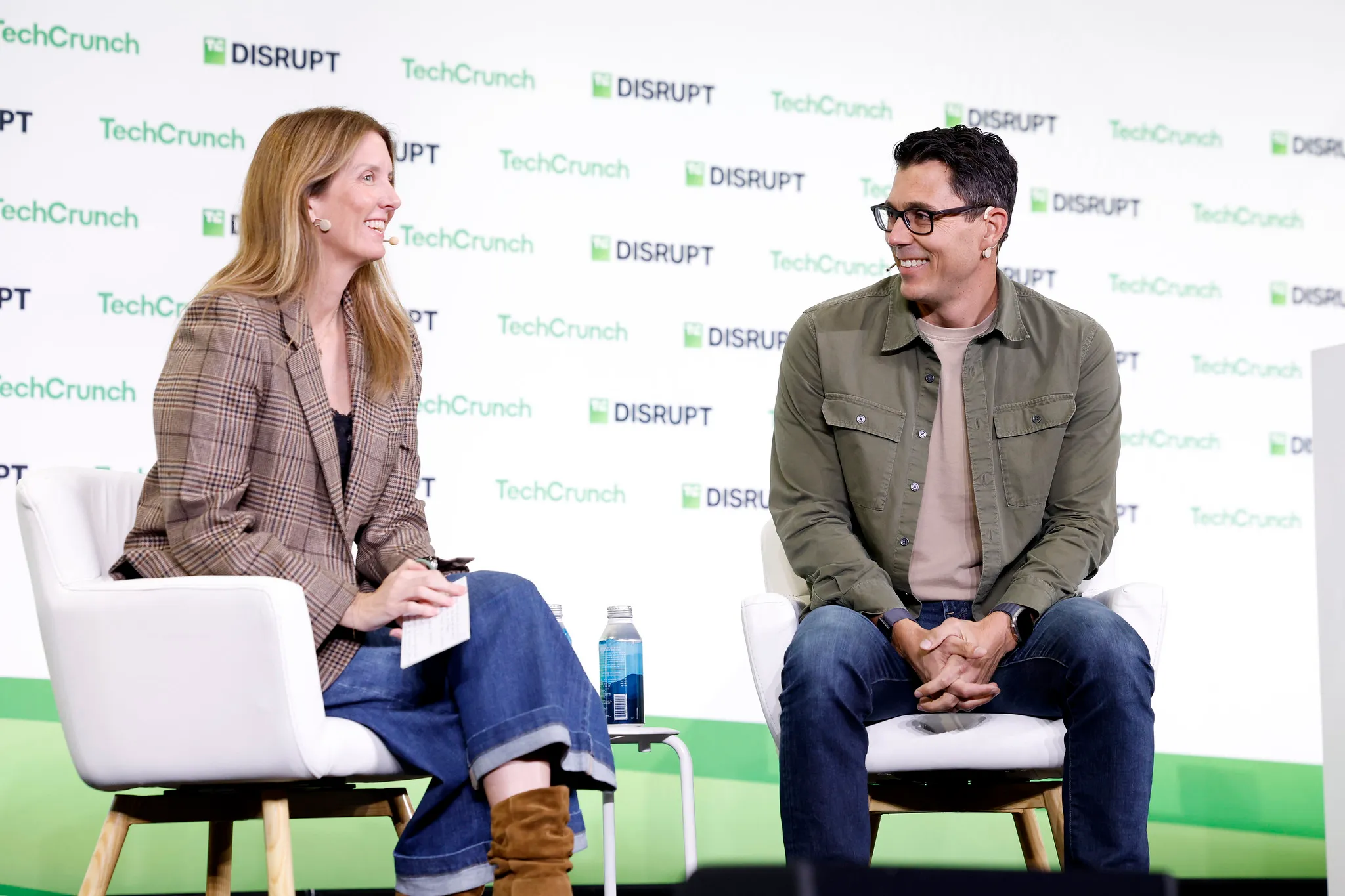
In the rapidly evolving landscape of automotive technology, Rivian is carving out a distinctive path. While many legacy automakers have outsourced their dashboard experiences to tech giants like Google or Apple, Rivian has maintained a rigorous, in-house approach to software development. At this year’s TechCrunch Disrupt, Rivian founder and CEO RJ Scaringe unveiled a vision that extends far beyond standard voice commands: a future where the vehicle serves as a host for third-party, frontier AI agents.
This strategic shift represents a significant evolution from the company’s recently launched native AI assistant, which currently handles basic vehicle functions. By opening its ecosystem to powerful external models—such as Anthropic’s Claude, OpenAI’s iterations, or Meta’s Muse—Rivian aims to transform the electric vehicle (EV) from a simple mode of transportation into a highly contextual, mobile personal assistant.
The Foundation: Building a Proprietary Agentic Framework
To understand where Rivian is heading, one must first look at how it manages its current digital architecture. Unlike competitors that rely heavily on Apple CarPlay or Android Auto, Rivian has spent years building its own vertical software stack. This autonomy has allowed the company to develop an in-house "agentic framework" designed to interpret driver intent with precision.
When a user speaks to a Rivian, the vehicle acts as a sophisticated traffic controller. The system analyzes the request, determines the level of complexity, and routes the task to the most appropriate model. For routine tasks—adjusting the climate control, warming seats, or summarizing the day’s news—the vehicle utilizes edge-based, local models that operate directly on the car’s hardware, ensuring speed and privacy. For more complex inquiries, the system securely routes the request to the cloud, utilizing a hierarchy of models to provide the most accurate response.
This "traffic light" methodology is crucial for the company’s long-term roadmap. By controlling the routing mechanism, Rivian retains oversight of which data is processed locally versus externally, a vital consideration for both latency and data security.
A Chronology of Integration: From Basic Utility to Cognitive Assistance
The trajectory of Rivian’s software development has been marked by a transition from static functionality to dynamic interaction.
- Early Development: Rivian’s initial software focus was on creating a stable, high-performance operating system that could manage vehicle dynamics, battery management, and infotainment through a unified interface.
- May 2024: The company marked a significant milestone by enabling its native AI assistant to interface with external productivity tools, most notably Google Calendar. This allowed drivers to manage their schedules via voice, effectively turning the cabin into a mobile office.
- The Present: Rivian has officially rolled out its voice-interactive AI, allowing passengers and drivers to command the vehicle using natural language.
- The Future (Anticipated): December’s upcoming "AI & Autonomy Day" is expected to provide the next chapter in this narrative. While the company has been tight-lipped, industry analysts expect a roadmap for integrating third-party large language models (LLMs) into the vehicle’s core software suite.
Navigating the "Plumbing": The Technical and Safety Hurdles
Integrating frontier AI into a two-ton vehicle is a fundamentally different challenge than embedding it into a smartphone or a laptop. As Scaringe noted during his keynote at TechCrunch Disrupt, the "plumbing" required to make these external agents function within a vehicle is immense.
Safety-Critical Boundaries
Perhaps the most critical constraint in Rivian’s strategy is the strict separation between AI "agents" and "vehicle-level controls." Scaringe was unequivocal: an AI agent, regardless of its intelligence or capability, will never be granted the authority to make safety-critical decisions.
"You wouldn’t want an agent to determine, ‘hey, it’s time to apply the brakes, or time to steer the vehicle,’" Scaringe explained. By keeping the AI’s reach limited to infotainment and personal assistant tasks, Rivian avoids the legal and safety minefield associated with autonomous vehicle control. The AI acts as a facilitator, not a pilot.
The Complexity of Coordination
For Rivian to successfully host third-party models, it must coordinate with labs like Anthropic and OpenAI to ensure their software can run within the vehicle’s specific constraints. This involves:
- API Standardization: Establishing secure, low-latency communication channels between the vehicle’s OS and the external model’s cloud infrastructure.
- Contextual Awareness: Enabling the AI to access personal user data—such as past conversations or planned activities—without compromising user privacy.
- Hardware Optimization: Ensuring the vehicle’s onboard computing power is sufficient to handle the demands of advanced models without draining battery life or impacting system stability.
Implications: The Vehicle as a Personal Assistant
The ultimate vision Scaringe painted at TechCrunch Disrupt is one of "magical" utility. Consider a scenario where a driver asks their car to activate ventilated seats, and then, in the same breath, asks for help planning a dinner menu for guests they are hosting on Friday.
If the vehicle’s AI is integrated with the user’s broader digital life, it could access context from a conversation the driver had on their smartphone earlier that day. The car becomes a persistent extension of the user’s digital workspace. This shifts the value proposition of the car from being just a machine that moves you from Point A to Point B to a collaborative partner that helps you manage your professional and personal life while you travel.
The Competitive Landscape
Rivian is not alone in this pursuit, though its approach differs from its rivals. Tesla has already begun experimenting with this space, integrating its "Grok" chatbot and "Grok Bot" into its software ecosystem. However, where Tesla has often focused on proprietary solutions, Rivian’s willingness to embrace third-party "frontier" companies suggests a more open, platform-based strategy.
By choosing to be a "host" for the best AI models rather than insisting on building every single layer itself, Rivian may be positioning itself to stay at the cutting edge of AI development. As models from Anthropic, Meta, and others improve at breakneck speed, Rivian’s vehicles could theoretically improve overnight simply by updating the model they tap into, rather than needing a hardware overhaul.
Looking Ahead: The December Catalyst
The industry’s attention is now firmly fixed on Rivian’s "AI & Autonomy Day" this December. This event serves as a pivotal moment for the company to justify its massive R&D investments in software.
Investors and tech enthusiasts will be looking for answers to several key questions:
- Which partners will be announced? Will we see a partnership with OpenAI, or perhaps a closer integration with Anthropic?
- How will privacy be managed? With the car becoming a repository of personal data, how will Rivian ensure that user information is not exploited?
- What is the monetization model? Will advanced AI agents be a subscription-based add-on, or a standard feature included in the premium software package?
Rivian’s bet is that the future of the automotive experience is not just about torque, range, or design, but about intelligence. If they can successfully navigate the "plumbing" and safety hurdles, they may well redefine what it means to own a vehicle in the age of AI. For now, the company remains in a period of rigorous preparation, balancing the allure of high-tech innovation with the uncompromising safety standards required of a modern automaker.


 Reynand Wu

 Sagoh

 Raul Delapena Setiawan


 Azzam Bilal Chamdy

 Ali Ikhwan
