
 Asep Darmawan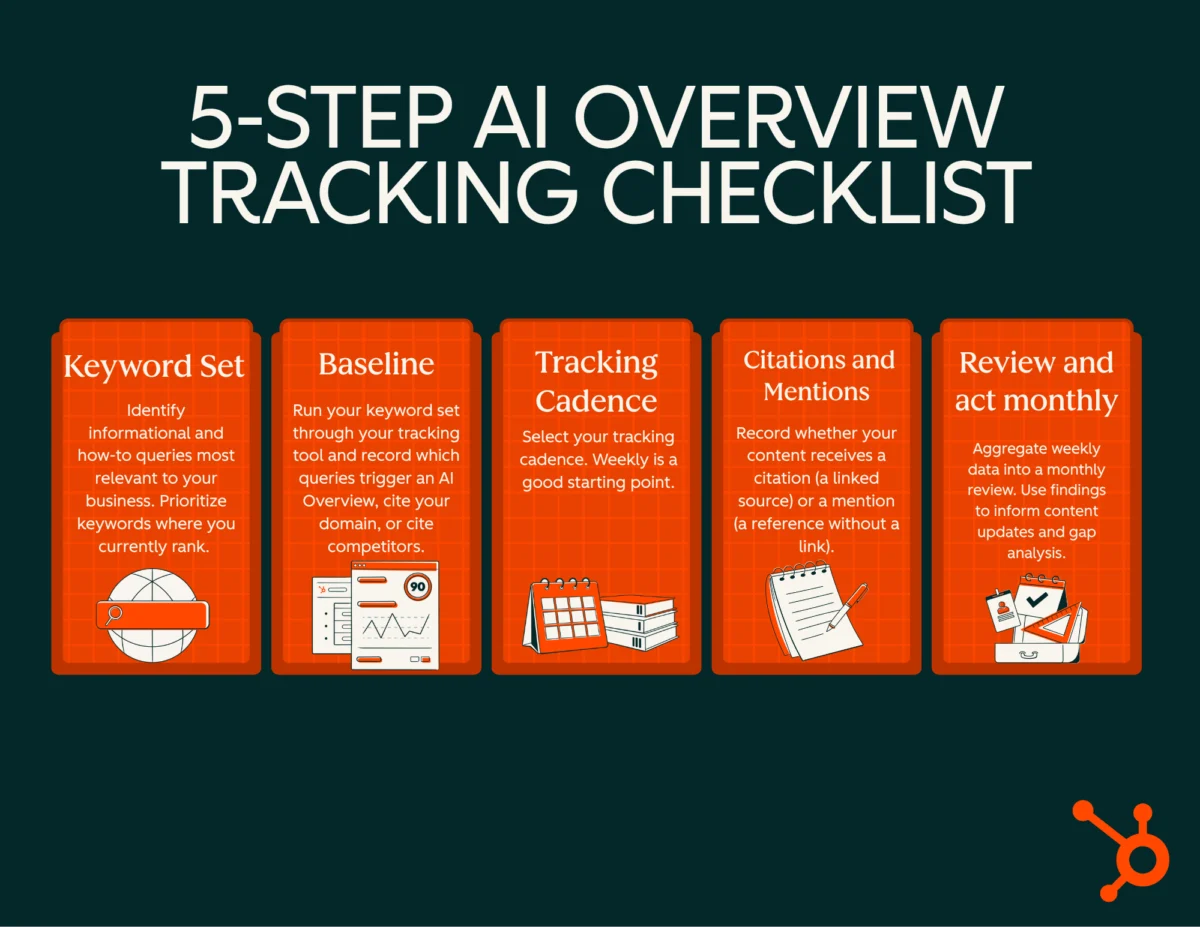
The landscape of search engine optimization (SEO) has undergone a tectonic shift. For two decades, the primary objective of any digital marketer was to climb the ranks of the “ten blue links.” Today, that goal is increasingly overshadowed by the rise of AI Overviews (AIO). These AI-generated summaries, which occupy the prime real estate at the very top of the search engine results page (SERP), are fundamentally altering how audiences discover, consume, and interact with brand content.
For many businesses, the "ranking fine, traffic dropping" paradox has become a daily reality. This article explores the mechanics of this shift, the essential strategies for tracking AIO performance, and how organizations can pivot from traditional SEO to a more nuanced, AI-aligned search strategy.
Main Facts: The End of the "Click-Through" Era
The emergence of AI Overviews represents a transition from a retrieval-based search model to a generative one. In the past, users searched for information, clicked a link, and navigated a website to find an answer. Now, Google’s AI performs the heavy lifting, synthesizing information from multiple sources to provide a direct answer on the results page.
This shift presents a dual-edged sword for brands:
- The Visibility Opportunity: Being cited in an AI Overview provides an authoritative stamp of approval, placing your brand at the absolute pinnacle of search intent.
- The Traffic Risk: Because the AI provides the answer directly, the incentive for users to click through to your website decreases. Brands are now being "cited or ignored" without a single visit to their digital property.
Traditional rank-tracking tools are largely obsolete for this new environment. They measure position in a static list, failing to account for the dynamic, volatile, and often invisible nature of AI-generated content.
Chronology: The Evolution of Search Intelligence
The transition toward AI-integrated search did not happen overnight. It is the culmination of years of investment in Large Language Models (LLMs) and semantic search technology.
.png)
- 2015–2019 (The Foundations): Google introduced RankBrain and BERT, shifting the focus from keyword matching to understanding the intent behind complex queries.
- 2022 (The Generative Explosion): The release of ChatGPT by OpenAI signaled to the industry that generative AI was ready for mainstream adoption, forcing Google to accelerate its own AI integration.
- 2023–2024 (The Rollout): Google launched Search Generative Experience (SGE), which evolved into what we now recognize as AI Overviews. This moved the search experience from a list of links to a conversational, summary-first interface.
- 2025–2026 (The Standardization): Tracking AIO visibility has moved from an experimental "nice-to-have" to a mission-critical component of digital marketing operations.
Supporting Data: Why Tracking is No Longer Optional
The data reveals a clear divergence between organic search rankings and AI Overview citations. A website can hold the top organic position for a specific keyword while being completely bypassed by the AI Overview, which may instead choose to cite a competitor in the fourth or fifth position.
Key Metrics for the New Age
- Coverage: The percentage of your target keywords that actually trigger an AI Overview.
- Citation Frequency: The rate at which your domain is linked as a source within those summaries.
- Mention Frequency: How often your brand is mentioned, even without a link. This is a critical indicator of brand authority, even if it lacks the direct traffic potential of a citation.
- Cited-Page Distribution: Identifying which specific pages (guides, data sheets, etc.) earn the most citations.
Marketers must understand that AI Overviews are not uniform. They appear most frequently for informational and "how-to" queries, while transactional queries often remain reserved for traditional shopping or paid search interfaces.
Implementing a 5-Step Tracking Framework
To navigate this volatility, marketers should adopt a structured, hypothesis-driven approach to data collection.
1. Define and Segment Your Keywords
Do not attempt to track everything. Focus on informational and long-tail queries that define your brand’s authority. Deprioritize high-volume, generic keywords that are unlikely to trigger a meaningful AI response.
2. Establish a Performance Baseline
Before you can improve, you must know your starting point. Use diagnostic tools like the HubSpot AI Search Grader to determine your current citation rate. Record which queries trigger an overview and which competitors are currently winning those slots.
3. Determine Your Cadence
Weekly tracking is generally sufficient for most industries. However, during Google’s periodic algorithm updates or when launching major campaigns, daily tracking is recommended to capture rapid shifts in AI behavior.

4. Separate Citations from Mentions
Never conflate a link-based citation with a mere brand mention. Citations drive traffic; mentions build brand awareness. Tracking them separately allows you to understand whether your content is being "read" by the AI as a reference or as a primary source of truth.
5. Monthly Synthesis and Action
Aggregate your data into a monthly review. Look for patterns: Is there a specific type of content (e.g., video transcripts, numbered lists, original research) that is consistently winning? Use these findings to inform your next round of content creation.
Official Perspectives and Industry Implications
Google maintains that its goal is to provide the most helpful, reliable information to users. From the company’s perspective, AI Overviews are designed to help users resolve complex tasks more quickly. However, the industry impact is profound.
The Rise of User-Generated Content (UGC)
Google’s AI frequently favors firsthand experience. This is why platforms like Reddit, YouTube, and niche forums are seeing a surge in visibility within AI Overviews. For brands, this means that "polished" corporate content is often less effective than authentic, peer-to-peer discussions.
The "Attribution Gap"
The most significant challenge for marketers is the lack of "closed-loop" attribution. Google Search Console does not currently separate AIO traffic from standard organic traffic. Consequently, marketing teams must rely on proxy metrics:
- Comparing organic click-through rates (CTR) on pages with high AIO citation rates.
- Monitoring shifts in branded search volume.
- Observing changes in referral traffic from aggregator sites that track AI trends.
Implications: Strategic Shifts for the Future
What should a business do when they realize their content isn’t being cited? The answer is not to try and "game" the AI, but to improve the fundamental utility of the content.
.png?width=650&height=502&name=Pastel%20Playful%20Illustrated%20Project%20Stages%20Graphic%20Organizer%20(4).png)
The Principle of Completeness
AI models favor content that answers a question fully and succinctly. Content that requires the user to click away to get the final piece of the puzzle is less likely to be cited than content that serves as a standalone, comprehensive answer.
The Role of Authority and Recency
In fast-moving sectors—such as AI, cybersecurity, or finance—recency is a major factor. If your content is outdated, the AI will ignore it in favor of fresher, albeit perhaps less "authoritative," sources. Regular content audits and updates are no longer just for SEO hygiene; they are essential for AI survival.
Investing in "Optimization Theater" vs. Value
There is a temptation to create content specifically for AI algorithms. However, this often leads to "optimization theater"—content that is structured well for bots but provides no value to humans. The most effective strategy remains the same as it has always been: produce high-quality, authoritative, and deeply relevant content that people want to read. The AI is simply a mirror of what the public finds valuable; if your content is truly the best answer, the AI will eventually find it.
Final Thoughts: Building a Resilient Strategy
The transition to an AI-driven search environment requires a shift in mindset. We must move away from the obsession with rank and toward an obsession with citation candidacy. By focusing on structural clarity, deep expertise, and answering user questions directly, brands can ensure they remain relevant in an era where the search engine is no longer just a librarian, but an author.
As we move toward 2026, the brands that win will be those that provide the most value in the shortest amount of time. Whether that value is delivered via a link-click or an AI-summarized snippet, the objective remains constant: be the most trusted source of information in your category.


 Nana
Nana
 Jia Lissa
 Layla Zulfa

 Pevita Pearce
 Rifan Muazin

 Iffa Jayyana