
 Nana
Nana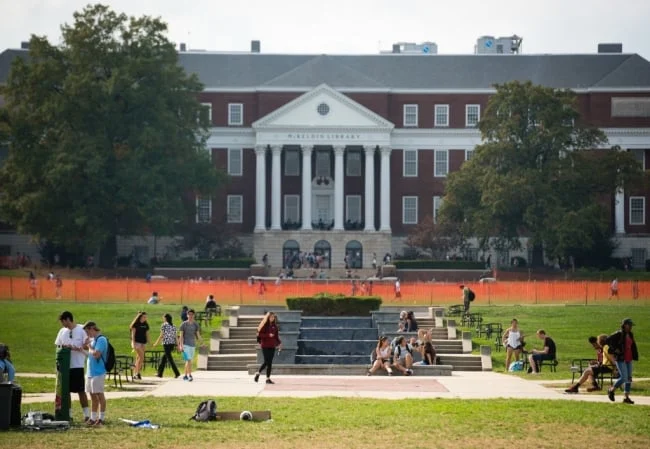
Introduction
The University of Maryland at College Park (UMD) has taken decisive disciplinary action, suspending its club tennis team indefinitely following the discovery of offensive, racially charged imagery shared among team members. The incident, which surfaced just days before a scheduled collegiate invitational, has cast a spotlight on the challenges of fostering inclusive environments within university extracurricular athletics. The discovery, which involved images of Ku Klux Klan regalia superimposed onto state symbols, has sparked outrage, prompted a multi-agency investigation, and ignited a broader conversation regarding institutional accountability and the culture of student-run organizations.
The Discovery: A Pre-Tournament Revelation
The controversy began when student leaders from Howard University—a prominent historically Black university (HBCU)—were preparing for an upcoming tennis invitational hosted in the region. According to reports, Toni Rachal, the president of the Howard University club tennis team, accessed a shared Google document intended for logistical coordination among participating teams.
Within the document, Rachal encountered digital files containing hateful imagery. Among the materials identified were images of Ku Klux Klan hoods superimposed over the Maryland state flag. Recognizing the severity of the content, Rachal immediately alerted University of Maryland officials. In a formal communication sent to the university administration, Rachal underscored that the images were explicitly "associated with racial hatred and intimidation." She further expressed that the Howard University community expected "meaningful accountability" in the wake of what she described as a profound breach of the standards of sportsmanship and human decency.
Chronology of Events
The timeline of the incident reflects a swift transition from internal discovery to institutional crisis:
- Pre-Tournament Phase: Members of the UMD club tennis team allegedly circulated the offensive imagery via a shared digital document meant for tournament planning.
- The Discovery: Howard University’s tennis leadership accessed the document and identified the racist materials.
- The Notification: Toni Rachal formally reported the incident to UMD administration, providing evidence of the imagery.
- Immediate Aftermath: The University of Maryland tennis club was forced to forfeit its matches scheduled for that weekend.
- Institutional Intervention: UMD administrators initiated an indefinite suspension of the club, referred the matter to the University of Maryland Police Department, and opened a parallel inquiry through the Office of Student Conduct.
- The Apology: Following the public fallout, representatives from the UMD tennis team held meetings with other team captains to offer apologies, while also distributing a written apology to all participating programs.
The Nature of the Imagery: Context and Impact
The imagery identified in the shared document carries a historical weight that cannot be overstated. By superimposing symbols of white supremacy—specifically the Ku Klux Klan—onto the Maryland state flag, the perpetrators engaged in a form of digital harassment that targeted both the identity of the state institution and the safety of the Black students who were intended to see the document.
Experts in campus culture suggest that such acts, even when conducted in private digital spaces, reflect a dangerous normalization of extremist tropes. For students from Howard University, the inclusion of such imagery in a document meant for inter-collegiate competition served as an act of intimidation, effectively turning a platform for athletic camaraderie into a hostile environment.
Official Responses: From Condemnation to Investigation
The University of Maryland’s administration has been quick to distance the institution from the actions of the club members. In a series of statements provided to regional and national news outlets, university officials characterized the behavior as "repugnant" and fundamentally inconsistent with the university’s core values.
"UMD club tennis team student leaders met with other tournament team captains to take responsibility, apologize for their actions, and acknowledge the harm caused," the university stated. "They also sent an apology email to each of the invited club team programs."
However, the administration has signaled that apologies are insufficient to mitigate the severity of the incident. By involving the campus police department and the Office of Student Conduct, the university has signaled that this is not merely a matter of club policy, but a potential violation of the student code of conduct that could result in permanent expulsion or legal consequences depending on the findings of the investigation.

Implications for Collegiate Athletics and Club Sports
The incident raises significant questions about the oversight of student-run organizations. Unlike varsity sports, which are heavily monitored by the NCAA and university athletic departments, club sports often operate with a higher degree of autonomy.
The Oversight Gap
Club teams are typically funded in part by student fees and university grants, yet they are frequently managed by students themselves with minimal faculty or administrative supervision. This "oversight gap" can lead to the formation of insular cultures where inappropriate behavior is left unchecked until it manifests in a public scandal.
The Role of Digital Hygiene
The use of a shared Google document as a repository for hate speech highlights a growing concern in higher education: the weaponization of digital collaboration tools. As universities move toward increasingly digitized administrative workflows, the potential for digital harassment grows. This incident serves as a case study for universities nationwide, suggesting that even internal team documentation must be subject to clear conduct guidelines and monitoring.
Campus Culture and the HBCU Relationship
The inclusion of Howard University in the tournament adds a layer of complexity to the incident. Historically, the relationship between predominantly white institutions (PWIs) and HBCUs is one that requires intentional effort to bridge gaps in cultural understanding. The fact that an HBCU was the recipient of this harassment has amplified the call for systemic change.
Advocates for racial justice on campus are now pushing for the University of Maryland to go beyond the suspension of the tennis team. Demands include:
- Mandatory Sensitivity Training: Requiring all club sport participants to undergo comprehensive anti-racism and bias training.
- Audit of Student Organizations: A broader review of other student-run clubs to ensure that similar toxic cultures are not festering elsewhere.
- Restorative Justice: Engaging in a formal dialogue between the UMD tennis team and the Howard University tennis program to facilitate genuine healing and education, rather than relying solely on punitive measures.
Moving Forward: Accountability vs. Reform
As the Office of Student Conduct continues its investigation, the UMD community remains divided on the appropriate path forward. Some students argue that the indefinite suspension is a necessary step to protect the university’s reputation and the safety of its students. Others are calling for the complete dissolution of the club tennis team, arguing that the incident indicates a deep-seated cultural issue within the organization that cannot be remedied through mere apologies.
The university’s handling of this situation will likely set a precedent for how other major research universities respond to hate speech incidents within their student ranks. The balance between maintaining an environment of free expression and ensuring an environment free from discrimination is delicate.
Conclusion
The incident at the University of Maryland is a stark reminder that the fight for equity in collegiate spaces is far from over. While the immediate actions of the administration—suspension and investigation—provide a baseline for accountability, the long-term work of cultural transformation remains. As the university moves toward a resolution, the focus must remain on the students who were targeted and the institutional responsibility to ensure that the halls of academia remain a place of learning, competition, and mutual respect, rather than a theater for intolerance.
The findings of the ongoing investigations, expected to be released in the coming months, will be pivotal in determining whether this was an isolated incident of student misconduct or a symptom of a larger, systemic failure at the university level. For now, the tennis courts remain silent, and the dialogue regarding how to best dismantle hate in student organizations continues to echo across the College Park campus.

 Rifan Muazin
 Ammar Sabilarrohman
 Nana Wu
 Asro
Asro
 Jia Lissa
 Neng Nana
 Dwi Wanna
 Siti Muinah